
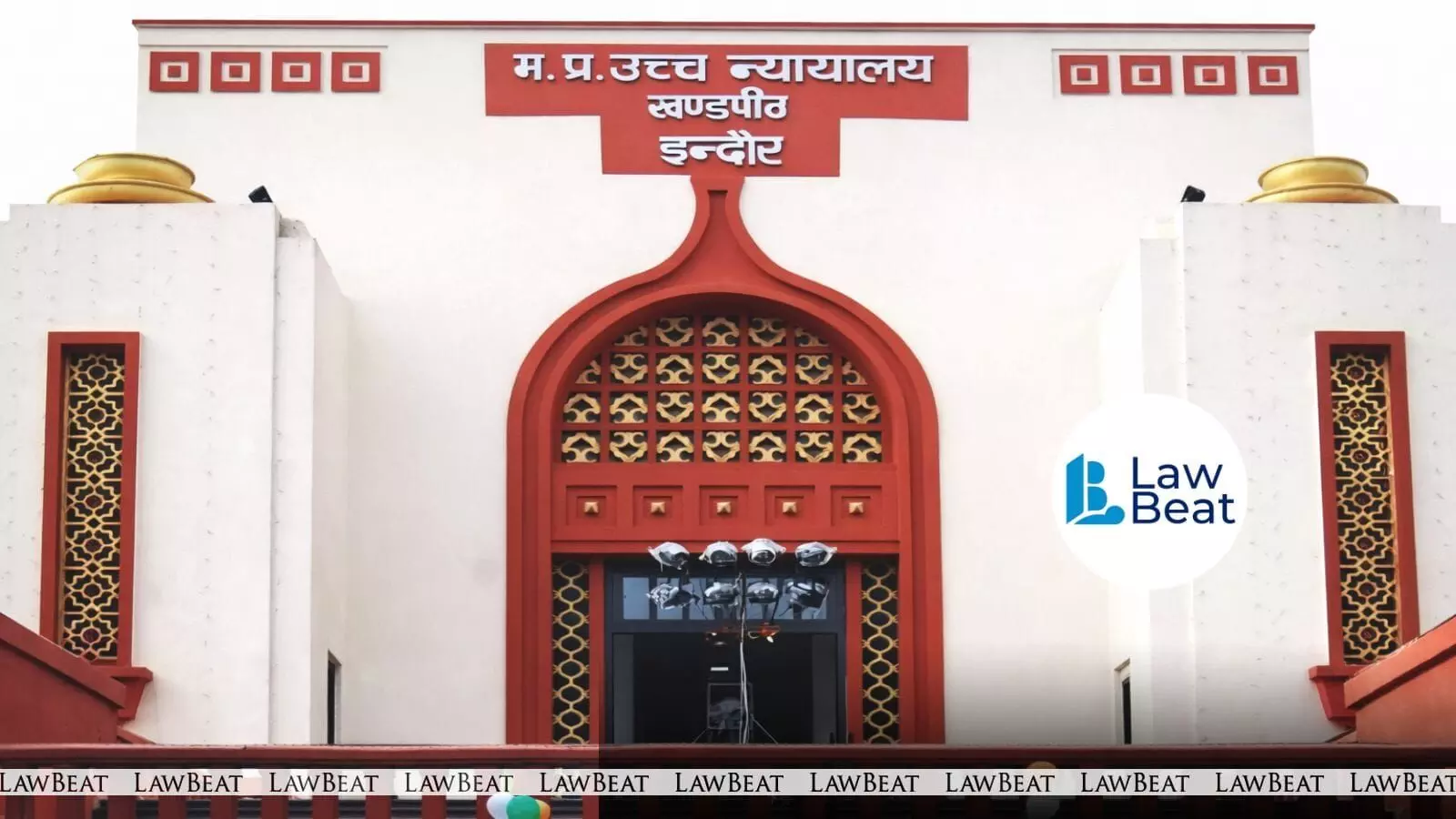
Insurer Not Liable For Worker's Death Compensation If Policy Was Based On A Fake Earlier Policy: MP High Court
What Happened
Home / News updates Insurer Not Liable For Worker's Death Compensation If Policy Was Based On A Fake Earlier Policy: MP High Court X Fake Earlier Policy Makes New Insurance "Void Ab Initio", MP High Court Exonerates Insurer in Employee Compensation Case The MP High Court has held that a motor insurance policy issued on the basis of a fake earlier policy is void from the start, freeing the insurer from paying compensation, interest and penalty in a tractor driver's death case. The Madhya Pradesh High Court at Indore has held that an insurance company cannot be made to pay compensation for a worker's death when the policy covering the vehicle was issued on the strength of an earlier policy that turned out to be fake, ruling that such a policy is "void ab initio" , that is, void from the very beginning, and not merely voidable. Allowing an appeal filed by Bajaj Allianz General Insurance Company Ltd, Justice Rajendra Kumar Vani set aside an order of the Commissioner for Workmen's Compensation, Labour Court, Mandsaur, and directed that the entire amount be recovered from the employer, the owner of the tractor involved. The case arises from the death of Kamal on 24 June 2018. Kamal was driving a tractor owned by his employer, respondent no. 5, while it was working in a field belonging to one Sanju. The tractor suddenly fell into a well, and Kamal died. His survivors claimed Rs 8,39,680 as compensation under the Employees' Compensation Act, 1923 . By its order dated 5 April 2024, the Commissioner awarded compensation of around Rs 7.9 lakh along with penalty, costs and 12 per cent annual interest, holding both the insurer and the owner liable. The insurer then approached the High Court under Section 30 of the Act. The insurer's case was that the tractor's policy (Ex. D-7) was issued on the basis of an earlier policy (Ex. D-6), which was found to be fake on verification with the company that allegedly issued it (Ex. D-8). The Commissioner rejected this plea because the insurer never told the owner about it, a fact its witness, Naman Sharma (DW-2), admitted in cross-examination. Appearing for the insurer, Advocate Monesh Jindal argued that this lapse made no difference, since a policy built on a fake one is void, not voidable. He added that the driver's licence was also reported fake by the RTO (Ex. D-9) and that the penalty could only be imposed on the employer. Nobody appeared for the respondents, though they were served. Insurer's Silence Does Not Revive a Void Policy The High Court relied on Section 149(2)(b) of the Motor Vehicles Act, 1988, which allows an insurer to defend a claim on the ground that the policy was obtained by non-disclosure of a material fact or by a false representation. The Court noted that a fake earlier policy had been placed on record and that Ex. D-8 confirmed it, which made the current policy void from the start. On the Commissioner's reasoning, Justice Vani was clear. "The lapse on the part of the Insurance Company in this regard doesn't change the factual and legal proposition inasmuch as the policy Ex.D-7 is void ab initio," the Court said, holding that the insurer is "not liable to pay the compensation amount". The owner, the Court noted, had led no evidence and made no pleadings in response. On the driver's licence too, the Court found the insurer's defence proved on the strength of the RTO's report. On penalty, the Court relied on Supreme Court rulings including Ved Prakash Garg v. Premi Devi , Sheela Devi v. Oriental Insurance and New India Assurance v. Rekha Chaudhary (2026 ACJ 559), besides its own decisions in Lavkush Prasad and Manjeet Singh . These settle that a penalty under Section 4A(3)(b) of the Act flows from the employer's own delay in paying compensation and cannot be passed on to the insurer. "There is no iota of doubt that the amount of penalty is to be deposited by the employer himself," the Court observed, adding that an insurer is ordinarily liable only for compensation along with in
Source
Source: Original reporting via LawBeat
How does this affect you?
Get an AI analysis of this article grounded in your jurisdictions, practice areas, and any policy documents you've uploaded to Wansom.
Finish Reading the Full Story and the Expert Analysis.
Get the latest legal & regulatory intelligence in India
Wansom is AI and can make mistakes.