
Institut national de la femme Bénin: 13,000 Plaintes Documented
Summary
- The Institut national de la femme in Benin has processed nearly 13,000 complaints since its establishment in 2021.
- Over 1,200 judicial decisions have been rendered favorably for women and girls in Benin, addressing violences faites aux femmes Bénin.
- Executive Secretary Flore Djinou attributes the institution's success to a robust legislative framework and strong political will.
- Senegalese authorities are actively studying the Beninese model to enhance their own victim support mechanisms, aiming for a "modèle sénégalais protection femmes."
- The Réseau des Femmes Leaders pour le Développement (RFLD) highlighted Benin's experience at the 89th session of the African Commission on Human and Peoples' Rights.
Benin's Progress in Combating Gender-Based Violence
The demonstrable success of this model in achieving concrete legal redress has not gone unnoticed, drawing considerable interest and admiration from neighboring nations seeking to enhance their own protective measures.
The Institut national de la femme Bénin has demonstrated significant progress in addressing violences faites aux femmes Bénin, recording a substantial number of complaints and securing favorable judicial outcomes. Since its inception in 2021, the institution has documented nearly 13,000 plaintes from women and girls across the country, indicating a robust engagement with the challenges faced by victims of gender-based violence. This proactive and extensive outreach has translated into tangible results within the legal system, offering a beacon of hope for those seeking justice.
Crucially, the dedicated efforts of the Institut national de la femme have led to over 1,200 judicial decisions that have favored victims. These statistics underscore a growing efficacy in the judicial processing of violence cases and highlight the institution's vital role in upholding the rights of women and girls within the Beninese legal framework. The demonstrable success of this model in achieving concrete legal redress has not gone unnoticed, drawing considerable interest and admiration from neighboring nations seeking to enhance their own protective measures.
Institutional Design and Driving Factors
The effectiveness of the Institut national de la femme stems directly from its foundational design and strategic operational choices, which prioritize both victim welfare and legal accountability. Established in 2021, the institution is uniquely mandated to both provide direct support to victims of violence and actively participate in the judicial handling of violence-related cases. This comprehensive, dual approach ensures that individuals receive holistic assistance, from the moment an initial complaint is lodged through to the final legal resolution, streamlining the often-complex path to justice.
Flore Djinou, the Executive Secretary of the Institut national de la femme, has clearly articulated several key factors contributing to its remarkable achievements. She emphasizes the critical role of an appropriately tailored legislative framework that not only defines but also significantly empowers the institution to act decisively. Furthermore, Ms. Djinou points to the broad prerogatives granted to the body, allowing for flexible and impactful interventions, alongside the deliberate selection of capable leaders who possess the vision and drive to translate strategic objectives into concrete actions on the ground. She succinctly attributes the ultimate driving force behind this successful model to a clear and unwavering "political will," acknowledging the inherent difficulties of the work while noting the emerging positive impacts now visible in communities.
Regional Recognition and Potential for Replication
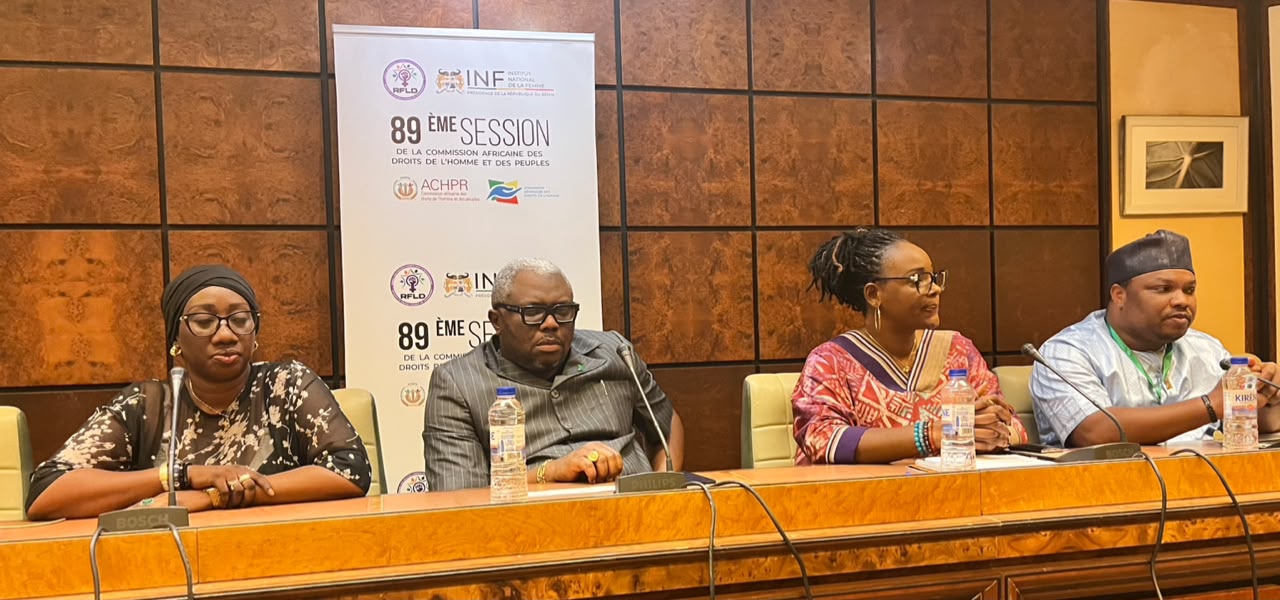
The impactful work of the Institut national de la femme Bénin has garnered significant regional recognition, particularly highlighted during a prominent gathering of human rights advocates. The Réseau des Femmes Leaders pour le Développement (RFLD) played a pivotal role by organizing a dedicated parallel session to thoroughly explore the Beninese experience in combating gender-based violence. This important event took place on the sidelines of the 89th ordinary session of the African Commission on Human and Peoples' Rights, providing a high-profile platform for sharing best practices and fostering inter-state learning.
During this RFLD Commission africaine droits de l'homme event, Flore Djinou, the Executive Secretary, shared invaluable insights into the institution's operational strategies and its documented successes. The Beninese model for protecting women and girls has specifically captured the keen attention of Senegalese authorities, who are now actively seeking to draw inspiration from Benin's comprehensive approach. Their interest lies particularly in enhancing the provision of holistic and integrated support for victims within their own borders. This strong interest suggests a significant potential for the Beninese framework to serve as a robust blueprint for other African nations seeking to strengthen their own mechanisms for addressing violences faites aux femmes, thereby contributing to improved Bénin droits des femmes statistiques and broader human rights across the continent. The aspiration is to adapt this successful model, potentially leading to a "modèle sénégalais protection femmes" that mirrors Benin's achievements.
Practical Implications
Lawyers in Benin should be aware of the Institut national de la femme's demonstrated success in securing favorable judicial decisions for women and girls, leveraging this resource for clients experiencing violence. For lawyers and compliance officers in other African jurisdictions, particularly Senegal, this presents a successful institutional and legislative model for addressing gender-based violence that could inform future policy advocacy or legal reforms.
Source
How does this affect you?
Get an AI analysis of this article grounded in your jurisdictions, practice areas, and any policy documents you've uploaded to Wansom.
Finish Reading the Full Story and the Expert Analysis.
Get the latest legal & regulatory intelligence in Senegal
Wansom is AI and can make mistakes.