
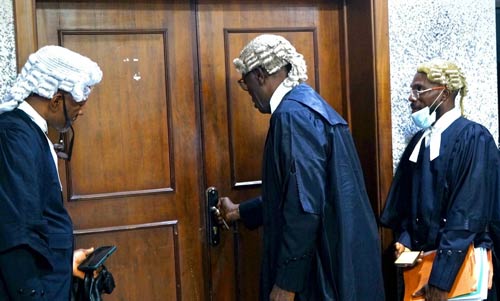
INEC Lawyer Izinyon: Confronts Judge Lateness in Sowore Trial
Summary
- An INEC lawyer, Izinyon, publicly confronted a judge over habitual lateness during Omoyele Sowore's criminal trial.
- The judge arrived at the Federal High Court in Abuja at 10:30 am, instead of the scheduled 9 am, on November 17, 2026.
- Izinyon expressed being under pressure from Nigerians regarding efforts to set aside a subpoena for Bola Ahmed Tinubu’s records.
- The incident highlights concerns about judicial conduct and potential delays in Nigerian court proceedings.
What Transpired in Court
This public display of dissatisfaction by an INEC lawyer Izinyon confronting judge lateness brought attention to a persistent issue within the Nigerian judiciary.
Proceedings in the criminal trial of Omoyele Sowore, a prominent human rights activist and the African Action Congress (AAC) presidential candidate, took an unexpected turn at the Federal High Court in Abuja on Tuesday, November 17, 2026. The court session was marked by a direct confrontation between the Independent National Electoral Commission's (INEC) counsel, Izinyon, and the presiding judge. This incident stemmed from the judge's consistent tardiness in commencing court proceedings, a matter that has frequently drawn criticism.
Specifically, the judge arrived at the courtroom at 10:30 am, significantly later than the scheduled 9 am start time. This delay prompted Izinyon to openly challenge the judge, highlighting the impact of such habitual lateness on the judicial process. The confrontation underscored growing frustrations within the legal community regarding adherence to court schedules, particularly in high-profile cases like the ongoing Sowore trial, where public scrutiny is intense. This public display of dissatisfaction by an INEC lawyer Izinyon confronting judge lateness brought attention to a persistent issue within the Nigerian judiciary.
Context of the Legal Proceedings
The confrontation by INEC lawyer Izinyon occurred amidst a separate but related legal challenge that was placing considerable pressure on him. Izinyon expressed his distress over the demands from the Nigerian public concerning his efforts to quash a subpoena seeking the records of Bola Ahmed Tinubu. This particular legal maneuver, while distinct from the immediate Sowore criminal trial, added to the counsel's exasperation with procedural delays and the broader demands of his legal responsibilities.
The broader context of Omoyele Sowore's criminal trial itself involves complex legal arguments and significant public interest. Such proceedings, held at the Federal High Court in Abuja, often draw national attention, making timely and efficient judicial conduct particularly crucial. The lawyer's public lament about external pressures suggests that judicial lateness can exacerbate the difficulties faced by counsel in managing public expectations and fulfilling their legal duties, potentially contributing to Omoyele Sowore case delays.
Broader Implications for Justice Administration
The incident involving Izinyon's confrontation over judicial lateness brings to the forefront critical issues surrounding Nigerian court conduct. Consistent delays in court sittings, such as the judge's 10:30 am arrival for a 9 am session, can significantly impede the administration of justice. These delays not only prolong trials, leading to increased costs and inconvenience for all parties involved, but also risk eroding public confidence in the efficiency and reliability of the judicial system.
Such occurrences highlight the practical challenges lawyers face in managing their cases and client expectations, especially when dealing with Federal High Court Abuja proceedings. While not directly impacting substantive law, judicial lateness can lead to significant Sowore trial judicial lateness and broader inefficiencies. Addressing these procedural issues is vital for upholding the integrity of the courts and ensuring that justice is dispensed in a timely manner, a concern frequently raised within the legal profession in Nigeria as part of ongoing discussions about Nigerian court conduct issues.
Practical Implications
While not directly impacting substantive law, this incident highlights the practical challenges and potential for procedural delays in Nigerian court proceedings due to judicial conduct, which lawyers must factor into case management, client communication, and strategic planning for litigation timelines.
Source
How does this affect you?
Get an AI analysis of this article grounded in your jurisdictions, practice areas, and any policy documents you've uploaded to Wansom.
Finish Reading the Full Story and the Expert Analysis.
Get the latest legal & regulatory intelligence in Nigeria
Wansom is AI and can make mistakes.