
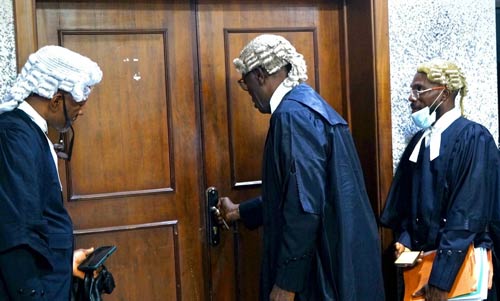
INEC Lawyer Confronts Judge Over Lateness During Sowore Trial
On Tuesday, November 17, 2026, in Abuja, Nigeria, an INEC lawyer, Izinyon, publicly confronted a judge at the Federal High Court over habitual lateness during the criminal trial of human rights activist Omoyele Sowore, expressing frustration over public pressure regarding proceedings to set aside a subpoena for Tinubu’s records.
This incident highlights critical issues of judicial conduct, court efficiency, and public perception of the justice system in Nigeria. Judicial punctuality is fundamental to maintaining the integrity and respect for the courts, ensuring timely dispensation of justice, and upholding public confidence. The confrontation, particularly from a counsel representing a key electoral body, underscores the frustration within the legal community and the broader public regarding delays and perceived inefficiencies in judicial processes, especially in high-profile cases with significant public interest.
The Nigerian legal framework, particularly the Rules of Professional Conduct for Legal Practitioners and various practice directions issued by the Chief Judge of the Federal High Court, emphasizes the need for expeditious trial and adherence to court schedules. While there are no specific statutes directly penalizing judicial lateness, such conduct can be subject to administrative review by the National Judicial Council (NJC) if it amounts to judicial misconduct or brings the judiciary into disrepute. The Federal High Court, as a court of first instance with broad jurisdiction, plays a crucial role in criminal trials, and its procedural integrity is paramount. The mention of a subpoena for Tinubu's records suggests the case involves significant public interest and potentially sensitive political implications, further amplifying the need for strict adherence to judicial protocols.
The key parties involved are the Federal High Court in Abuja, the presiding judge (unnamed in the excerpt), Omoyele Sowore (the defendant in the criminal trial), the Independent National Electoral Commission (INEC) represented by its lawyer, Izinyon, and potentially Bola Ahmed Tinubu, whose records are subject to a subpoena. The public, particularly "Nigerians," are also implicitly key stakeholders due to the pressure exerted.
Attorneys should be aware of the increasing scrutiny on judicial conduct and court efficiency in Nigeria. While direct confrontation with a judge is an extreme measure, it signals a growing intolerance for judicial delays and non-compliance with court schedules. Practitioners should continue to advocate for timely proceedings through formal channels, such as applications for accelerated hearing or complaints to the NJC where appropriate, while also managing client expectations regarding court timelines. This incident also serves as a reminder of the importance of judicial decorum and the need for all parties, including the bench, to uphold the dignity and efficiency of the court system.
How does this affect you?
Get an AI analysis of this article grounded in your jurisdictions, practice areas, and any policy documents you've uploaded to Wansom.
Finish Reading the Full Story and the Expert Analysis.
Get the latest legal & regulatory intelligence in Nigeria
Wansom is AI and can make mistakes.