
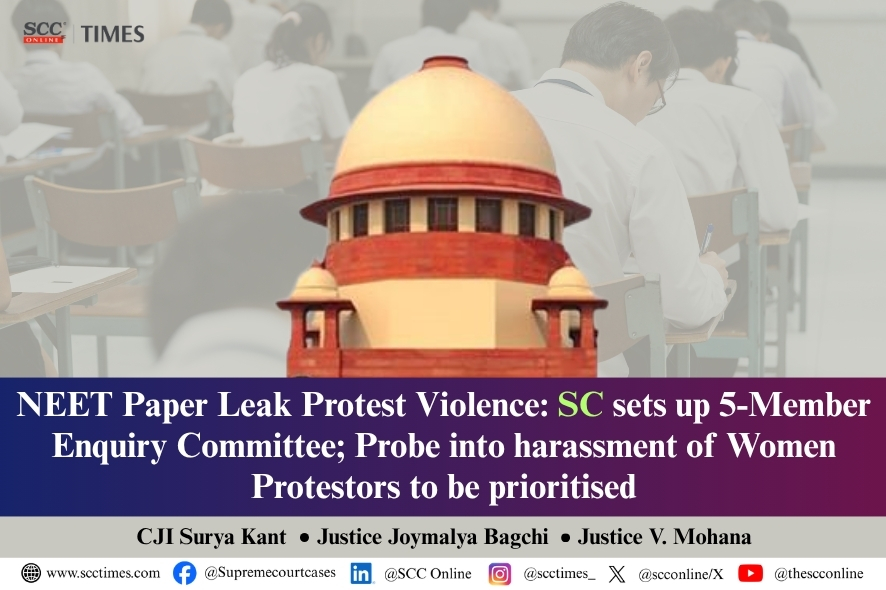
Indian Supreme Court: Sets Up 5-Member Probe Committee into NEET Paper Leak Protest Violence
Summary
- The Indian Supreme Court has set up a five-member probe committee to investigate NEET paper leak protest violence.
- The committee will prioritize investigation into alleged harassment and molestation of female protestors.
- This move may set a precedent for future investigations into similar incidents and highlight the importance of protecting women's rights during protests.
- The Indian Supreme Court has taken cognizance of the alleged harassment and molestation of female protestors, underscoring their commitment to upholding women's rights.
What Happened
A key focus of the investigation will be the alleged harassment and molestation of female protestors.
The Indian Supreme Court has established a five-member probe committee, led by Justice Subhash Reddy, a former judge of the Supreme Court. The High Power Committee (HPEC) will investigate the violence that erupted during protests against the National Eligibility cum Entrance Test (NEET) paper leak. A key focus of the investigation will be the alleged harassment and molestation of female protestors.
Legal Context
The formation of this probe committee is a significant development in India's legal landscape, particularly with regards to the protection of women's rights during protests. The Supreme Court has taken cognizance of the alleged harassment and molestation of female protestors, highlighting the importance of prioritizing their safety and well-being. This move may set a precedent for future investigations into similar incidents and underscore the need for robust measures to prevent violence against women in public gatherings.
Why It Matters
The establishment of this probe committee is not only a response to the NEET paper leak protest violence but also a reflection of the Indian Supreme Court's commitment to upholding women's rights. As lawyers and legal experts, it is essential to closely monitor the proceedings of this committee and analyze its potential implications on future investigations into similar incidents. The protection of women's rights during protests is a critical aspect that cannot be overlooked, and this probe committee may serve as a benchmark for addressing such concerns in the future.
Practical Implications
Lawyers should watch for the potential precedent set by this probe committee, which may influence future investigations into similar incidents and highlight the importance of prioritizing the protection of women's rights during protests.
Source
Source: Original reporting via SCC Times
How does this affect you?
Get an AI analysis of this article grounded in your jurisdictions, practice areas, and any policy documents you've uploaded to Wansom.
Wansom is AI and can make mistakes.