
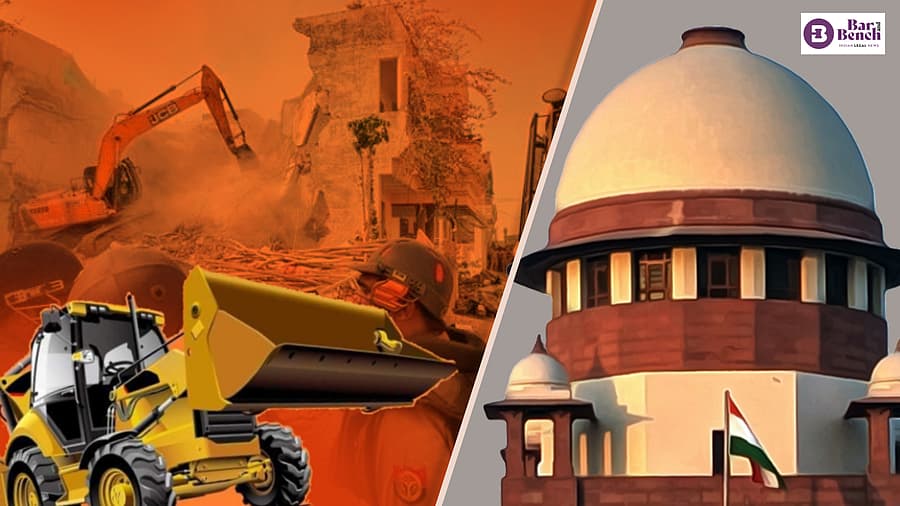
Indian Supreme Court Refuses Uniform Policy Demolition Long-Standing Properties In
Summary
- The Supreme Court refused to issue a uniform policy against demolition of long-standing unauthorised constructions.
- States and Union Territories are now free to revisit their policies on regularisation and demolition.
- There is a risk that demolitions may occur without notice or adequate rehabilitation schemes for affected residents.
- Lawyers should be aware of the potential impact on clients with unauthorised constructions, as state policies may change in response to the Court's decision.
What Happened
The Court observed that such issues fall within the policy domain and declined the prayer for a uniform policy framework.
The Supreme Court has declined to issue a uniform policy against the demolition of long-standing unauthorised constructions across India. On Wednesday, a Bench comprising Chief Justice Surya Kant, Justice Joymalya Bagchi, and Justice V Mohana refused to entertain a petition filed by the Centre for Law and Good Governance. The petition sought the establishment of a court-empowered committee to formulate uniform guidelines on regularisation and demolition of unauthorised constructions.
The Court observed that such issues fall within the policy domain and declined the prayer for a uniform policy framework. Instead, it suggested that States and Union Territories consider the issues raised in the petition while formulating or revisiting their existing policies.
Legal Context
The Centre for Law and Good Governance's petition highlighted the varying approaches to dealing with unauthorised constructions across different states. While Andhra Pradesh, Telangana, and Delhi have introduced settlement and regularisation policies, there are instances of unauthorised colonies being demolished without notice or rehabilitation schemes. The petition aimed to establish a uniform policy framework to address these issues.
The Court's decision not to intervene in the matter may lead to continued variations in state-level policies. This could result in inconsistent treatment of similar cases across different regions. The Supreme Court disposed of the Centre for Law and Good Governance's petition, declining to issue a uniform policy and suggesting that States and Union Territories consider the issues raised.
Why It Matters
The Supreme Court's refusal to issue a uniform policy against demolition of long-standing unauthorised constructions has significant implications for property owners and residents in affected areas. With states now free to revisit their policies, there is a risk that demolitions may occur without notice or adequate rehabilitation schemes. Lawyers should be aware of this potential impact on clients with unauthorised constructions, as state policies may change in response to the Court's decision.
The Centre for Law and Good Governance's petition aimed to establish a uniform policy framework to address the issue of unauthorised constructions. While the Court has declined to intervene, its suggestion that states consider the issues raised in the petition may lead to more consistent treatment of similar cases across different regions.
Practical Implications
Lawyers should watch for the potential impact on clients with unauthorised constructions, as states may now revisit their policies and consider demolitions without notice.
Source
How does this affect you?
Get an AI analysis of this article grounded in your jurisdictions, practice areas, and any policy documents you've uploaded to Wansom.
Wansom is AI and can make mistakes.