
India Supreme Court: Marital Rape Section 375 Challenge Hearings Begin
Summary
- The Supreme Court of India is conducting a final hearing on petitions challenging Exception 2 of Section 375 IPC, which currently exempts husbands from rape charges against their wives.
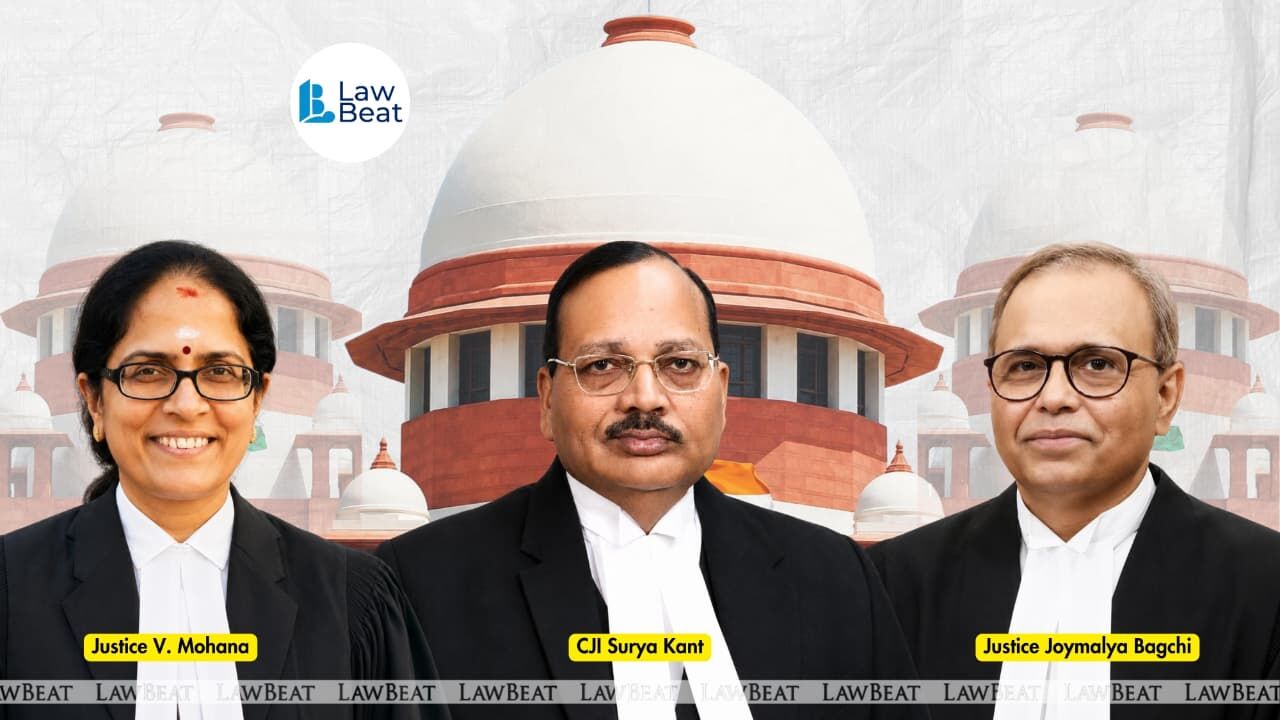
- A three-judge bench, led by Chief Justice of India Surya Kant, is presiding over the case, with specific days allocated for arguments.
- The challenge also extends to Exception 2 of Section 63 of the Bharatiya Nyaya Sanhita, which carries forward the marital rape exception.
- Justice Joymalya Bagchi emphasized that marriage cannot extinguish individual autonomy and that the safety of married women is paramount.
- The Union Government opposes criminalization, arguing it would destabilize marriage and that a holistic approach is needed.
Supreme Court Hears Marital Rape Challenge
The institution of marriage should never lead to the suppression of an individual's autonomy.
India's Supreme Court is currently engaged in a critical hearing concerning the criminalization of marital rape, specifically addressing a batch of petitions that challenge Exception 2 of Section 375 of the Indian Penal Code (IPC). This exception currently stipulates that sexual intercourse or sexual acts performed by a man with his own wife, provided she is not under the age of fifteen, do not constitute rape. The proceedings are being overseen by a three-judge bench, presided over by Chief Justice of India Surya Kant, with Wednesdays and Thursdays specifically allocated for the final arguments in this significant matter.
The Union Government has submitted its response in related cases, with instructions for copies to be distributed to all legal counsel involved within two days. All other necessary pleadings have been completed, and a nodal counsel has been tasked with compiling these documents into a comprehensive collection for the court's review. This marks a pivotal stage in the constitutional challenge marital rape India faces, as the court delves into the fundamental aspects of spousal consent and criminal liability within marriage.
During the ongoing hearings, Justice Joymalya Bagchi offered several pertinent observations. He emphasized that while a clear definition and an exception exist under Section 375, the central issue revolves around the precise scope and application of that exception. Justice Bagchi underscored the paramount importance of ensuring the safety and security of married women, affirming that the institution of marriage should never lead to the suppression of an individual's autonomy. He noted that before any person can be prosecuted under such a penal law, a constitutional court must definitively rule on whether the exception is unreasonable or manifestly arbitrary.
The Legal Provisions Under Scrutiny
The core of the legal challenge lies in Exception 2 to Section 375 of the Indian Penal Code, which effectively grants immunity to husbands from rape charges brought by their wives, provided the wife is above the specified age. This provision is being contested on grounds that it unconstitutionally excludes married women from the protection against sexual assault afforded to others. Furthermore, the petitions extend their challenge to Exception 2 of Section 63 of the recently enacted Bharatiya Nyaya Sanhita (BNS), which essentially perpetuates the marital rape exception from the older IPC, maintaining the contentious legal distinction.
Justice Bagchi further elaborated on the judicial approach to such matters, suggesting that courts might, in certain circumstances, refrain from immediately declaring a penal provision ultra vires. Instead, they might allow the State a specified timeframe to re-evaluate the law. Should the State fail to act within this period, the court could then proceed to declare the provision unconstitutional. He highlighted that a law's unconstitutionality can stem either from a lack of legislative competence in its creation or from its violation of fundamental rights, framing the ongoing debate within broader constitutional principles.
This constitutional challenge marital rape India presents a complex legal landscape, requiring a delicate balance between established legal traditions and evolving societal norms regarding individual rights within marriage. The outcome will significantly redefine the boundaries of consent and autonomy for married individuals, impacting future legal interpretations and criminal justice practices related to sexual offenses.
Divergent Views and Societal Impact
The potential implications of criminalizing marital rape India are a central point of contention in the Supreme Court's deliberations. The court had previously raised a crucial question at the outset of the hearings: whether striking down the exception and thereby criminalizing non-consensual sexual acts within marriage could potentially destabilize the institution of marriage itself. This query highlights the profound societal and legal ramifications being considered by the bench.
The Union Government has vociferously opposed the plea for marital rape criminalization, advocating for a comprehensive and holistic approach to the issue rather than a strictly legal one. In an affidavit submitted to the court, the government argued that nullifying the exception, which currently protects husbands from rape charges, on constitutional grounds would have far-reaching consequences for the institution of marriage and could severely strain conjugal relationships. The government contended that the concept of marriage, as solemnized through prevailing societal rituals or legal requirements, establishes an 'intelligible differentia' that bears a rational connection to its intended objectives, creating reciprocal legal and social obligations and rights for both individuals and their families.
Lawyers practicing criminal or family law in India must closely monitor the Supreme Court's ongoing hearing on marital rape. A potential ruling to strike down Section 375 IPC Exception 2 and Section 63 BNS Exception 2 would fundamentally alter the legal definition of spousal consent and criminal liability within marriage, profoundly impacting prosecution, defense strategies, and client advisory. The court's ultimate decision will not only shape the future of marital rape criminalization India but also redefine the understanding of individual autonomy within the marital bond.
Practical Implications
Lawyers practicing criminal or family law in India must closely monitor the Supreme Court's ongoing hearing on marital rape, as a potential ruling to strike down Section 375 IPC Exception 2 and Section 63 BNS Exception 2 would fundamentally alter the legal definition of spousal consent and criminal liability within marriage, impacting prosecution, defense strategies, and client advisory.
Source
Source: Original reporting via Live Law
How does this affect you?
Get an AI analysis of this article grounded in your jurisdictions, practice areas, and any policy documents you've uploaded to Wansom.
Finish Reading the Full Story and the Expert Analysis.
Get the latest legal & regulatory intelligence in India
Wansom is AI and can make mistakes.