
Allahabad High Court: No 2-Year Gap for Second Maternity Leave
Summary
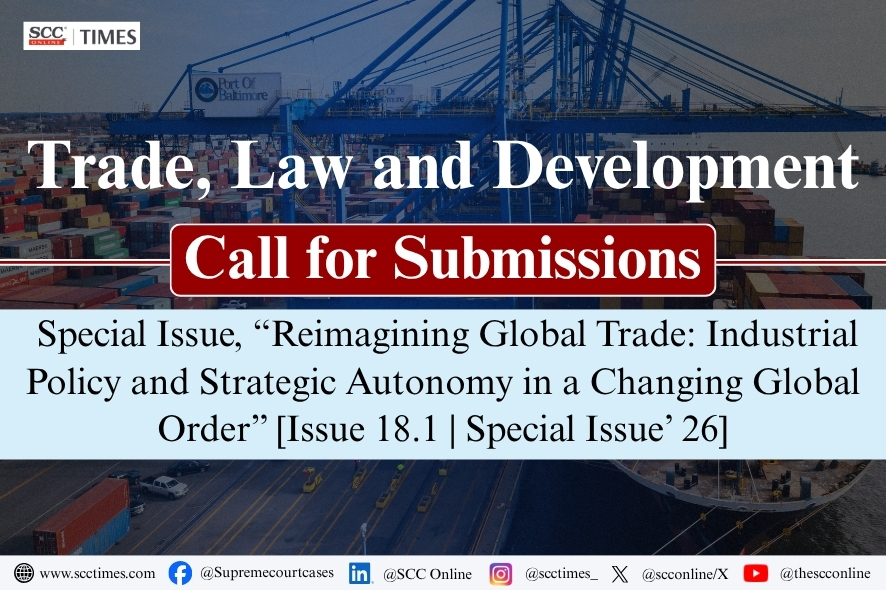
- Trade, Law and Development (TL&D) has announced a special issue on 'Reimagining Global Trade: Industrial Policy and Strategic Autonomy in a Changing Global Order'.
- The special issue aims to explore the evolving relationship between industrial policy, strategic autonomy, and international trade law.
- India's shift towards strategic autonomy may have significant implications for its international trade commitments.
What Happened
This development is significant as it reflects India's growing interest in strategic autonomy, which may have implications for its international trade commitments.
Trade, Law and Development (TL&D) has announced a special issue focused on the intersection of industrial policy, strategic autonomy, and international trade law. The special issue, titled 'Reimagining Global Trade: Industrial Policy and Strategic Autonomy in a Changing Global Order', aims to explore the evolving relationship between these concepts. This development is significant as it reflects India's growing interest in strategic autonomy, which may have implications for its international trade commitments.
Legal Context
The concept of strategic autonomy has been gaining traction globally, particularly among emerging economies like India. Strategic autonomy refers to a country's ability to make independent decisions on trade and economic policies without being heavily influenced by external factors. In the context of international trade law, this shift towards strategic autonomy may lead to a re-evaluation of existing trade agreements and commitments. Lawyers should be aware of these developments as they may impact compliance with existing trade agreements.
Why It Matters
The special issue on 'Reimagining Global Trade' is an opportunity for scholars, policymakers, and practitioners to engage in a critical discussion on the implications of India's shift towards strategic autonomy. As India continues to navigate its position in the global trade landscape, this special issue will provide valuable insights into the potential consequences of prioritizing strategic autonomy over traditional trade liberalization policies. The outcome of this debate is likely to shape India's future industrial policy and international trade commitments.
Practical Implications
Lawyers should watch for the implications of India's shift towards strategic autonomy on its international trade commitments, which may impact compliance with existing trade agreements.
Source
How does this affect you?
Get an AI analysis of this article grounded in your jurisdictions, practice areas, and any policy documents you've uploaded to Wansom.
Wansom is AI and can make mistakes.