
India Supreme Court: Drops Protest Cases From Medical Exam Leak
Summary
- India's Supreme Court has dropped criminal investigations against most protesters involved in demonstrations over a leaked medical exam paper.
- The court utilized its special constitutional powers to provide relief, while investigations will continue for 2,873 protesters with prior criminal records.
- The protests, led by the Cockroach Janta Party (CJP), turned violent in July and led to police charges against hundreds of students.
- Chief Justice Surya Kant issued the order, which also directed the government to compensate families of students who died by suicide after the leak.
- The demonstrations, which prompted Education Minister Dharmendra Pradhan's resignation, grew to challenge Prime Minister Narendra Modi's government over wider issues like unemployment.
Supreme Court Steps In
This ruling demonstrates the Indian Supreme Court's willingness to use its special constitutional powers to intervene in mass protest-related criminal cases, potentially setting a precedent for future challenges to charges against protesters and highlighting judicial oversight in politically sensitive matters.
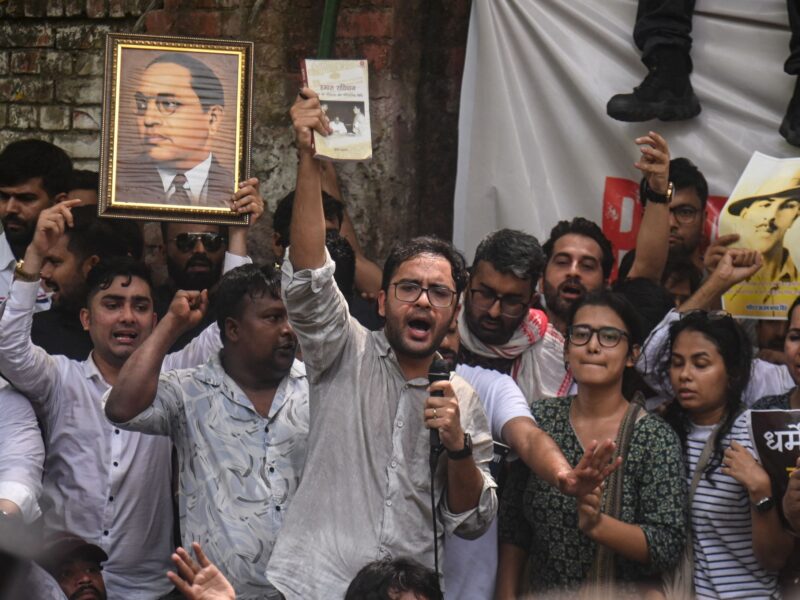
India's Supreme Court has taken decisive action to halt criminal investigations against the majority of individuals involved in widespread protests that followed a significant medical examination paper leak. On Tuesday, the apex court issued an order providing relief to numerous demonstrators who participated in the July protests, which were organized by the online Cockroach Janta Party (CJP) movement. These demonstrations initially ignited public anger over the leaked exam paper, an incident that ultimately prompted the resignation of Education Minister Dharmendra Pradhan.
The protests escalated into violent confrontations on July 20 in New Delhi, as tens of thousands of participants clashed with police while attempting to march towards Parliament. Similar outbreaks of violence were also reported in states such as Bihar and West Bengal. In the aftermath, police filed criminal charges against hundreds of students, accusing them of various offenses including rioting, violence, and damaging public property. Chief Justice Surya Kant, presiding over the order, remarked on the potential for resolution, stating, "If both sides show good faith, then all issues can be resolved one by one."
Judicial Power and Broader Implications
The Indian Supreme Court invoked its special constitutional powers to deliver this significant protest relief, marking a notable exercise of judicial authority in mediating politically sensitive matters. This intervention extends beyond merely quashing charges; the court also directed the government to provide compensation within three months to the families of students who reportedly died by suicide following the exam paper leak. Following these directions, CJP spokesperson Ashutosh Ranka announced the cancellation of a planned protest in Delhi for the upcoming Saturday.
However, the court's order does not grant universal immunity. Investigations will continue against 2,873 protesters who possess prior criminal records, a detail confirmed by the Press Trust of India. This ruling demonstrates the Indian Supreme Court's willingness to use its special constitutional powers to intervene in mass protest-related criminal cases, potentially setting a precedent for future challenges to charges against protesters and highlighting judicial oversight in politically sensitive matters. Lawyers should note this as a significant exercise of judicial power in mediating social unrest.
Roots of the Unrest
While the immediate catalyst for the widespread unrest was the medical exam paper leak, the Cockroach Janta Party (CJP) protests rapidly expanded to encompass a broader spectrum of societal grievances. The demonstrations grew beyond the initial outrage, drawing attention to significant concerns such as high unemployment rates and a perceived lack of opportunities for young people across the nation. Critics also framed the movement as a response to what they describe as Prime Minister Narendra Modi’s increasingly authoritarian approach to governance.
These extensive demonstrations proved to be the most substantial challenge Prime Minister Modi has encountered since he secured his third term in office in 2024. The court's intervention, therefore, addresses not only the immediate legal consequences for participants but also touches upon the underlying social and political tensions that fueled such a significant outpouring of public discontent.
Practical Implications
This ruling demonstrates the Indian Supreme Court's willingness to use its special constitutional powers to intervene in mass protest-related criminal cases, potentially setting a precedent for future challenges to charges against protesters and highlighting judicial oversight in politically sensitive matters. Lawyers should note this as a significant exercise of judicial power in mediating social unrest.
Source
Source: Original reporting via AFP
How does this affect you?
Get an AI analysis of this article grounded in your jurisdictions, practice areas, and any policy documents you've uploaded to Wansom.
Finish Reading the Full Story and the Expert Analysis.
Wansom is AI and can make mistakes.