
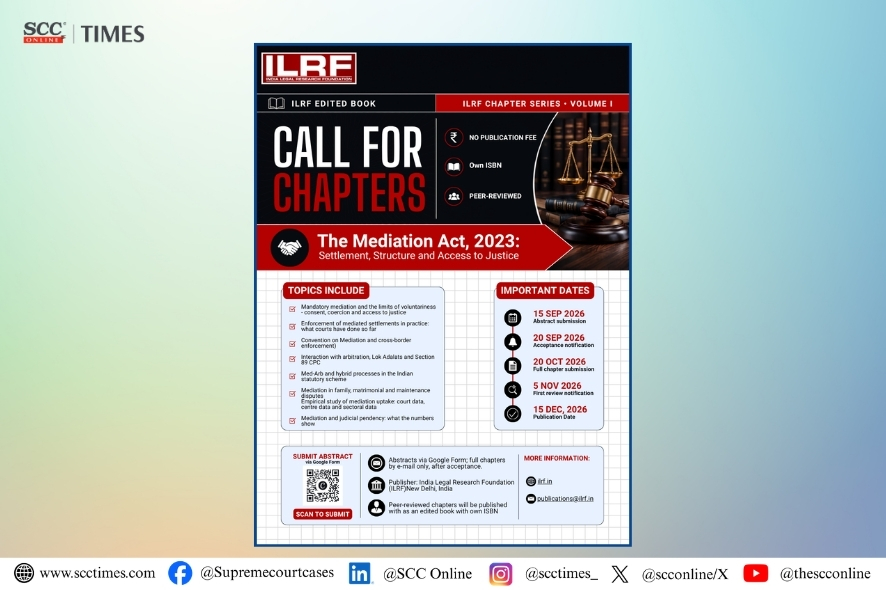
India: Mediation Act 2023 Call Chapters for New E-Book
Summary
- Legal professionals are invited to submit chapters for an e-book on the Mediation Act, 2023.
- The upcoming e-book will feature an ISBN and requires no publication fee from contributors.
- Submissions for this scholarly publication are open until September 15, 2026.
- This initiative offers a significant opportunity for legal experts to contribute to a definitive commentary on India's new mediation law.
Opportunity for Scholarly Contribution
This call for chapters on the Mediation Act 2023 represents a unique chance for legal professionals to contribute to a definitive resource on the subject, offering their specialized insights into its various provisions and implications.
An open invitation has been extended to legal scholars and practitioners across India for the submission of chapters to an upcoming e-book. This significant publication is dedicated to a comprehensive analysis of the recently enacted Mediation Act, 2023, a pivotal piece of legislation shaping the nation's alternative dispute resolution framework. This call for chapters on the Mediation Act 2023 represents a unique chance for legal professionals to contribute to a definitive resource on the subject, offering their specialized insights into its various provisions and implications.
This publishing opportunity is particularly attractive as it carries no associated publication fee, removing a common barrier for academic and professional contributions. Furthermore, the resulting e-book will be assigned an International Standard Book Number (ISBN), lending academic credibility and broad accessibility to the collected works. Those interested in contributing their specialized knowledge to this India Mediation Act 2023 e-book project have a generous timeframe, with submissions invited until September 15, 2026. This extended deadline allows for thorough research and detailed writing, ensuring high-quality contributions for these legal e-book submissions India.
The Evolving Landscape of Mediation Law
The introduction of the Mediation Act, 2023, marks a transformative moment in India's legal landscape, formalizing and promoting mediation as a primary mechanism for conflict resolution across various domains. This legislation is poised to profoundly impact how disputes are managed, from complex commercial disagreements to civil matters, by providing a robust statutory framework for mediation processes. It aims to streamline dispute resolution, reduce the burden on traditional courts, and foster a culture of amicable settlement.
As such, a thorough Mediation Act 2023 commentary is not merely beneficial but essential for legal practitioners, academics, and policymakers to fully grasp its implications and operationalize its provisions effectively. The e-book seeks to fill this critical need, offering diverse perspectives on the Act's interpretation, implementation challenges, and potential future trajectory. Understanding the intricacies of this new mediation law India 2023 is paramount for ensuring its successful integration into the existing legal system and maximizing its potential to reduce litigation burdens and promote efficient justice delivery.
Advancing Legal Scholarship and Professional Standing
For legal professionals specializing in Alternative Dispute Resolution (ADR), or those aspiring to establish themselves as thought leaders in this rapidly evolving domain, contributing to this e-book offers an unparalleled platform. Authors will have the opportunity to showcase their expertise and contribute to the foundational scholarship surrounding the Mediation Act, 2023, thereby significantly enhancing their professional standing and influence within the legal community. This initiative provides a significant avenue for legal minds to offer their unique insights and analysis, creating a valuable resource that will serve as a reference point for years to come.
Such ADR legal publications India are vital for fostering a deeper understanding of new statutes and encouraging informed discourse among peers. The inclusion of an ISBN ensures that these contributions will be formally recognized and cited, solidifying the authors' roles in shaping the narrative around this crucial legislation. This collective effort will not only enrich the academic understanding of the Act but also provide practical guidance for its application, potentially becoming a key reference point alongside other resources like SCC Online Mediation Act commentaries. By participating, contributors play a direct role in shaping the discourse and application of this landmark law.
Practical Implications
Legal professionals specializing in ADR or seeking to contribute to legal scholarship on the new Mediation Act, 2023, should consider this opportunity to publish their insights and establish thought leadership on this significant legislation.
Source
How does this affect you?
Get an AI analysis of this article grounded in your jurisdictions, practice areas, and any policy documents you've uploaded to Wansom.
Finish Reading the Full Story and the Expert Analysis.
Wansom is AI and can make mistakes.