
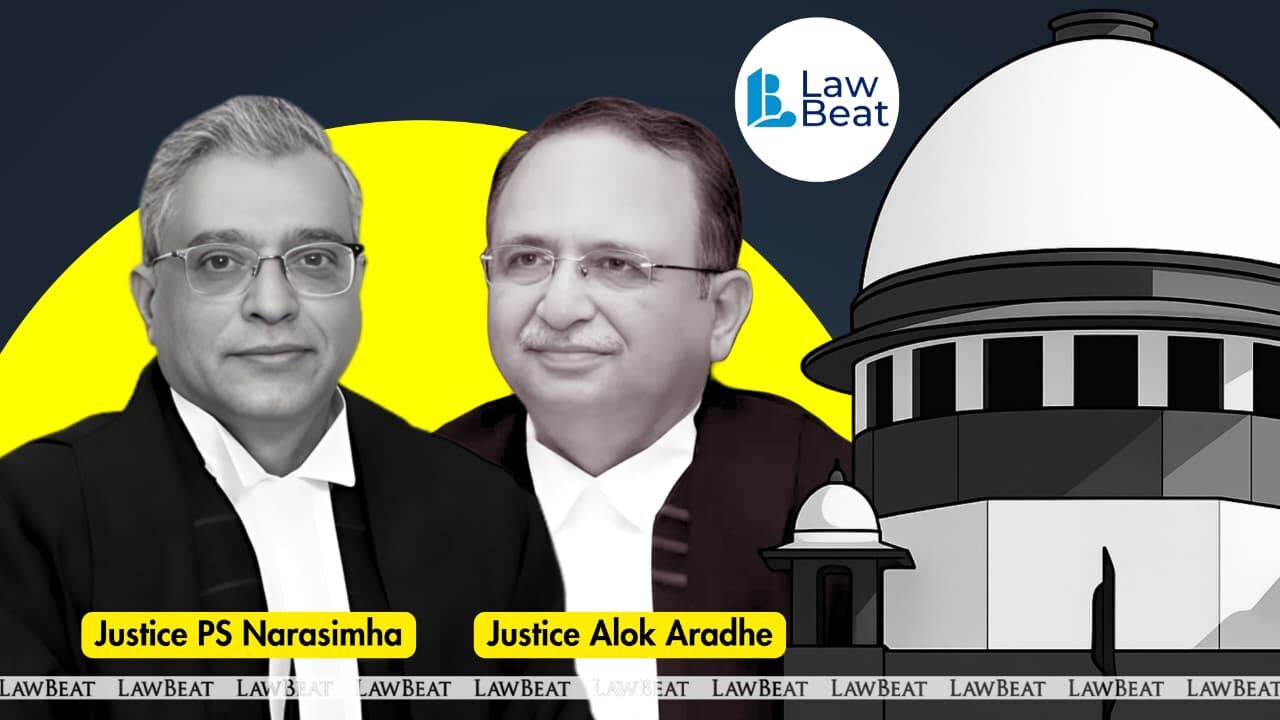
Supreme Court: India Law Commission To Standardize Uniform Court Deposits
Summary
- The Supreme Court has mandated that court deposits must be unconditional and freely withdrawable to halt interest accrual on decretal or arbitral awards.
- A deposit merely placed in court, if conditional or not readily accessible, does not constitute payment to the creditor and fails to stop interest from running.
- The Court highlighted a significant gap in the Arbitration and Conciliation Act, 1996, regarding the treatment of conditional deposits.
- The Law Commission of India has been directed to formulate a uniform approach for court deposits and interest, consulting with key financial and legal ministries.
- This directive aims to address the "time value of money" and ensure economic integrity in how deposited funds are managed and adjusted.
Supreme Court's Directive on Court Deposits
The Supreme Court has underscored that for court deposits to effectively halt the accrual of interest on decretal or arbitral award amounts, they must be made unconditionally and be immediately available for withdrawal by the decree-holder.
The Supreme Court of India has recently issued a significant directive to the Law Commission of India, urging it to formulate a standardized approach for handling court deposits and the interest accrued on them. This move comes in response to persistent ambiguities surrounding when such deposits effectively halt the running of interest on awarded amounts, particularly in cases involving decretal or arbitral awards. A bench comprising Justices P S Narasimha and Alok Aradhe underscored the critical need for systemic reforms to introduce uniformity and certainty in how funds deposited before various courts and tribunals are managed.
The apex court observed that while disputes concerning the treatment of deposits and the subsequent accrual of interest are a regular feature of litigation, existing legal frameworks, such as the Arbitration and Conciliation Act, 1996, offer insufficient guidance on how conditional deposits should be handled. Recognizing this substantial legal gap, the Court has tasked the Law Commission with a comprehensive examination of the issue. This mandate includes studying comparative international practices and consulting with key governmental bodies, including the Reserve Bank of India, the Ministry of Finance, and the Ministry of Law and Justice, before proposing reforms. The goal is to establish clear guidelines for India Law Commission uniform court deposits.
Clarifying Interest Accrual and Unconditional Deposits
Central to the Supreme Court's recent pronouncement is a definitive clarification regarding the conditions under which a court deposit can stop interest accrual. The Court explicitly ruled that for a deposit to be effective in halting interest on a decretal or arbitral award amount, it must be unconditional and freely available for withdrawal by the decree-holder. Merely placing money into a court account does not, by itself, constitute a payment to the creditor, nor does it prevent interest from continuing to run if these conditions are not met.
The bench emphasized that a deposit made under Order XXI Rule 1 of the Civil Procedure Code must adhere strictly to these requirements. If the deposit is not made in such a manner, the liability for interest continues unabated, even after the funds have been placed with the court. The Court further clarified that any conditional deposit, particularly one made solely to secure a stay on the execution of a decree or arbitral award, does not interrupt the judgment-debtor's obligation to pay interest. A deposit that remains beyond the debtor's control, or is not immediately accessible to the creditor, neither extinguishes the underlying liability nor effectively transfers the funds to the creditor's possession. This ruling provides crucial guidance on unconditional deposit interest accrual.
Addressing Systemic Gaps and Economic Principles
Beyond the immediate clarification on interest accrual, the Supreme Court's directive highlights broader systemic issues that undermine economic principles within the judicial system. The Court pointed out that the absence of clear, standardized procedures for handling deposits creates a range of uncertainties, particularly in the enforcement of arbitral awards. This lack of standardization directly impacts the "time value of money," a fundamental economic concept which dictates that money available today holds greater value than the same amount received at a future date due to opportunity costs.
The Court stressed that without uniform procedures for the investment and management of deposited funds, this principle is undermined, making it difficult to preserve economic integrity and ensure proper accounting for interest. The normative principle that the Law Commission is expected to evolve must cover three critical aspects: the method of depositing decretal amounts and the treatment of interest upon final case resolution; how these deposits can protect both decree-holders and judgment-debtors from escalating interest liabilities; and the precise mechanism for adjusting both principal and accrued interest during final settlements. This comprehensive reform aims to bring much-needed clarity and uniformity to the treatment of Supreme Court court deposits interest, ensuring their economic value is maintained.
Practical Implications
Lawyers must advise clients that court deposits made under Order XXI Rule 1 CPC must be unconditional and freely withdrawable to stop interest accrual on decretal or arbitral awards. Additionally, they should closely monitor the Law Commission of India's upcoming recommendations, which are expected to bring significant reforms and uniformity to the treatment of court deposits and interest, impacting litigation and arbitration strategies.
Source
How does this affect you?
Get an AI analysis of this article grounded in your jurisdictions, practice areas, and any policy documents you've uploaded to Wansom.
Finish Reading the Full Story and the Expert Analysis.
Get the latest legal & regulatory intelligence in India
Wansom is AI and can make mistakes.