
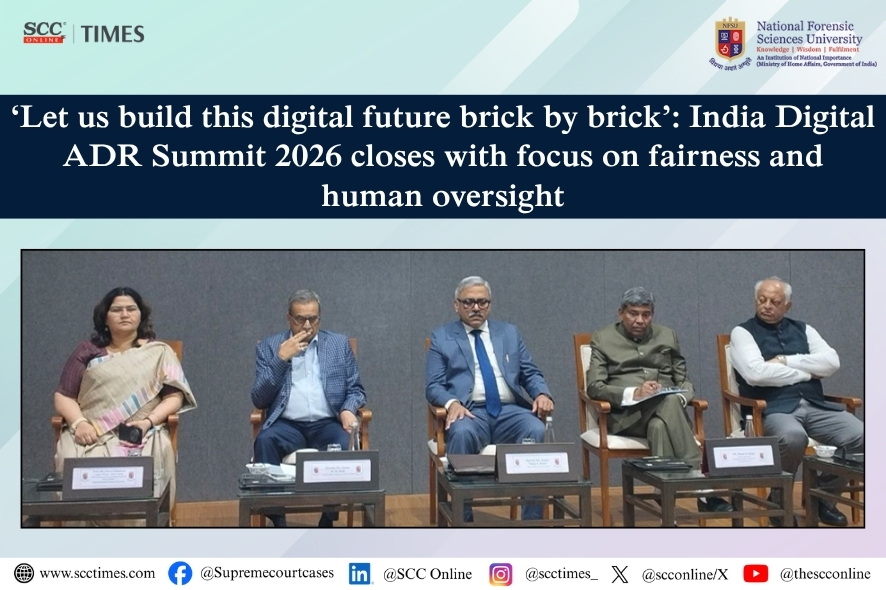
India Digital ADR Summit 2026: Human Oversight Key to Fairness
Summary
- The India Digital ADR Summit 2026 concluded with speakers emphasizing that technology should strengthen, not replace, human judgment, procedural fairness, and institutional accountability.
- Discussions at the summit highlighted the critical importance of fairness and human oversight in digital dispute resolution.
- Speakers advocated for fostering greater trust in both digital arbitration and online mediation.
- The event underscored the need for technology to enhance, rather not supplant, fundamental aspects of the justice system.
Key Takeaways from India Digital ADR Summit 2026
Speakers at the closing ceremony underscored a critical principle: technology's role is to enhance, not supplant, fundamental aspects of the justice system, specifically human judgment, procedural fairness, and institutional accountability.
The India Digital ADR Summit 2026 concluded with a strong emphasis from speakers at its valedictory ceremony on the foundational role of human elements in the evolving landscape of digital dispute resolution. A central message conveyed was that technological advancements should serve to fortify, rather than diminish, core principles such as human judgment, procedural fairness, and institutional accountability within alternative dispute resolution (ADR) mechanisms. This perspective underscores a cautious yet progressive approach to integrating technology into the justice system.
Throughout the summit, discussions consistently highlighted the paramount importance of fairness and robust human oversight within these evolving digital frameworks. Speakers collectively urged for the cultivation of greater trust in both digital arbitration India and online mediation India. This call for confidence reflects a recognition that while technology offers significant efficiencies, its successful adoption hinges on maintaining public and professional belief in the integrity and impartiality of digital processes. The summit therefore positioned technology as an enabler, not a replacement, for established legal and ethical standards.
The Evolving Landscape of Digital Dispute Resolution
The deliberations at the India Digital ADR Summit 2026 provide crucial insights into the trajectory of dispute resolution in the digital age, particularly concerning digital arbitration India and online mediation India. The emphasis on technology in ADR fairness signals a growing recognition that the mere implementation of digital tools is insufficient; these tools must be designed and deployed in a manner that upholds and enhances equitable outcomes. This involves careful consideration of how algorithms and automated processes interact with human decision-making and legal principles.
The discussions underscored the necessity of embedding human oversight digital dispute resolution to prevent unintended biases or errors that could arise from purely automated systems. This approach ensures that while efficiency gains are pursued, the fundamental rights and protections of parties remain paramount. The summit's focus on strengthening institutional accountability in a digital context further highlights the need for clear governance structures and mechanisms to address potential challenges in online dispute resolution environments.
Implications for the Future of ADR in India
The outcomes of the India Digital ADR Summit 2026 are highly significant for the future of ADR India, signaling a clear direction for the integration of technology. The consensus among speakers points towards a hybrid model where technological innovation is meticulously balanced with human expertise and ethical considerations. This balanced perspective is vital for building a sustainable and trustworthy digital ADR ecosystem that can effectively serve a diverse population.
Developing greater trust in digital arbitration and online mediation will be crucial for their widespread adoption and success. This trust can only be fostered by demonstrating that digital platforms are not only efficient but also fair, transparent, and subject to meaningful human review. The summit's conclusions suggest that stakeholders across the legal, technological, and governmental sectors must collaborate to construct a digital future for ADR brick by brick, ensuring that every step reinforces the core values of justice and accessibility.
Practical Implications
Lawyers and compliance officers should note the growing emphasis on integrating human oversight and fairness into digital ADR processes, indicating a future trend in dispute resolution that may require adapting current practices and advising clients on the evolving landscape of online dispute resolution mechanisms.
Source
How does this affect you?
Get an AI analysis of this article grounded in your jurisdictions, practice areas, and any policy documents you've uploaded to Wansom.
Finish Reading the Full Story and the Expert Analysis.
Get the latest legal & regulatory intelligence in India
Wansom is AI and can make mistakes.