
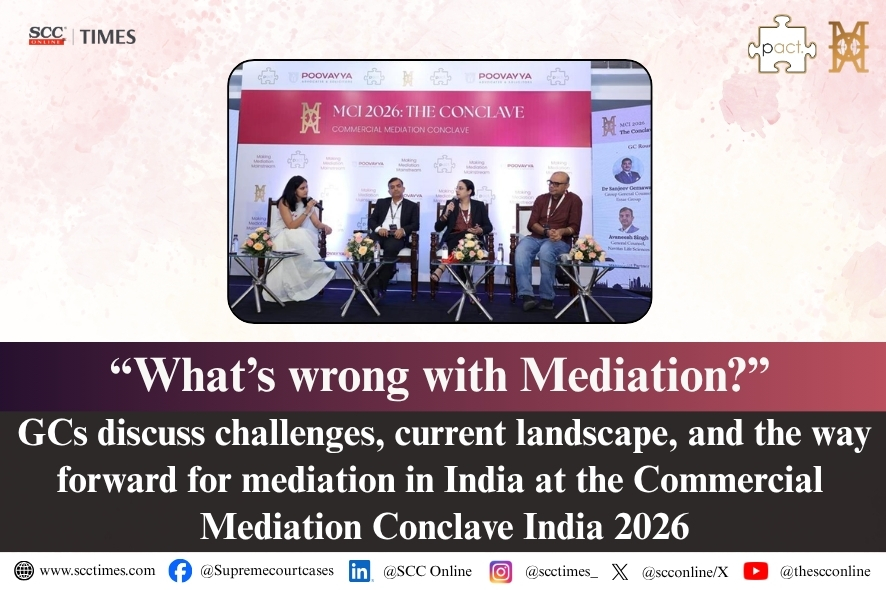
India Commercial Mediation Challenges 2026: GCs Discuss Adoption Barriers
Summary
- The Commercial Mediation Conclave India 2026 brought together general counsel and mediation service providers.
- The primary discussion focused on why mediation has not become the default method for high-value commercial disputes in India.
- Participants candidly explored the existing challenges and what systemic changes are necessary for broader adoption of mediation.
- The event, hosted by The PACT in collaboration with Obelisk Legal, aimed to chart a strategic "way forward" for commercial mediation in the country.
Overview of the Conclave
The discussions were geared towards understanding the specific India commercial mediation challenges 2026 presents, and what systemic or procedural shifts would be necessary to elevate mediation's role.
The Commercial Mediation Conclave India 2026 recently convened a significant roundtable discussion, bringing together prominent general counsel (GCs) and leading mediation service providers. This pivotal event, meticulously curated and hosted by The PACT in collaboration with Obelisk Legal, aimed to critically examine the current landscape of commercial dispute resolution in India. The central focus was a candid exploration into why mediation has yet to establish itself as the preferred or default mechanism for resolving high-value commercial disputes across the nation.
Participants at the conclave engaged in an open dialogue, seeking to identify the fundamental barriers preventing wider adoption of mediation. The discussions were geared towards understanding the specific India commercial mediation challenges 2026 presents, and what systemic or procedural shifts would be necessary to elevate mediation's role. This gathering underscored a collective recognition among legal professionals and service providers that despite its potential, commercial mediation in India faces significant hurdles that warrant urgent attention and strategic solutions. The insights shared by the General Counsel India mediation experts present offered a crucial perspective on the practical realities faced by corporations.
Current Hurdles in Commercial Mediation
The core of the conclave's agenda revolved around dissecting the reasons behind mediation's struggle to become the go-to method for resolving complex, high-stakes commercial disagreements. Despite the inherent advantages often associated with alternative dispute resolution, such as cost-effectiveness and speed, the roundtable participants acknowledged that these benefits have not translated into widespread adoption for significant commercial disputes within India. This candid assessment by GCs and service providers highlighted a gap between the theoretical promise of mediation and its practical application in the Indian legal ecosystem.
The discussions implicitly pointed towards various factors contributing to this challenge, ranging from perceptions of enforceability and finality to a potential lack of awareness or trust among corporate entities regarding the mediation process itself. The very premise of the conclave, encapsulated by its probing question, indicated a deep-seated concern among stakeholders about the efficacy and acceptance of current commercial dispute resolution India practices. Understanding these specific impediments is crucial for any meaningful reform or strategic push towards making mediation a more integral part of the country's legal framework.
Charting the Future of Mediation in India
Beyond identifying the existing challenges, a significant portion of the Commercial Mediation Conclave India 2026 was dedicated to envisioning the future of mediation India and outlining a strategic "way forward." The participants, including representatives from The PACT and Obelisk Legal, collectively sought to pinpoint the critical changes required to transform mediation from an alternative option into the default route for high-value commercial disputes. This forward-looking perspective emphasized the need for actionable strategies that could address the identified shortcomings.
The dialogue underscored that for mediation to gain traction, it would necessitate a multi-faceted approach, potentially involving legislative reforms, enhanced training for mediators, greater advocacy among legal professionals, and a concerted effort to build confidence in the process among corporate clients. The consensus was that only through such deliberate and comprehensive interventions could the landscape of commercial dispute resolution in India truly evolve, positioning mediation as a primary and trusted mechanism. The insights from this conclave are expected to inform future policy discussions and industry initiatives aimed at strengthening the role of PACT Obelisk Legal mediation services and similar offerings in the country.
Practical Implications
Lawyers advising on commercial disputes in India should be aware of the current challenges and future outlook for mediation, as discussed by GCs, to better strategize dispute resolution options for their clients. This insight helps anticipate potential shifts in dispute resolution preferences and regulatory frameworks.
Source
Source: Original reporting via SCC Times
How does this affect you?
Get an AI analysis of this article grounded in your jurisdictions, practice areas, and any policy documents you've uploaded to Wansom.
Finish Reading the Full Story and the Expert Analysis.
Get the latest legal & regulatory intelligence in India
Wansom is AI and can make mistakes.