
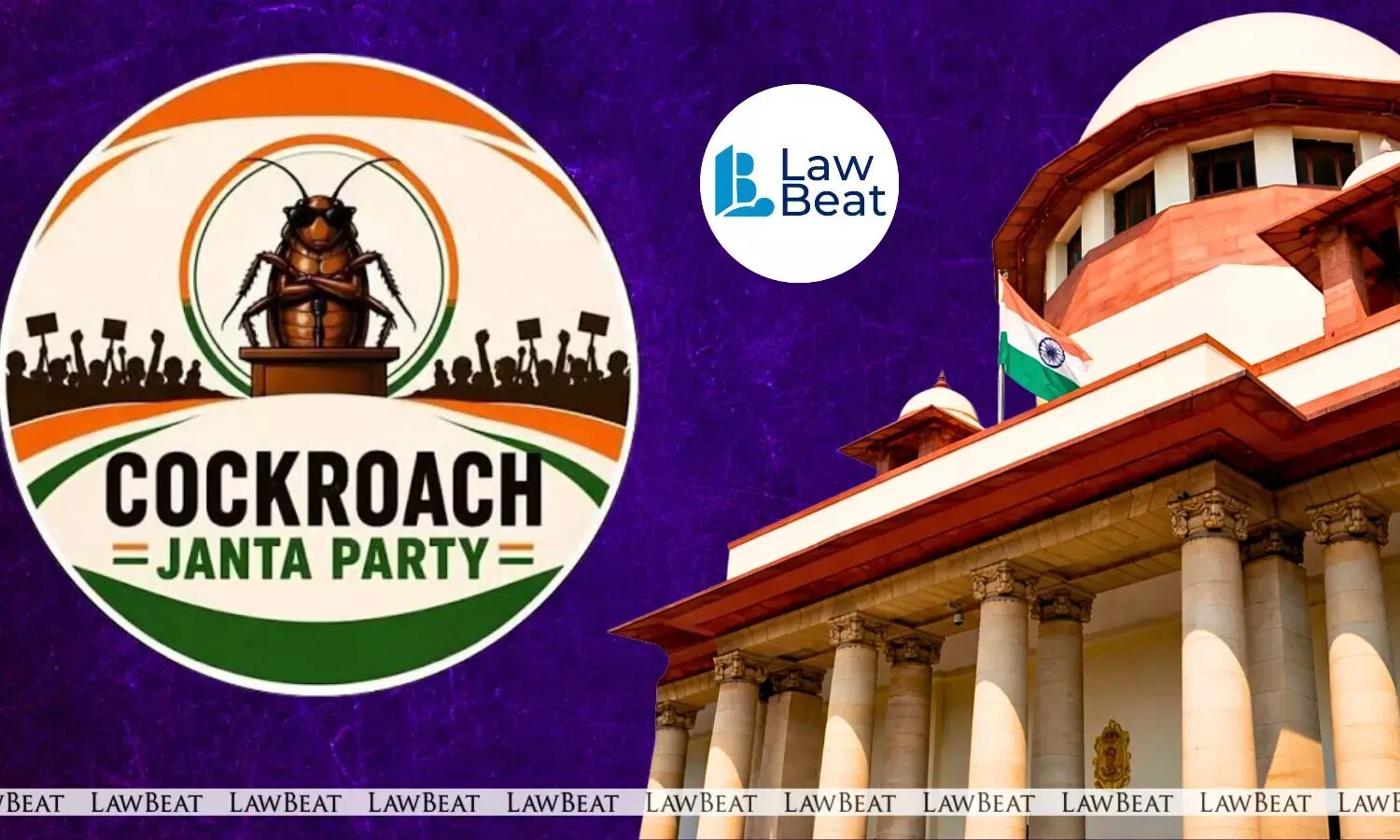
India: CJP Campaign Tests Digital Satire, Judicial Sanctity Boundaries
Home / Articles Independence And The Law: How The CJP Campaign Tests The Boundary Between Digital Satire And Judicial Sanctity X With the CJP campaign, concerns have been raised over viral memes and commercial exploitation of courtroom proceedings. The judiciary occupies a unique constitutional position, requiring its dignity and independence to be protected and thus satire targeting courts should be distinguished from deliberate attempts to undermine judicial authority. The intersection of live-streamed justice and digital free speech has triggered a critical constitutional debate over the boundaries of public accountability and judicial sanctity. The Supreme Court's recent formal notice on a PIL targeting the viral ' Cockroach Janta Party ' (CJP) campaign presents a dual challenge: safeguarding the citizen's democratic right to political satire while protecting the institutional integrity of the nation's highest court from systematic, commercialised distortion. On August 11, 2026, notice was issued in a PIL (Raja Choudhary v. Union of India & Ors. ) filed before the Supreme Court in which concerns were raised over the commercial exploitation of court footage and the prevalence of fake advocates. The petition specifically raised alarms regarding the "Cockroach Janta Party" campaign using stripped courtroom observations for monetisation and called for a CBI probe into fake legal credentials. This stems from the proceedings held on May 15, 2026 in Sanjay Dubey vs Registrar General, High Court of Delhi & Anr. , during which certain metaphorical expressions, including the word “cockroach”, were allegedly used in the course of courtroom exchanges concerning procedural misuse of courts, Senior Advocate designations, and declining professional standards within the legal system. Concerns have been raised over activities allegedly associated with a so-called “Cockroach Janta Party,” claiming that courtroom exchanges are being converted into “digitally marketable content, political symbolism and viral commodities.” As constitutional courts today increasingly operate within “digital ecosystems governed by outrage algorithms, trolling cultures, meme warfare, emotional mobilisation and monetised virality,” where does one draw the line on criticism of the judiciary, satire, or constitutionally protected free speech under Article 19(1)(a) . Constitutional morality in the digital era requires preservation of institutional dignity, contextual interpretation, responsible public discourse, and ethical dissemination of judicial proceedings. The Right To Satire: Upholding Democratic Criticism Under Article 19(1)(a) Freedom of speech in India is a fundamental right guaranteed under Article 19(1)(a) of the Constitution. Free speech is essential to democracy, individual liberty and informed public debate. In a vibrant democracy, oral observations made by judges in open court are public data. Citizens, digital creators, and political commentators have a fundamental right under Article 19(1)(a) to use humor, memes, and satire to critique or highlight institutional statements. Satire is a historically protected tool used to speak truth to power. Restricting how the public reacts to open-court dialogue could risk chilling public discourse and reducing the transparency that live-streaming was originally meant to bring. A judge may face criticism or disagreement, but criticism must remain within permissible bounds and should not undermine the dignity or functioning of the judiciary. The CJP controversy raises an important constitutional question: Where does legitimate criticism or satire of judicial remarks end, and contempt of court begin? The creation of the CJP as a satirical response also illustrates how courtroom remarks can enter the wider public sphere and become subjects of political or social commentary. The Duty To Protect: Safeguarding Judicial Integrity From Algorithmic Distortion Major concerns revolve around courtroom exchanges being convert
How does this affect you?
Get an AI analysis of this article grounded in your jurisdictions, practice areas, and any policy documents you've uploaded to Wansom.
Wansom is AI and can make mistakes.