
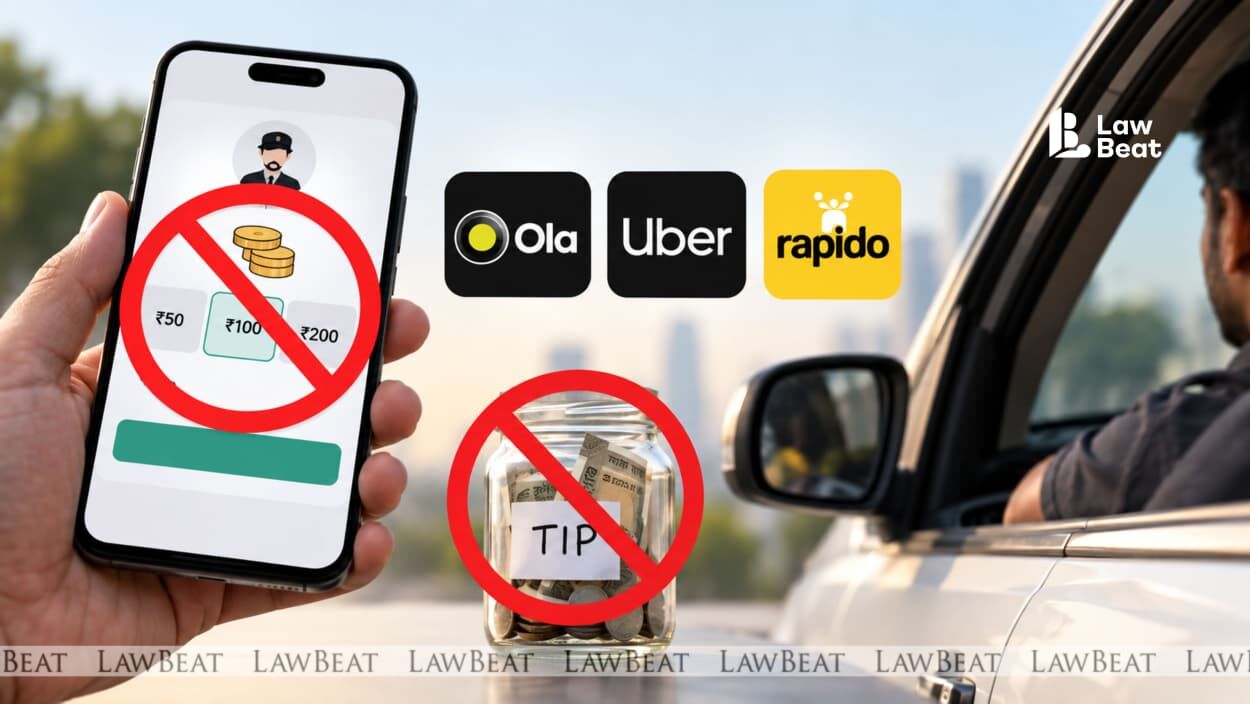
India Centre: Bans Advance Tipping on Ride-Hailing Apps
Summary
- India's Centre has directed cab aggregators to stop advance tipping prompts, labeling them as misleading and an unfair trade practice.
- This directive follows a Rs 10 lakh penalty imposed by the CCPA on Rapido for 'Confirm Shaming' dark patterns, which coerced passengers into paying more for rides.
- Rapido's app displayed prompts like 'Higher the price, higher the chance of getting a ride' and manipulated fare algorithms, creating an impression that additional payment was necessary to secure a booking.
- The CCPA classified these practices under the Guidelines for Prevention and Regulation of Dark Patterns, 2023, emphasizing that tipping must be voluntary and occur after a ride.
- Investigations into the business practices of other major ride-hailing platforms, including Uber and Ola, are currently underway.
India Bans Advance Tipping on Ride-Hailing Apps
The Indian government has issued a directive to cab aggregators, instructing them to cease the practice of prompting passengers for advance tips.
The Indian government has issued a directive to cab aggregators, instructing them to cease the practice of prompting passengers for advance tips. This move comes as the Centre deems such prompts to be both misleading and an unfair trade practice, signaling a significant shift in regulatory oversight for the ride-hailing sector.
This decisive action follows closely on the heels of a substantial penalty levied against ride-hailing platform Rapido. Investigations into the business practices of other major players, including Uber and Ola, are also actively underway, indicating a broader scrutiny across the industry. Consumer Affairs Secretary Nidhi Khare, who also heads the Central Consumer Protection Authority (CCPA), highlighted that the directive was prompted by numerous complaints received via the National Consumer Helpline. These complaints detailed instances where consumers were presented with an 'advance tip' option even before their ride commenced, creating an impression that payment was necessary to secure a booking.
Khare emphasized that the practice was found to be deceptive and constituted an unfair trade practice after a thorough investigation. The CCPA has since ordered the discontinuation of these built-in mechanisms, asserting that tipping should remain an entirely voluntary decision made by passengers after their journey is completed, rather than a prerequisite for obtaining a ride.
Rapido Penalized for 'Confirm Shaming' Dark Patterns
The Central Consumer Protection Authority (CCPA) recently imposed a penalty of Rs 10 lakh on Roppen Transportation Services Pvt Ltd, the operator of the Rapido ride-hailing platform. This fine was a direct consequence of a range of practices, most notably prompts that encouraged passengers to increase the fare they were willing to pay while their booking requests were still being processed. The CCPA's examination revealed that Rapido's app displayed messages such as "Higher the price, higher the chance of getting a ride" and "Captains aren't accepting at Rs 60. Try adding +10, +20, +30" even before a booking was confirmed.
Further scrutiny by the regulator exposed how Rapido's fare algorithm functioned. It would initially quote a fare to the rider, but after the rider accepted, the app would then prompt them to pay more, citing drivers' unwillingness to accept the original amount. The CCPA concluded that these prompts created a false impression that consumers needed to pay extra to improve their chances of securing a driver, even after they had already agreed to the initially quoted fare. This practice was specifically classified as 'Confirm Shaming,' a type of dark pattern explicitly identified under the Guidelines for Prevention and Regulation of Dark Patterns, 2023.
The authority elaborated that 'Confirm Shaming' creates a sense of urgency and fear of losing the ride if the consumer does not agree to pay more, thereby coercing them into additional payments. The CCPA also noted that the fare initially displayed to a passenger already incorporates all relevant factors, including distance, travel time, traffic conditions, tolls, and the amount payable to the driver, leaving no legitimate justification for demanding an additional sum for the same journey before the ride has even begun.
Legal Context and Broader Industry Scrutiny
The CCPA's actions against Rapido and the subsequent government directive underscore the increasing regulatory focus on digital consumer practices in India. The penalty on Rapido and the broader ban on advance tipping prompts are rooted in the Guidelines for Prevention and Regulation of Dark Patterns, 2023. These guidelines provide a framework for identifying and penalizing deceptive user interface designs that manipulate consumer choices, with 'Confirm Shaming' being a key example.
Consumer Affairs Secretary Nidhi Khare reiterated that tipping should be a completely voluntary act, decided by the passenger after the service is rendered, rather than a mechanism presented as a way to secure a ride. This stance reinforces the government's commitment to protecting consumers from unfair trade practices by cab aggregators. The CCPA had previously issued notices to several platforms, including Uber, Ola, Rapido, and Namma Yatri, directing them to ensure compliance with the 2023 Dark Patterns Guidelines.
The government's examination of the ride-hailing sector extends beyond Rapido. Khare confirmed that the business practices of other prominent platforms, Uber and Ola, are also under active investigation. This ongoing scrutiny signals a clear message to all digital service providers in India: consumer-facing digital practices must adhere strictly to fair trade principles and avoid any form of manipulative 'dark patterns' that exploit consumer vulnerabilities.
Practical Implications
Compliance officers for ride-hailing platforms in India must immediately review and update their app interfaces to remove any advance tipping prompts, as the CCPA is actively enforcing against 'unfair trade practices' and 'dark patterns' under the 2023 guidelines. This directive signals increased regulatory scrutiny on consumer-facing digital practices.
Source
How does this affect you?
Get an AI analysis of this article grounded in your jurisdictions, practice areas, and any policy documents you've uploaded to Wansom.
Finish Reading the Full Story and the Expert Analysis.
Get the latest legal & regulatory intelligence in India
Wansom is AI and can make mistakes.