
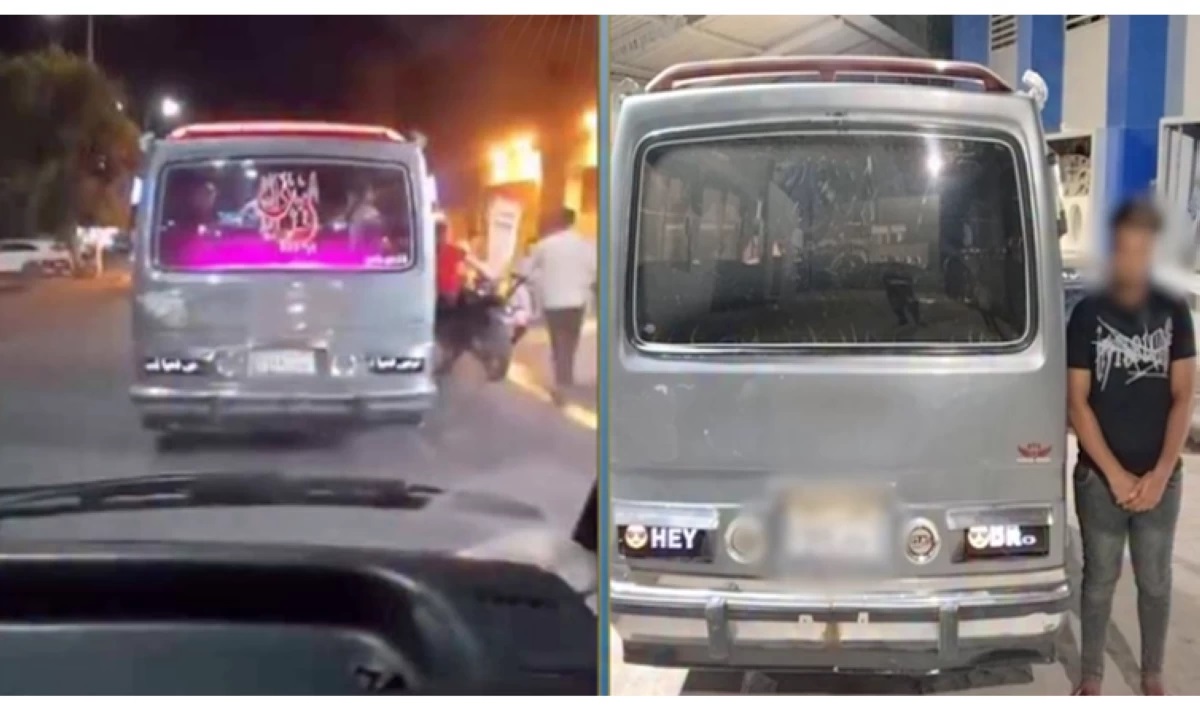
Giza Security Forces: Imbaba Microbus Driver Arrested For Israel Slogan
Summary
- Giza security forces arrested a microbus driver from al-Warraq district.
- The arrest followed online videos showing his microbus displaying "offensive banners," including "Long Live Israel."
- The driver confessed to committing the act on September 4.
- The incident highlights strict enforcement of public order laws and limits on freedom of expression in Egypt.
The Arrest in Imbaba
This incident underscores the potential for swift legal action under Egyptian public order laws against individuals displaying politically sensitive or provocative messages in public.
Giza security forces recently took swift action following the widespread circulation of controversial online videos depicting a microbus adorned with provocative messages. The footage, which garnered significant attention, showed the vehicle displaying banners deemed offensive, notably one proclaiming 'Long Live Israel.' This incident, centered in the Giza Governorate, prompted an immediate investigation by local authorities.
Investigators successfully identified the specific microbus involved in the incident. Their efforts quickly led to the apprehension of the driver, a resident hailing from the al-Warraq district. The individual was taken into custody for questioning regarding the public display.
During subsequent interrogation, the driver reportedly confessed to having committed the act. The incident itself occurred on September 4, according to the details revealed by the Giza security forces. This rapid response underscores the vigilance of authorities in addressing public displays that could be perceived as disruptive or politically charged.
Legal Context and Public Order
The display of such a banner, particularly the 'Long Live Israel' slogan, in a public setting within Egypt, falls squarely within the purview of potential public order violations. Egyptian law maintains strict boundaries regarding public expression, especially concerning politically sensitive or controversial messages that could be interpreted as inciting unrest or offending national sentiment. The swift arrest of the Imbaba microbus driver for displaying this slogan highlights the government's low tolerance for perceived provocations.
Authorities, including the Giza security forces, are empowered to act decisively when public displays are deemed to transgress these established norms. The characterization of the banners as 'offensive' by the security forces themselves indicates a clear official stance on the nature of the message conveyed. This incident serves as a stark reminder of the limits on freedom of expression in Egypt, where certain topics, particularly those touching upon foreign relations or national identity, are subject to intense scrutiny and potential legal repercussions.
Individuals engaging in acts that might be considered a 'prank,' as the incident was described in some initial reports, can still face serious legal consequences if those actions are interpreted as undermining public order or national security. The confession obtained during questioning further solidifies the legal basis for the actions taken against the driver, demonstrating the direct link between public display and accountability under Egyptian statutes.
Broader Implications
The case of the Al-Warraq microbus driver and his arrest for displaying an 'offensive banner' like 'Long Live Israel' carries significant broader implications for public conduct and expression in Egypt. It vividly illustrates how quickly online content can trigger real-world legal consequences, with controversial videos shared online serving as direct evidence for law enforcement. This incident underscores the potential for swift legal action under Egyptian public order laws against individuals displaying politically sensitive or provocative messages in public.
This event reinforces the understanding that even seemingly isolated acts of public expression, particularly those involving sensitive geopolitical statements, are closely monitored and can lead to immediate intervention by authorities. The involvement of Giza security forces in identifying the vehicle and apprehending the individual demonstrates the state's capacity and willingness to enforce its regulations concerning public displays. The outcome of this particular case, culminating in a confession, sends a clear message about the risks associated with public displays that challenge prevailing political or social norms within the country. It highlights the strict enforcement of Egypt's freedom of expression limits.
Practical Implications
This incident underscores the potential for swift legal action under Egyptian public order laws against individuals displaying politically sensitive or provocative messages in public. Legal professionals should advise clients on the strict boundaries of public expression to mitigate risks of arrest and prosecution.
Source
How does this affect you?
Get an AI analysis of this article grounded in your jurisdictions, practice areas, and any policy documents you've uploaded to Wansom.
Finish Reading the Full Story and the Expert Analysis.
Wansom is AI and can make mistakes.