
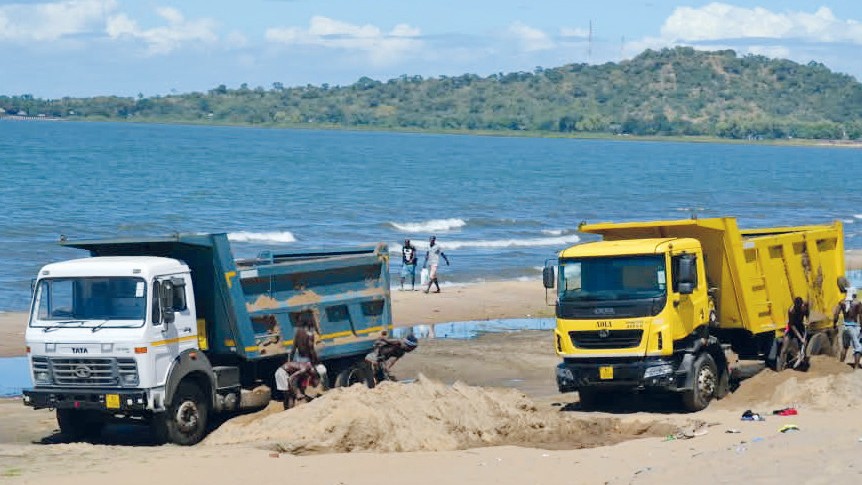
Illegal Sand Mining Raids Lake Malawi Shores
Unregulated sand mining is reportedly occurring along parts of Senga Bay in Salima, Malawi, specifically at Kambiri Point, where freshly extracted sand is being stockpiled for construction sites. This activity, described as a 'raid' on Lake Malawi, highlights a pressing environmental and regulatory challenge impacting one of Africa's largest freshwater bodies and a UNESCO World Heritage Site. The visual evidence of piles of sand awaiting transport underscores the scale and ongoing nature of the extraction.
This issue carries profound legal significance, primarily concerning environmental protection, natural resource management, and regulatory enforcement. Illegal sand mining leads to severe shoreline erosion, habitat destruction for aquatic life, and degradation of water quality, all of which violate Malawi's environmental laws. Economically, it represents an unregulated industry that deprives the state of potential revenue through licenses and taxes, while also creating unfair competition for legitimate businesses operating within environmental guidelines. For legal practitioners, this situation signals a high potential for environmental litigation, enforcement actions by regulatory bodies, and public interest advocacy aimed at protecting Lake Malawi.
The legal context for addressing such environmental degradation in Malawi is primarily governed by the Environmental Management Act, which provides a framework for the sustainable management and protection of the environment and natural resources. Other relevant legislation may include the National Parks and Wildlife Act, if the affected areas fall within protected zones, and local government by-laws that regulate mining and land use. The Department of Environmental Affairs, local councils, and the Malawi Police Service are the primary enforcement agencies responsible for preventing and prosecuting illegal extraction activities. The issue also touches upon international environmental conventions to which Malawi is a signatory, given Lake Malawi's international significance.
The key parties involved, as implied by the excerpt, include unidentified sand miners operating in Senga Bay and Kambiri Point, local communities affected by the environmental degradation, and potentially various government agencies responsible for environmental protection and law enforcement. While no specific companies or individuals are named as perpetrators, the scale of the operation suggests organized activity. The article itself serves as a public alert, implicitly calling upon regulatory bodies to intervene and enforce existing laws.
Attorneys should advise clients involved in construction, infrastructure development, or resource extraction to conduct thorough due diligence regarding the sourcing of materials, ensuring strict compliance with all environmental permits and regulations. Environmental law practitioners should be prepared for potential enforcement actions, public interest litigation, or calls for legislative reform to strengthen protections for Lake Malawi. Businesses operating in the vicinity of the lake should review their environmental impact assessments and ensure sustainable practices to avoid complicity in or contribution to such destructive activities. This situation underscores the critical need for robust environmental governance and enforcement in Malawi.
How does this affect you?
Get an AI analysis of this article grounded in your jurisdictions, practice areas, and any policy documents you've uploaded to Wansom.
Finish Reading the Full Story and the Expert Analysis.
Wansom is AI and can make mistakes.