
IEA: Rejects Ghana Presidential Term Extension, Citing Ample 4-Year Mandate
Summary
- The Institute of Economic Affairs (IEA) has rejected a proposal to extend Ghana's presidential and parliamentary terms from four to five years.
- Former Chief Justice and IEA Fellow, Justice Sophia Akuffo, stated there is no compelling evidence to justify the extension, emphasizing that four years is sufficient.
- The Prempeh Committee recommended the five-year term, and the government has accepted this proposal, citing a need for more time for policy implementation.
- The IEA argues that governments should be prepared to implement programs immediately upon taking office and criticizes delays in appointing key officials.
- The institute suggests that policy discontinuity may be due to weak institutions or poor planning, not solely the four-year electoral cycle, and recommends strengthening the National Development Planning Commission.
IEA Rejects Presidential Term Extension
The Institute of Economic Affairs (IEA) in Ghana has publicly opposed a proposal to prolong the terms of both the President and Members of Parliament from the current four years to five.
The Institute of Economic Affairs (IEA) in Ghana has publicly opposed a proposal to prolong the terms of both the President and Members of Parliament from the current four years to five. The prominent think tank asserts that the existing four-year presidential mandate offers ample time for any administration to effectively implement its agenda and deliver on its promises to the populace. This stance directly challenges a recommendation from the Prempeh Committee, which advocated for the extension, a suggestion that has since been accepted by the government.
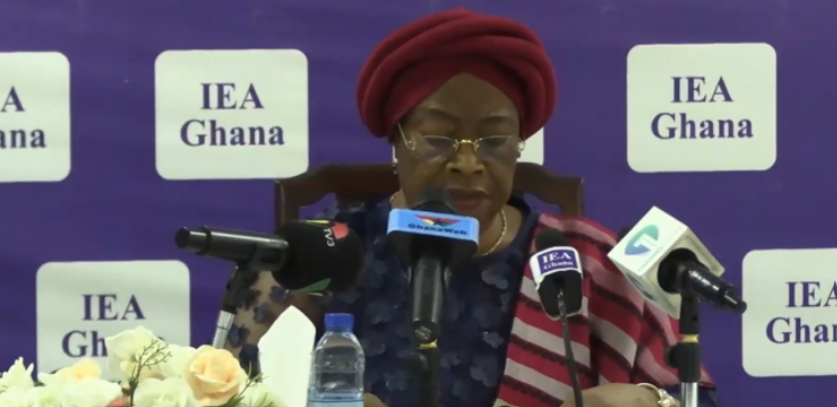
Former Chief Justice and IEA Fellow, Justice Sophia Akuffo, articulated the institute's position during a press briefing. She emphasized a lack of compelling evidence to justify an extension of the current term limits. Her remarks preceded an IEA seminar, part of its "Views and Reflections" series, which is dedicated to scrutinizing the Prempeh Committee's recommendations and the government's official stance on proposed constitutional reforms. The IEA's firm rejection underscores a broader debate on Ghana constitutional reform term limit.
Arguments for and Against Longer Terms
The government's acceptance of the Prempeh Committee term extension recommendation is predicated on the belief that an additional year would provide administrations with more time to formulate, implement, and thoroughly assess their policies. However, the Institute of Economic Affairs maintains that political parties and prospective governments should undertake all necessary preparations before assuming office, enabling them to commence program implementation immediately upon inauguration. Justice Sophia Akuffo, in particular, stressed the importance of readiness, stating that preparation should occur even before vying for power, ensuring that an administration is fully operational from day one.
Justice Akuffo also criticized the common delays in appointing ministers and other crucial officials, arguing that such protracted processes significantly reduce the effective time available for governments to execute their programs. She highlighted past experiences where ministerial appointments have taken as long as six months, thereby eroding a substantial portion of the Ghana four-year presidential mandate. The IEA's position suggests that these internal inefficiencies, rather than the length of the term itself, are often the true impediments to effective governance.
Balancing Accountability and Policy Continuity
The IEA frames the debate over the proposed five-year term as a critical balancing act between ensuring effective policy implementation and upholding democratic accountability. While proponents of a longer mandate argue it would facilitate the execution of long-term national development programs, the IEA counters that shorter electoral cycles are vital for strengthening citizens' ability to hold elected officials accountable for their performance. This perspective suggests that a more frequent opportunity to vote reinforces the democratic contract.
The Institute of Economic Affairs Ghana further questions whether policy discontinuity is genuinely a consequence of the four-year electoral cycle. Instead, it posits that such disruptions might stem from deeper issues, including weak institutional frameworks, inadequate planning, or the tendency of successive governments to abandon or significantly redesign programs initiated by their predecessors. To address these challenges, the IEA proposes that any consideration of a term extension should be coupled with concerted efforts to strengthen the National Development Planning Commission (NDPC). They argue that a credible, long-term national development framework could empower successive governments to implement substantial programs within the existing four-year mandates, fostering a consistent national development direction regardless of changes in political leadership.
Practical Implications
Lawyers and compliance officers should monitor the ongoing debate regarding Ghana's presidential and parliamentary term limits, as any constitutional amendment could significantly impact policy stability, regulatory predictability, and the long-term planning horizons for businesses and government contracts.
Source
How does this affect you?
Get an AI analysis of this article grounded in your jurisdictions, practice areas, and any policy documents you've uploaded to Wansom.
Finish Reading the Full Story and the Expert Analysis.
Get the latest legal & regulatory intelligence in Ghana
Wansom is AI and can make mistakes.