
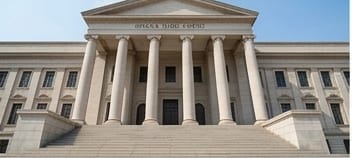
ICC: Ali Kushayb Reparations Hearing: Victims Invited to Submit Claims
Summary
- Sudan faces a severe humanitarian crisis due to prolonged drought, leading to widespread crop failure and livestock deaths in Darfur and Kordofan.
- The crisis is exacerbated by ongoing conflict, economic collapse, and high agricultural input costs, prompting warnings of widespread famine from the Tas'is government.
- An international Quintet, including the African Union and UN, will visit Khartoum next week for political consultations aimed at restoring democratic civilian rule.
- UN Envoy Pekka Haavisto recently met with Sudanese leaders, urging military de-escalation, civilian protection, and prisoner exchanges.
- The International Criminal Court has begun a reparations hearing for victims of Darfur commander 'Ali Kushayb'.
Sudan Grapples with Deepening Humanitarian Crisis
The International Criminal Court (ICC) has commenced a hearing focused on reparations for victims of Darfur commander 'Ali Kushayb'.
Sudan is currently facing a severe humanitarian crisis, exacerbated by a prolonged lack of rainfall across its Darfur and Kordofan regions. This drought has led to widespread crop failure and significant livestock deaths, intensifying a food crisis already made critical by ongoing conflict and economic instability. Farmers in West Kordofan, East Darfur, and North Darfur have reported dry spells exceeding a month, devastating essential rain-fed crops such as millet, peanuts, and okra, with local observers noting that many crops are now beyond recovery even if precipitation returns. This agricultural devastation is forcing rural populations away from traditional self-sufficiency and into reliance on markets, at a time when war has severely disrupted supply chains, caused acute goods shortages, and devalued the Sudanese pound.
The crisis extends to the pastoral sector, where dwindling pastures and scarce water sources have weakened livestock, resulting in animal fatalities and stripping families of vital food and income. Further compounding these challenges, the Forces for Radical Change—a coalition comprising Sudanese political parties, civil society organizations, and trade unions—has highlighted that agricultural production is severely hampered by shortages of electricity, fuel, and irrigation, alongside prohibitively high input costs. The coalition has urgently called for an immediate declaration of an agricultural emergency plan, advocating for the repair of irrigation facilities, reduction of fees, and securing preparations for the upcoming winter season.
In response to the escalating disaster, Mohamed Hassan Al-Ta'aishi, who serves as Prime Minister of the Tas'is government in areas controlled by the Rapid Support Forces (RSF), dispatched an urgent letter to UN Secretary-General António Guterres. His communication warned of impending widespread famine and pressed for early, coordinated international action. Al-Ta'aishi cautioned that the deteriorating climate, productivity, and humanitarian indicators within Sudan pose a significant risk of spilling over into neighboring countries, a concern echoed by joint statements from local advocacy organizations. These groups have warned that a failure to intervene proactively will plunge millions deeper into severe hunger in the coming months.
International Community Ramps Up Peace Efforts
In a concerted push to restore Sudan's trajectory toward a democratic civilian government, a high-level international coalition known as the Quintet is scheduled to visit Khartoum next week. This influential group comprises the African Union, IGAD, the Arab League, the European Union, and the United Nations. Their three-day mission, set to run from Tuesday to Thursday, aims to conduct direct political consultations, assess the prevailing political and security situation on the ground, and articulate the group's strategic vision for a unified mediation framework.
The Quintet has confirmed its close coordination with the Quartet Dialogue Group, which includes the United States, Saudi Arabia, Egypt, and the United Arab Emirates, to ensure alignment of international efforts aimed at resolving the ongoing conflict. This diplomatic initiative follows a series of engagements by Pekka Haavisto, the UN Secretary-General's Personal Envoy to Sudan, who recently concluded talks in Khartoum. During these discussions, Haavisto met with key figures including Sovereignty Council Chairman Lt-Gen Abdel Fattah al-Burhan, Darfur Governor Minni Arko Minawi, and Finance Minister Jibril Ibrahim, urging immediate military de-escalation, enhanced civilian protection, and prisoner exchanges.
ICC Ali Kushayb Reparations Hearing Commences
In a significant development for international justice, the International Criminal Court (ICC) has commenced a hearing focused on reparations for victims of Darfur commander 'Ali Kushayb'. This crucial proceeding marks a step towards addressing the profound suffering endured by those affected by the actions attributed to the commander during the Darfur conflict. The ICC Ali Kushayb reparations hearing underscores the ongoing commitment to ensuring accountability for grave international crimes and providing a measure of justice to survivors.
Source
How does this affect you?
Get an AI analysis of this article grounded in your jurisdictions, practice areas, and any policy documents you've uploaded to Wansom.
Finish Reading the Full Story and the Expert Analysis.
Get the latest legal & regulatory intelligence in Sudan
Wansom is AI and can make mistakes.