
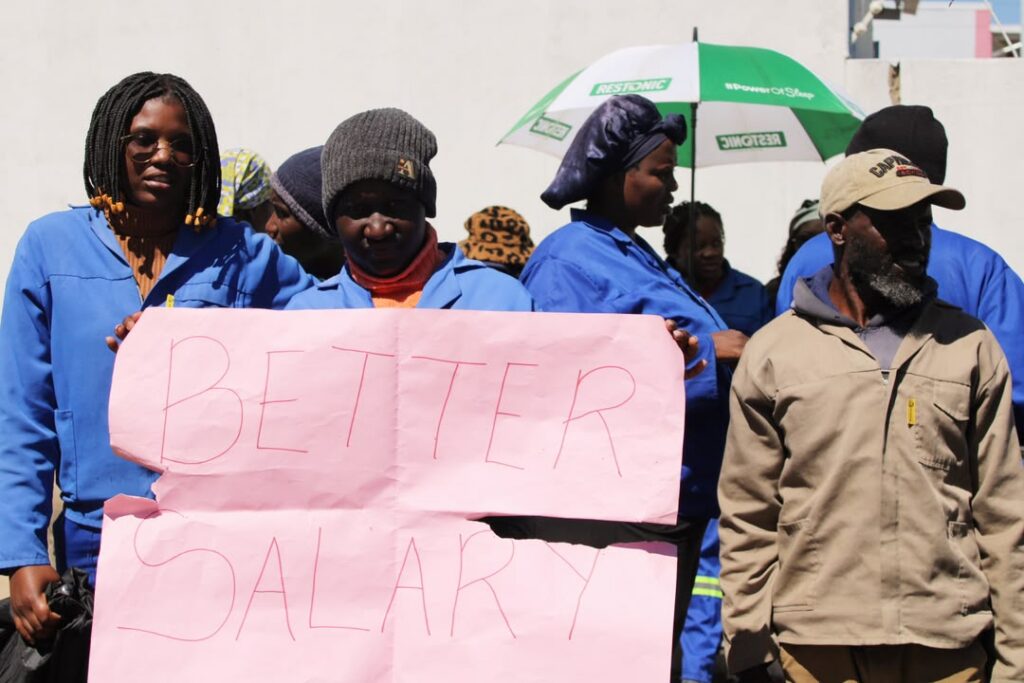
Howard House Manufacturing: Strike Security Namibia During Naretu Dispute
Summary
- Snack company Howard House Manufacturing deployed security after union representatives attempted to remove workers from its factory.
- The incident occurred during an industrial dispute stemming from months of failed wage negotiations with the Namibian Revolutionary Transport and Manufacturing Union (Naretu).
- Howard House Manufacturing initiated a lockout on a Friday, the same day employees resolved to strike, but stated it allowed union access.
- The company justified the security intervention as necessary to manage the situation.
What Happened
The incident at Howard House Manufacturing underscores the critical legal considerations for employers regarding the lawful deployment of security personnel during industrial action in Namibia, particularly concerning union access and worker removal.
Snack producer Howard House Manufacturing recently engaged security personnel to intervene during an industrial dispute in Namibia, following an attempt by representatives of the Namibian Revolutionary Transport and Manufacturing Union (Naretu) to remove workers from the company's factory. The company maintained that the deployment of security was a necessary step to manage the situation and ensure order on its premises.
This incident is set against a backdrop of prolonged and unsuccessful wage negotiations between Howard House Manufacturing and Naretu. These discussions ultimately led to the employees resolving to initiate a strike action on a recent Friday. In response to the impending industrial action, Howard House Manufacturing implemented a lockout on the same Friday, affecting its workforce. Despite the lockout, the company indicated that it had permitted union access to its premises, suggesting a nuanced approach to managing the industrial action.
The specific catalyst for the security intervention was the reported effort by Naretu representatives to facilitate the departure of workers from the factory. This action prompted Howard House Manufacturing to call upon its security detail, reinforcing the company's stance that such measures were essential for maintaining control and protecting its operations amidst the ongoing industrial action. The events highlight the complex challenges employers face in ensuring workplace security during strike actions in Namibia.
Legal and Regulatory Context
The deployment of security personnel during an industrial dispute, such as the Howard House Manufacturing strike security Namibia incident, critically examines the delicate balance between employer rights and union activities under Namibian labour law. Employers generally possess the right to safeguard their property, maintain essential services, and protect non-striking employees during a strike or lockout. However, these rights are not absolute and must be exercised in a manner that respects the legitimate functions of trade unions and the rights of striking workers.
Namibia's labour legislation provides a comprehensive framework for industrial action, encompassing regulations concerning picketing, access to premises, and the general conduct of all parties involved in disputes. While unions, including the Namibian Revolutionary Transport and Manufacturing Union, are legally entitled to organize and communicate with their members, attempts to physically remove workers from a factory during a lockout or strike can raise significant questions regarding the permissible scope of union activity. Conversely, any use of security by the employer must be proportionate and must not infringe upon the rights of union representatives or workers to engage in protected industrial action.
This incident at Howard House Manufacturing underscores the critical legal considerations for employers regarding the lawful deployment of security personnel during industrial action in Namibia, particularly concerning union access and worker removal. Actions taken by security that are perceived as excessive, intimidating, or designed to obstruct legitimate union activities could potentially lead to claims of unfair labour practice. Therefore, employers must ensure that their security protocols during an industrial dispute are meticulously aligned with the provisions of Namibian labour law to mitigate risks of unfair labour practice claims and foster constructive industrial relations.
Why It Matters
The recent events at Howard House Manufacturing serve as a potent reminder of the inherent complexities in managing industrial disputes within Namibia, especially when security measures become a central point of contention. The incident highlights the potential for disputes to escalate when the actions of either party are perceived to exceed legal boundaries, emphasizing the paramount importance of clear communication and strict adherence to established labour relations protocols. Such situations can severely strain industrial relations, potentially leading to protracted legal battles that impact both the company's operational continuity and the livelihoods of its employees.
For employers operating in Namibia, this case underscores the imperative of having robust and legally compliant strike contingency plans. These plans must explicitly define the role and conduct of workplace security during strike actions and lockouts, ensuring that any interventions are strictly within the confines of Namibian labour law. A failure to do so can expose companies to significant legal challenges, including allegations of unfair labour practices, which can result in substantial financial penalties and damage to corporate reputation.
Ultimately, the Howard House Manufacturing lockout and the subsequent security intervention highlight the delicate balance required to navigate industrial disputes effectively. It reinforces the importance of legal counsel reviewing clients' strike contingency plans to ensure compliance with Namibian labour laws and mitigate risks of unfair labour practice claims. Maintaining a clear understanding of employer rights during strike Namibia and the permissible scope of security operations is crucial for fostering stable industrial relations and resolving disputes constructively.
Practical Implications
This incident highlights the critical legal considerations for employers regarding the lawful deployment of security personnel during industrial action in Namibia, particularly concerning union access and worker removal. Legal counsel should review their clients' strike contingency plans to ensure compliance with Namibian labour laws and mitigate risks of unfair labour practice claims.
Source
How does this affect you?
Get an AI analysis of this article grounded in your jurisdictions, practice areas, and any policy documents you've uploaded to Wansom.
Finish Reading the Full Story and the Expert Analysis.
Get the latest legal & regulatory intelligence in Namibia
Wansom is AI and can make mistakes.