
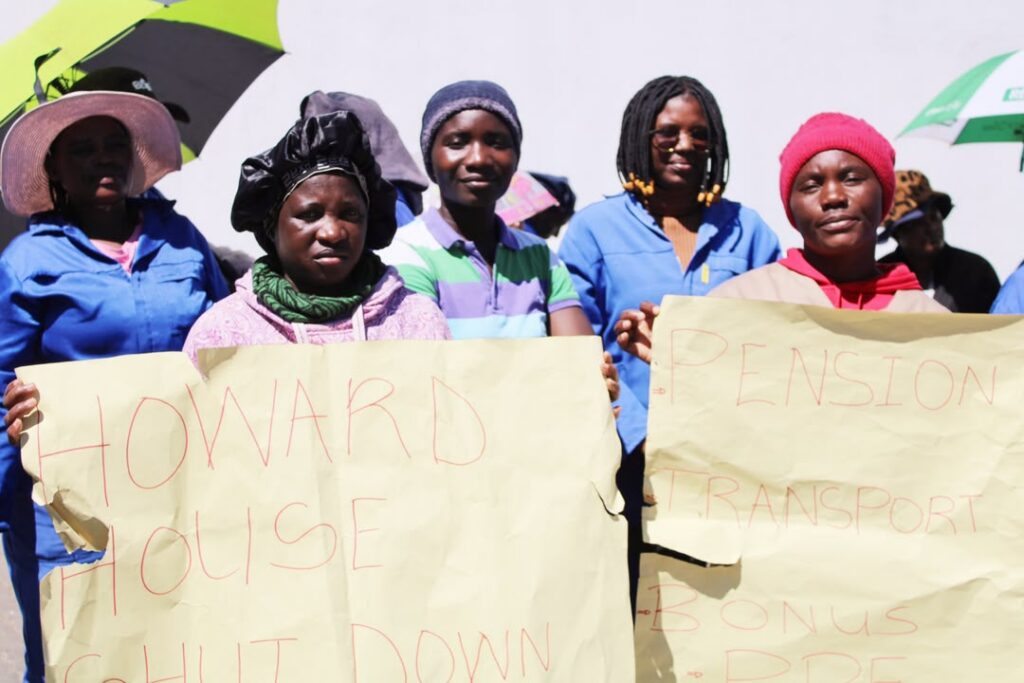
Howard House Manufacturing: Armed Guards Strike Sparks Legal Scrutiny
Summary
- Workers at Howard House Manufacturing, a Namibian snack company, initiated a strike demanding a N$1,400 salary increase.
- The company responded by deploying masked and armed security operators from Xiphos security.
- These security guards wore balaclavas and bullet-proof vests, as documented in a video seen by The Namibian.
- The incident raises concerns about legal compliance and reputational risks for companies using armed private security during labour disputes.
- Howard House Manufacturing produces Galaxy cream biscuits, Redos chips, and Gregoz chips.
Industrial Action at Howard House Manufacturing
The involvement of armed guards, particularly those with obscured identities, can lead to significant legal and reputational risks for the deploying company.
A significant labour dispute has emerged at Howard House Manufacturing, a prominent snack producer in Namibia. Workers at the company, known for popular products such as Galaxy cream biscuits, Redos chips, and Gregoz chips, initiated a strike after their demand for a N$1,400 salary increase was not met. This industrial action underscores ongoing tensions between management and employees regarding compensation.
In response to the strike, Howard House Manufacturing deployed private security personnel. These operators, affiliated with Xiphos security, were notably armed and wore balaclavas along with bullet-proof vests while engaging with the situation. The presence of masked, armed guards during the Howard House Manufacturing armed guards strike has drawn considerable attention, particularly after a video documenting their involvement was observed by The Namibian newspaper.
Legal and Regulatory Scrutiny
The deployment of armed and masked private security during a labour dispute, such as the one involving Xiphos security in Namibia, raises immediate questions regarding compliance with national labour laws and private security regulations. Companies engaging security firms during strikes must navigate a complex legal landscape, ensuring that such measures do not infringe upon workers' rights to peaceful assembly and protest. The use of balaclavas, in particular, could be perceived as an intimidating tactic, potentially escalating tensions rather than de-escalating them.
Legal experts often advise clients on the critical importance of adhering to established protocols for private security operations, especially in sensitive contexts like industrial action. The involvement of armed guards, particularly those with obscured identities, can lead to significant legal and reputational risks for the deploying company. Compliance officers are tasked with reviewing internal policies to ensure that any engagement with security providers during a Namibia private security labour dispute fully aligns with legal requirements and ethical considerations, thereby mitigating potential liabilities and human rights concerns.
Broader Implications for Industrial Relations
The incident at Howard House Manufacturing carries broader implications for industrial relations and corporate responsibility within Namibia. The decision to deploy armed guards industrial action Namibia, especially with their faces concealed, can severely damage a company's public image and erode trust among its workforce and the wider community. Such actions can be viewed as an aggressive stance against striking employees, potentially prolonging disputes and making future negotiations more challenging.
Beyond the immediate labour law implications security guards, this situation highlights the need for companies to consider the long-term impact of their responses to industrial action. The visual evidence, as captured in the video seen by The Namibian, serves as a powerful reminder of how corporate actions during strikes are perceived and scrutinized. It underscores the imperative for businesses to seek alternative, less confrontational methods for managing labour disputes, prioritizing dialogue and negotiation over measures that could be interpreted as coercive or threatening.
Practical Implications
Lawyers should advise clients on the legal and reputational risks of deploying armed, masked private security during industrial action, ensuring compliance with labour laws and private security regulations. Compliance officers should review internal policies on engaging security firms during strikes to mitigate potential liabilities and human rights concerns.
Source
How does this affect you?
Get an AI analysis of this article grounded in your jurisdictions, practice areas, and any policy documents you've uploaded to Wansom.
Finish Reading the Full Story and the Expert Analysis.
Get the latest legal & regulatory intelligence in Namibia
Wansom is AI and can make mistakes.