
Nigerian House Committee: PFIPC Board Members Listed, Tinubu Included
Summary
- A House of Representatives Ad Hoc Committee has uncovered documents allegedly used to present the PFIPC as a federal government agency.
- The committee's investigation revealed that President Bola Tinubu and several senior government officials, including Minister Nyesom Wike and Secretary to the Government of the Federation George Akume, are listed as members of the purported governing board.
- The FRSC is being queried over seven official number plates allegedly issued to the PFIPC.
What Happened
The discovery has raised fresh concerns about the legitimacy of the PFIPC and its activities.
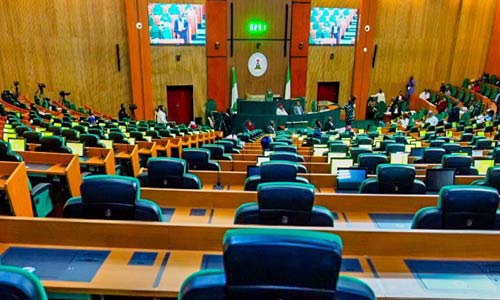
A House of Representatives Ad Hoc Committee has unearthed documents allegedly used to present the Presidential Foreign Intervention Promotion Council (PFIPC) as a federal government agency. The committee's investigation revealed that these documents included a purported governing board listing President Bola Tinubu and several senior government officials, including Minister Nyesom Wike and Secretary to the Government of the Federation George Akume, as members.
The discovery has raised fresh concerns about the legitimacy of the PFIPC and its activities. The committee is querying the Federal Road Safety Corps (FRSC) over seven official number plates allegedly issued to the organisation.
Legal Context
The controversy surrounding the PFIPC has sparked questions about its legal status as a federal government agency. The Presidency has declared the PFIPC fictitious and non-existent, with its self-styled Director-General currently facing trial for alleged fraud and impersonation. However, the organization controversially appeared in the 2026 Appropriation Act with a N1.3 billion allocation, which is part of the ongoing investigation. If the allegations are true, it could have significant implications for the officials listed as members of the board. As senior government officials, they may be subject to reputational risks and compliance exposures if their involvement with the organisation is deemed improper.
The PFIPC's activities and funding sources are also under scrutiny. The committee's investigation aims to uncover any potential irregularities or abuses of power. Lawyers should take note of these developments, as they may have implications for clients involved in dealings with entities linked to this controversy.
Why It Matters
The PFIPC controversy has far-reaching implications for the government and its officials. If the allegations are proven true, it could lead to a loss of public trust and confidence in the administration's ability to manage public resources effectively.
The case also highlights the need for robust regulatory frameworks and oversight mechanisms to prevent similar abuses of power in the future. As the investigation unfolds, lawyers should be prepared to advise clients on potential reputational risks and compliance exposures related to their involvement with entities linked to this controversy.
Practical Implications
Lawyers should watch for potential reputational risks and compliance exposures for senior government officials listed as members of the disputed PFIPC board, and advise clients to be cautious in dealings with entities linked to this controversy.
Source
How does this affect you?
Get an AI analysis of this article grounded in your jurisdictions, practice areas, and any policy documents you've uploaded to Wansom.
Wansom is AI and can make mistakes.