
Highway Alignment Is A Technical Call, Not A Judicial One: MP High Court Refuses To Interfere With NHAI's Route Choices
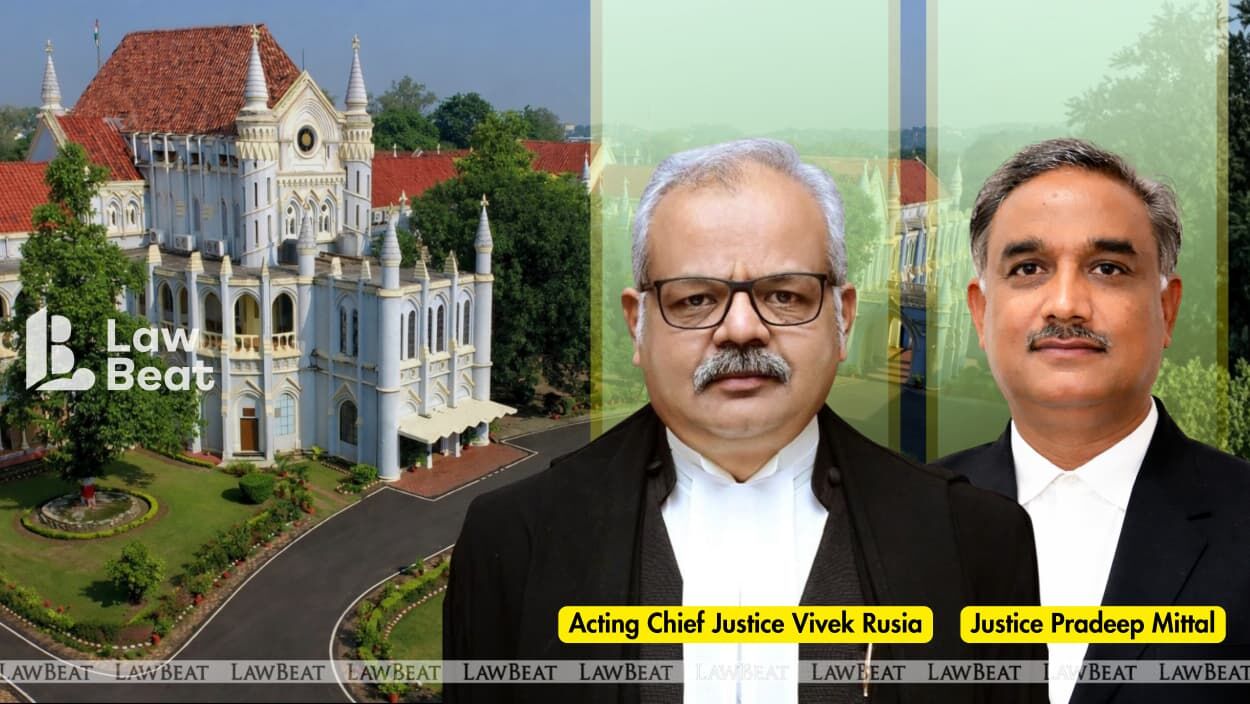
Home / News updates Highway Alignment Is A Technical Call, Not A Judicial One: MP High Court Refuses To Interfere With NHAI's Route Choices X Route and Design of Highways Are NHAI's Technical Call, Not the Court's, Says MP High Court, Dismissing PIL MP High Court dismisses PIL for bypasses at Rewa-district villages, holding that route selection and bypass-vs-widening decisions on national highways lie exclusively within NHAI's technical domain. The Madhya Pradesh High Court has dismissed a public interest litigation seeking construction of bypasses at three villages in Rewa district, holding that decisions on whether to build a bypass or widen an existing highway fall within the technical domain of road authorities and cannot be second-guessed by courts in writ jurisdiction. A division bench of Acting Chief Justice Vivek Rusia and Justice Pradeep Mittal was hearing a plea filed by Santosh Kumar Singh and other residents of Rewa district, who had approached the court on behalf of villagers of Patehara, Atraila and Dabhaura over the reconstruction and upgradation of the Sirmour-Dabhaura section of National Highway-135B, also known as the Rewa-Dabhaura Road. According to the petitioners, bypasses at the three villages were initially proposed to regulate traffic and ease vehicle movement. However, an order dated January 7, 2025 cancelled the bypasses and instead approved reconstruction and widening of the existing road, which runs through densely populated market areas. The stated reason for scrapping the bypasses was low traffic density and the need to cut expenditure on land acquisition and rehabilitation. The petitioners argued that this reasoning was flawed. Since the existing road passes through privately owned commercial land in the market areas, they contended acquiring it would actually cost the government more than building the bypasses. They also submitted that widening the stretch would worsen traffic congestion and raise accident risks in the crowded market belt, relying on data obtained through the Right to Information Act. The plea further stated that petitioner No.1 had submitted a representation on May 14, 2025 objecting to the alignment, to which authorities replied on June 2, 2025 that it had been finalised per applicable rules after considering traffic density and safety. The petitioners called this response inadequate and unsupported by technical material. They also raised concerns over a proposed two-lane bridge next to the existing one over the Tamas River at Patehara, questioning whether the older bridge was technically fit for heavy traffic, and alleged discrepancies in the Section 3A Gazette notification for the affected land. The petitioners went on to allege that the decision to scrap the bypasses was politically motivated and taken in collusion with local persons and businessmen. They sought quashing of the January 7 order and a direction to the authorities to act on an earlier decision dated December 14, 2024, which had cleared the way for the three bypasses. Appearing for the petitioners, Advocate Sunil Kumar Mishra argued that the January 7 order was contrary to public interest and that authorities had failed to consider population density and safety before altering the earlier alignment. Government Advocate Anubhav Jain, for the State, submitted that the decision followed prescribed procedure and was in public interest, and that no case for a writ of certiorari or mandamus was made out. The bench noted that the competent authority had cancelled the bypasses after concluding that they were "neither feasible nor required, looking to the lower traffic load and high cost." Relying on the Supreme Court's ruling in Federation of Railway Officers Association v. Union of India , the court observed that in policy and planning decisions involving financial expenditure, courts cannot substitute their own opinion for that of the executive. Citing National Highways Authority of India v. Sheetal Jaidev Vade , the
How does this affect you?
Get an AI analysis of this article grounded in your jurisdictions, practice areas, and any policy documents you've uploaded to Wansom.
Wansom is AI and can make mistakes.