
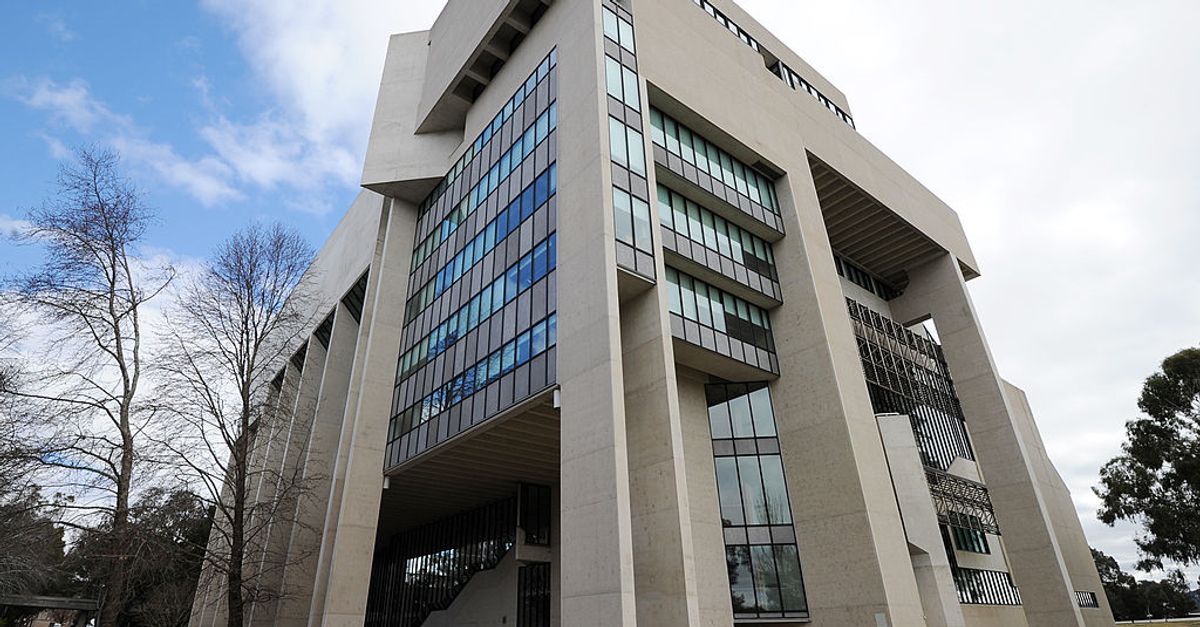
High Court of Australia: Defines Jurisdiction Powers, Original & Appellate
Summary
- The High Court of Australia was established in 1903, two years after the Australian Constitution took effect, with its creation mandated by Chapter III of the Constitution.
- The HCA functions as both an appellate court, hearing appeals from federal and state courts, and possesses original jurisdiction.
- Original jurisdiction is defined by Sections 75 and 76 of the Australian Constitution, with Section 75 matters directly conferred and Section 76 matters conferrable by legislation.
- The High Court of Australia has the power of judicial review, allowing it to assess legislative and executive actions for consistency with the Constitution.
- The court currently comprises seven justices, serving as the highest judicial authority in Australia.
Foundations of Australia's Highest Court
The High Court of Australia has the power of judicial review, allowing it to assess legislative and executive actions for consistency with the Constitution.
The High Court of Australia, the nation's ultimate judicial authority, was formally established in 1903, a mere two years after the Australian Constitution came into effect. Its creation is fundamentally mandated by Chapter III of the Constitution, which outlines the judicial power of the Commonwealth and necessitates the existence of a high court, while also regulating certain aspects of its operation. Despite this constitutional directive, specific implementing legislation was required to fully bring the court into being and define its initial framework.
As the pinnacle of the Australian judicial system, the High Court's structure currently comprises seven justices. These individuals preside over cases that shape the legal landscape of the country, ensuring consistency and adherence to constitutional principles. Understanding the High Court of Australia's establishment and its foundational structure is crucial for legal professionals navigating the complexities of Australian law.
Extensive Jurisdictional Powers
The High Court of Australia exercises significant High Court of Australia jurisdiction powers, functioning both as an appellate body and possessing substantial original jurisdiction. In its appellate capacity, the court hears appeals originating from both federal and state courts across Australia, serving as the final arbiter in a wide array of legal disputes. This appellate role underscores its position as the Australian highest court functions, ensuring uniformity and finality in legal interpretation.
Beyond appeals, the HCA also holds original jurisdiction, which is primarily delineated by sections 75 and 76 of the Australian Constitution. The subjects of original jurisdiction specified in Section 75 are directly conferred upon the court by the Constitution itself, granting it immediate authority over certain matters. Conversely, the subjects of original jurisdiction outlined in Section 76 can be conferred upon the HCA through legislative enactment, and indeed, some have been. It is important to note that all matters falling under the jurisdiction defined by Sections 75 and 76 are not exclusively reserved for the High Court; they may also be conferred upon other federal courts or state courts, allowing for a distributed judicial workload while maintaining the High Court's ultimate oversight. Lawyers advising clients on Australian legal matters must grasp these specific HCA appellate original jurisdiction distinctions to effectively strategize litigation.
Constitutional Review and Oversight
A critical aspect of the High Court of Australia's role is its power of judicial review. This authority allows the court to scrutinize legislative and executive actions to ensure their consistency with the Australian Constitution. This means the High Court can determine whether laws passed by Parliament or decisions made by the government are within the bounds of constitutional legality, effectively acting as the guardian of the Constitution.
This power of High Court of Australia judicial review is fundamental to Australia's system of government, providing a crucial check on the legislative and executive branches. For legal practitioners contemplating litigation in Australia, understanding the scope and application of this judicial review power, alongside the High Court of Australia jurisdiction powers, is paramount. It enables them to anticipate potential constitutional challenges and to effectively navigate the country's highest judicial body, ensuring that their strategies align with the ultimate legal framework of the nation.
Practical Implications
Lawyers advising clients on Australian legal matters or contemplating litigation in Australia should understand the High Court of Australia's specific appellate and original jurisdiction, as well as its judicial review powers, to effectively strategize and navigate the country's highest judicial body.
Source
How does this affect you?
Get an AI analysis of this article grounded in your jurisdictions, practice areas, and any policy documents you've uploaded to Wansom.
Finish Reading the Full Story and the Expert Analysis.
Get the latest legal & regulatory intelligence in United States
Wansom is AI and can make mistakes.