
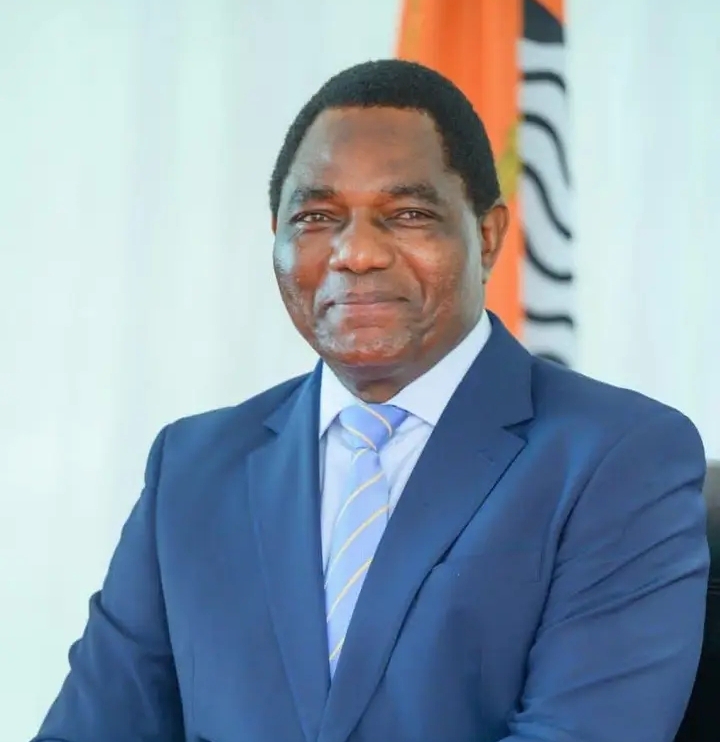
HH HAD NO POWER TO CLOSE COURTS — STATE HOUSE
Summary
- State House expressed concern over claims that President Hakainde Hichilema ordered courts closed on August 24, 2026.
- The alleged court closure was purportedly intended to prevent opposition parties from filing election petitions.
- State House firmly denied these allegations, stating President Hichilema has no constitutional power to close courts.
- The official statement emphasized that such claims are inconsistent with Zambia's constitutional order and available information.
Allegations Prompt Official Denial
President Hakainde Hichilema had no constitutional authority to order the closure of courts, a position unequivocally affirmed by State House in response to recent allegations.
State House has voiced significant concern regarding recent claims suggesting that President Hakainde Hichilema issued an order for the closure of courts on Monday, August 24, 2026. These allegations specifically posited that the purported court closure was orchestrated to impede opposition parties from submitting their election petitions, thereby obstructing a critical aspect of the democratic process in Zambia.
In a direct response, State House unequivocally denied these assertions, highlighting their inconsistency with the established constitutional order of Zambia. The official communication underscored that President Hakainde Hichilema, under the nation's legal framework, possesses no inherent power or authority to unilaterally close the courts. This firm rebuttal aims to clarify the official position on judicial independence and court accessibility, directly addressing the circulating Hakainde Hichilema court closure claims.
The State House statement court closure denial further emphasized that the allegations are not only contrary to the constitutional provisions but also inconsistent with all available information. This robust denial serves to counter any narratives that might undermine public confidence in the judiciary's autonomy and its capacity to operate without executive interference, particularly concerning sensitive political matters like election disputes.
Upholding Zambia's Constitutional Order
The official stance from State House firmly reiterates the government's commitment to upholding the Zambian constitutional order court closure principles, which enshrine the separation of powers and the independence of the judiciary. The assertion that President Hichilema lacks the authority to close courts is fundamental to maintaining the integrity of the legal system and ensuring that judicial processes remain uncompromised by executive directives. This clarification is crucial for reassuring the legal fraternity and the general public about the stability of the rule of law.
By stressing the constitutional limitations on presidential power concerning the judiciary, the State House statement reinforces the bedrock principles of governance in Zambia. Such an official position is vital in dispelling any notions of executive overreach, particularly in a context where the accessibility and impartiality of courts are paramount. The government's explicit denial serves as a public declaration of its adherence to these foundational legal tenets, ensuring that the judiciary can function as an independent arbiter.
Ensuring Access for Election Petitions
A key aspect of the State House's clarification revolves around the critical issue of Zambia election petition court access. The allegations specifically targeted the ability of opposition parties to file their election petitions, a fundamental right within a democratic framework. The government's swift denial therefore provides essential reassurance that the judicial avenues for challenging election outcomes remain fully open and accessible to all political entities.
This commitment to unimpeded court access for election-related matters is central to maintaining transparency and fairness in the electoral process. The State House's proactive communication aims to prevent any misperception that the courts might be inaccessible for such vital legal challenges, thereby safeguarding the democratic checks and balances. Lawyers and political stakeholders can be confident that the judicial system remains operational for all legitimate proceedings, including those arising from electoral disputes, reinforcing the principle of judicial independence.
Broader Implications for Governance
The State House's prompt and emphatic denial regarding the President Hichilema court closure denial Zambia carries significant weight for the nation's governance and democratic health. By addressing these claims directly and unequivocally, the government signals its dedication to transparency and its respect for institutional boundaries. This proactive communication helps to mitigate potential political instability and fosters public trust in the administration's commitment to democratic norms.
Such an official clarification is particularly important in a political climate where misinformation can quickly erode confidence in state institutions. The State House's firm stance not only refutes specific allegations but also reinforces the broader message that Zambia operates under a robust constitutional framework where the judiciary's independence is protected. This ensures that the country's legal and political systems continue to function predictably and fairly for all citizens.
Practical Implications
This statement clarifies the official position on judicial independence and court accessibility in Zambia, reassuring lawyers that courts remain open for critical matters like election petitions despite political allegations. It underscores the government's commitment to upholding the constitutional order.
Source
How does this affect you?
Get an AI analysis of this article grounded in your jurisdictions, practice areas, and any policy documents you've uploaded to Wansom.
Wansom is AI and can make mistakes.