
WHO Warns: Gaza Rainy Season Poses Imminent Health Disaster
Summary
- The World Health Organization warns that Gaza faces a severe public health crisis with the approaching rainy season, exacerbated by overcrowded tent camps and overflowing sewage.
- Water quality has significantly deteriorated, with microbiological contamination nearly tripling from less than 6% in January to over 18% in August, leading to a doubling of acute watery diarrhea cases to over 48,000.
- Despite a 2025 ceasefire, violence persists, and Israel maintains restrictions on essential goods like medical equipment and fuel, while nearly 90% of water and sanitation infrastructure has been damaged or destroyed.
- Flooding during the rainy season threatens to spread sewage and contaminated water into living spaces, fostering disease and pest breeding grounds, and infesting tents with mold.
- The WHO calls for urgent, unimpeded entry of humanitarian aid, including materials for permanent shelter, sustainable water, waste management, and laboratory supplies, to prevent a full-scale disaster.
Escalating Health Crisis in Gaza
The approaching rainy winter season is anticipated to profoundly deepen the ongoing health crisis, a scenario the WHO warns could become a full-blown public health disaster.
The World Health Organization (WHO) issued a stark warning on Tuesday, highlighting the severe risk that the approaching rainy season poses to public health in the Gaza Strip. The region is already grappling with a dire humanitarian and health crisis, exacerbated by the ongoing conflict that commenced after Hamas' October 7, 2023, attack inside Israel. A significant portion of Gaza's population currently resides in extremely overcrowded tent camps, situated amidst widespread rubble and pervasive overflowing sewage.
Evidence of a deteriorating public health situation is already apparent. Water quality in the territory has visibly worsened in recent months, coinciding with a notable surge in cases of diarrhea. Reinhilde Van de Weerdt, the WHO's representative in the Palestinian territories, underscored that water contamination and poor water quality remain critical concerns, primarily due to the inability to provide residents with even minimum quantities of clean water.
Further data supports these alarming trends. Tests conducted on approximately 6,700 water samples during the first eight months of the year revealed a near-tripling of microbiological contamination. The percentage of contaminated samples escalated from less than 6% in January to over 18% by August. This environmental degradation directly correlates with a significant increase in acute watery diarrhea cases, which almost doubled from about 27,000 in March to more than 48,000 by August.
Systemic Failures and Infrastructure Damage
Despite a U.S.-backed ceasefire that came into effect in October 2025, violence has persisted across the Gaza Strip. Concurrently, Israel has maintained substantial restrictions on the entry of essential goods, including vital medical equipment and fuel, further impeding humanitarian efforts and the functionality of critical services.
In April, Doctors Without Borders (MSF) accused Israel of employing access to water as a "weapon" in Gaza. This assertion was supported by data from the United Nations, the European Union, and the World Bank, which indicated that nearly 90% of the territory's water and sanitation infrastructure had been either destroyed or damaged. Israel, however, rejected these claims at the time.
The lack of adequate laboratory capacity within Gaza presents another significant challenge. According to Van de Weerdt, this deficiency means that current testing methods cannot detect all potential contaminants present in the water and environment, suggesting the true extent of the contamination could be even greater than reported figures. This systemic breakdown in infrastructure and monitoring capabilities compounds the existing health risks.
Impending Disaster and Urgent Calls for Action
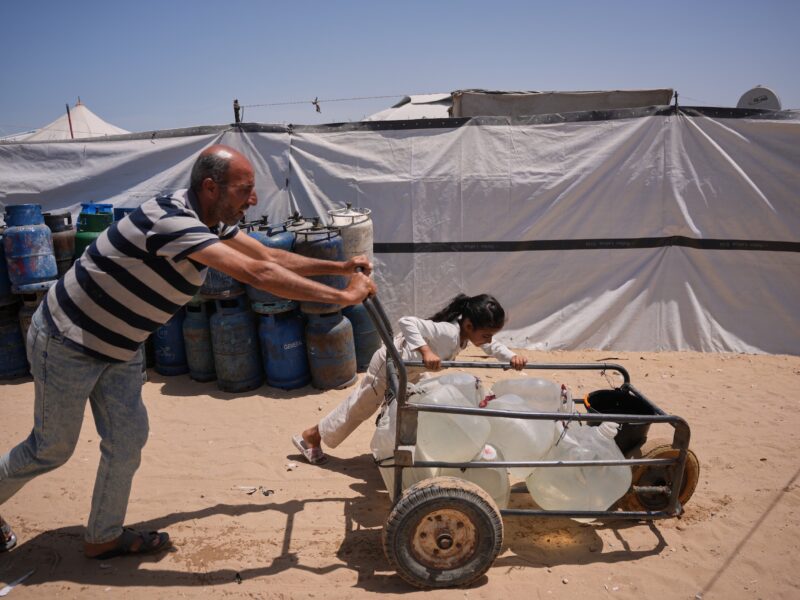
The approaching rainy winter season is anticipated to profoundly deepen the ongoing health crisis, a scenario the WHO warns could become a full-blown public health disaster. The vast majority of Gaza's population continues to live in flimsy, overcrowded tents, surrounded by towering mounds of garbage and ubiquitous overflowing sewage. When the rains arrive, flooding in these densely populated areas will inevitably carry sewage, waste, and contaminated water directly into people's living spaces, where they sleep, cook, and care for their families.
Beyond direct contamination, standing water will create ideal breeding grounds for mosquitoes and other pests, increasing the risk of vector-borne diseases. Furthermore, the makeshift tents themselves are highly susceptible to mold infestation, posing additional respiratory and health threats. The combination of these factors paints a grim picture for the coming months.
Despite the severity of the situation, Van de Weerdt emphasized that there is still an opportunity to avert a widespread public health catastrophe. The WHO is urgently calling for the unimpeded and expedited entry of humanitarian supplies into Gaza. These critical provisions include materials necessary for constructing permanent shelters, establishing sustainable water supplies, and implementing effective waste management systems. Additionally, an increase in laboratory supplies is crucial to enable rapid confirmation of disease causes and enhance the response to potential outbreaks.
Source
Source: Original reporting via AFP
How does this affect you?
Get an AI analysis of this article grounded in your jurisdictions, practice areas, and any policy documents you've uploaded to Wansom.
Finish Reading the Full Story and the Expert Analysis.
Wansom is AI and can make mistakes.