
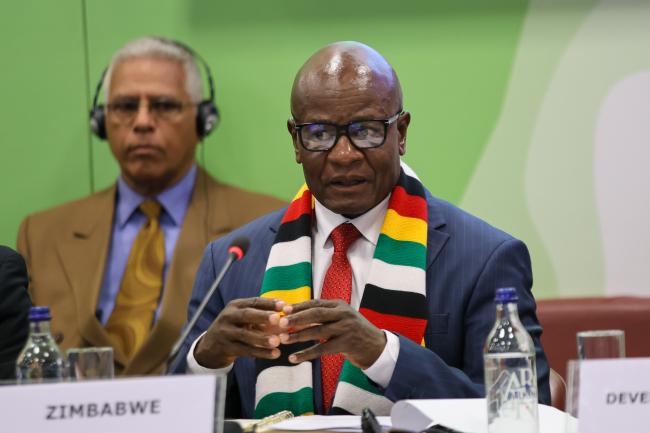
Daniel Garwe: Harare Vendors Moratorium Excludes Capital City
Summary
- Minister Daniel Garwe stated that a general moratorium on informal trader enforcement does not apply to Harare.
- Harare is exempt from this moratorium due to an ongoing city-wide clean-up operation.
- This means informal vendors in Harare will receive no reprieve from current enforcement actions.
- The Minister of Local Government and Public Works confirmed that the city's clean-up efforts will continue uninterrupted.
- Harare's informal sector remains subject to existing regulations and potential evictions without a pause in enforcement.
Harare Vendors Face Continued Enforcement
This declaration confirms that enforcement actions against vendors in the capital can proceed without the expectation of any broader policy-driven reprieve.
Minister Daniel Garwe, who oversees Local Government and Public Works, recently clarified the operational scope of a general moratorium concerning informal traders. His statement confirmed that this broader policy does not extend to Harare, the nation's capital. The exemption stems from the fact that Harare is currently engaged in its own extensive clean-up operation, rendering the general moratorium inapplicable within its municipal boundaries.
This declaration by Minister Garwe means that informal traders operating in Harare will not receive any temporary reprieve from ongoing enforcement actions. The city's clean-up efforts, which often involve regulating or relocating vendors, will proceed without interruption or exemption under any wider policy directive. The Minister's pronouncement underscores a distinct approach to urban management and informal commerce within the capital, setting it apart from other areas that might be subject to a broader moratorium.
Context of the Moratorium and Ministerial Authority
The existence of a general moratorium, even if not applicable to Harare, suggests a broader policy consideration regarding informal traders across Zimbabwe. Such moratoria typically aim to provide temporary relief or facilitate structured dialogue concerning the informal sector, which plays a crucial role in the national economy. However, the specific conditions in Harare, particularly its ongoing clean-up initiative, have been deemed sufficient reason for its exclusion from this wider protective measure.
As the Minister of Local Government and Public Works, Daniel Garwe holds significant authority over urban planning, municipal governance, and the regulatory frameworks impacting informal trade across the country. His statements provide authoritative guidance on the implementation of national and local policies. The decision to exempt Harare from the general Zimbabwe informal traders moratorium reflects a specific policy choice by the Local Government Public Works Zimbabwe policy framework to prioritize the city's clean-up objectives over a blanket pause on enforcement actions.
Implications for Harare's Informal Sector
For the multitude of informal traders in Harare, Minister Garwe's announcement signals a continuation of existing challenges related to their operational environment. The ongoing clean-up operation implies sustained efforts by municipal authorities to enforce Harare informal sector regulations, which can include the removal of unauthorized structures, relocation of vendors, and stricter adherence to trading bylaws. This situation contrasts sharply with any areas where a moratorium might offer a temporary cessation of such activities.
Consequently, the Harare vendor eviction policy remains actively in force, with no indication of a pause or relaxation. This means vendors must continue to navigate a regulatory landscape where enforcement is a constant possibility, necessitating vigilance regarding their operational compliance. The Minister Garwe Harare clean-up initiative, therefore, continues to shape the daily realities for thousands of informal businesses and individuals reliant on street vending for their livelihoods within the capital.
Why It Matters
This policy clarification is significant because it delineates a clear operational distinction for Harare's informal sector compared to other regions. It highlights the government's commitment to specific urban management goals within the capital, even when broader policies might suggest a different approach elsewhere. The absence of a reprieve means that the city's administration retains full discretion to implement its clean-up agenda, which often involves stringent measures against unlicensed or non-compliant informal businesses.
The decision underscores the ongoing tension between urban orderliness and the economic realities of a large informal sector. For stakeholders, including informal traders and businesses that rely on their distribution networks, understanding this specific exemption is crucial for strategic planning and risk assessment. This declaration confirms that enforcement actions against vendors in the capital can proceed without the expectation of any broader policy-driven reprieve.
Practical Implications
Lawyers advising informal traders or businesses reliant on informal distribution channels in Harare should note that the city's clean-up operations are exempt from any general moratorium. This means enforcement actions against vendors can proceed without reprieve, necessitating a review of potential client exposure to evictions or operational disruptions in the Harare informal sector.
Source
Source: Original reporting via Newsday
How does this affect you?
Get an AI analysis of this article grounded in your jurisdictions, practice areas, and any policy documents you've uploaded to Wansom.
Finish Reading the Full Story and the Expert Analysis.
Get the latest legal & regulatory intelligence in Zimbabwe
Wansom is AI and can make mistakes.