
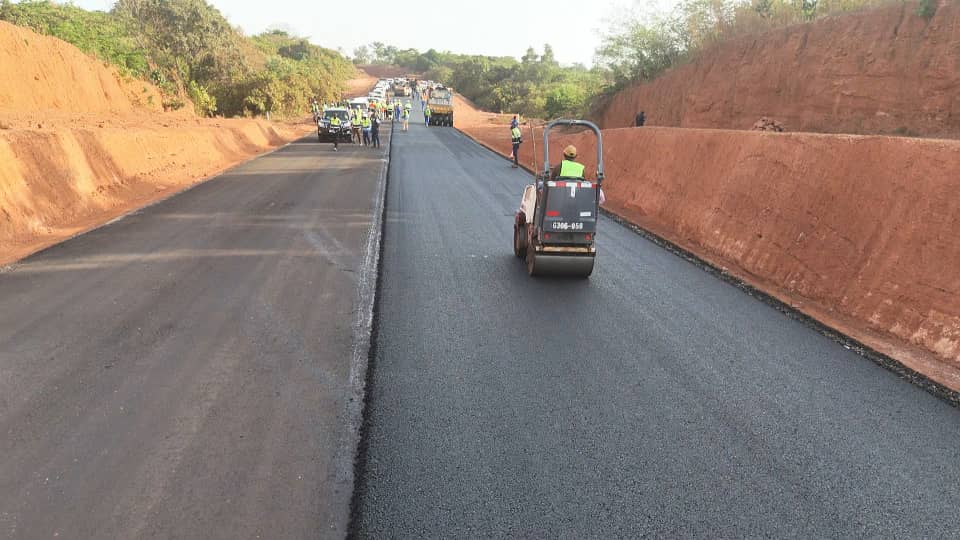
Guinea: Kagbelen-Kouria Road Procurement Scrutiny Over $12.45M/Km Cost
Summary
- The Kagbelen-Kouria road project in Guinea is under scrutiny due to its reported cost of $12.45 million per kilometer.
- Concerns have been raised regarding the use of restricted tenders and direct contracts for public works awarded between 2022 and 2023, rather than the standard open tender process.
- Questions persist about the technical and financial justifications provided for the high prices of these state contracts.
- The situation highlights broader issues of public procurement transparency and potential irregularities in Guinea.
- This scrutiny underscores the critical need for robust accountability and adherence to procurement rules for major infrastructure projects.
What Happened
The reported expenditure for this infrastructure initiative stands at an eyebrow-raising $12.45 million per kilometer, a figure that has prompted significant public and expert scrutiny regarding the financial management of state contracts.
Public attention in Guinea has recently focused on the substantial cost associated with the Kagbelen-Kouria road project. The reported expenditure for this infrastructure initiative stands at an eyebrow-raising $12.45 million per kilometer, a figure that has prompted significant public and expert scrutiny regarding the financial management of state contracts.
This high per-kilometer cost has led to pointed questions about the methods employed for awarding public contracts in Guinea, particularly those finalized between 2022 and 2023. Concerns are being raised not only about the final price tags but also about the procedural transparency and justification behind such significant public investments. The focus is squarely on understanding the underlying technical and financial justifications that led the state to approve these specific costs.
The intense public interest underscores a broader demand for greater accountability in the allocation of national resources for major infrastructure developments. The Kagbelen-Kouria road procurement scrutiny in Guinea highlights a critical juncture for how large-scale projects are planned, funded, and executed within the nation.
Legal Context
Under standard Guinean public procurement regulations, the prevailing method for awarding contracts is through open tenders, designed to foster competition and ensure optimal value for public funds. However, the current examination of contracts, including those related to the Kagbelen-Kouria project, reveals a pattern where alternative procurement approaches, such as restricted tenders and direct contracts, have been utilized.
These deviations from the general rule raise important questions about Guinean public tender irregularities. While restricted tenders Guinea legal frameworks do exist for specific circumstances, their frequent application in place of open competition warrants close inspection. Similarly, the use of direct contracts for public works in Guinea, bypassing competitive bidding entirely, demands robust justification to prevent perceptions of favoritism or inflated pricing.
For each contract awarded, especially those involving substantial public expenditure like the Kagbelen-Kouria project contract cost, there is an expectation for clear technical and financial documentation to support the agreed-upon prices. The absence or inadequacy of such justifications undermines the principles of fair competition and efficient resource allocation, potentially exposing the state to compliance risks and public distrust.
Why It Matters
The ongoing scrutiny of the Kagbelen-Kouria road project carries significant implications for Guinea public procurement transparency and the broader governance landscape. When the cost of a single kilometer of road construction reaches $12.45 million, it naturally triggers concerns about the judicious use of taxpayer money and the integrity of the procurement process. This situation underscores the critical need for rigorous oversight and adherence to established legal frameworks for public contracts in Guinea.
The questions surrounding the choice of procurement methods—specifically the reliance on restricted tenders and direct contracts over open bidding—signal potential vulnerabilities in the system. Such practices, if not adequately justified and transparent, can lead to inflated costs, reduced competition, and a heightened risk of corruption. This directly impacts public trust and the nation's ability to deliver essential infrastructure projects efficiently and economically.
Ultimately, the outcome of this scrutiny will shape future expectations for public sector accountability in Guinea. It emphasizes that all stakeholders, from government agencies to contractors, must prioritize transparency and demonstrate clear value for money in all public works. Addressing these concerns is vital for fostering a more robust and trustworthy environment for public investment and development within the country.
Practical Implications
Lawyers and compliance officers advising clients on public procurement in Guinea should note the increased scrutiny on tender processes, cost justifications, and contract award methods (restricted tenders, direct contracts) for large infrastructure projects. This signals a need for enhanced due diligence and robust compliance frameworks to mitigate legal challenges and reputational risks.
Source
How does this affect you?
Get an AI analysis of this article grounded in your jurisdictions, practice areas, and any policy documents you've uploaded to Wansom.
Finish Reading the Full Story and the Expert Analysis.
Wansom is AI and can make mistakes.