
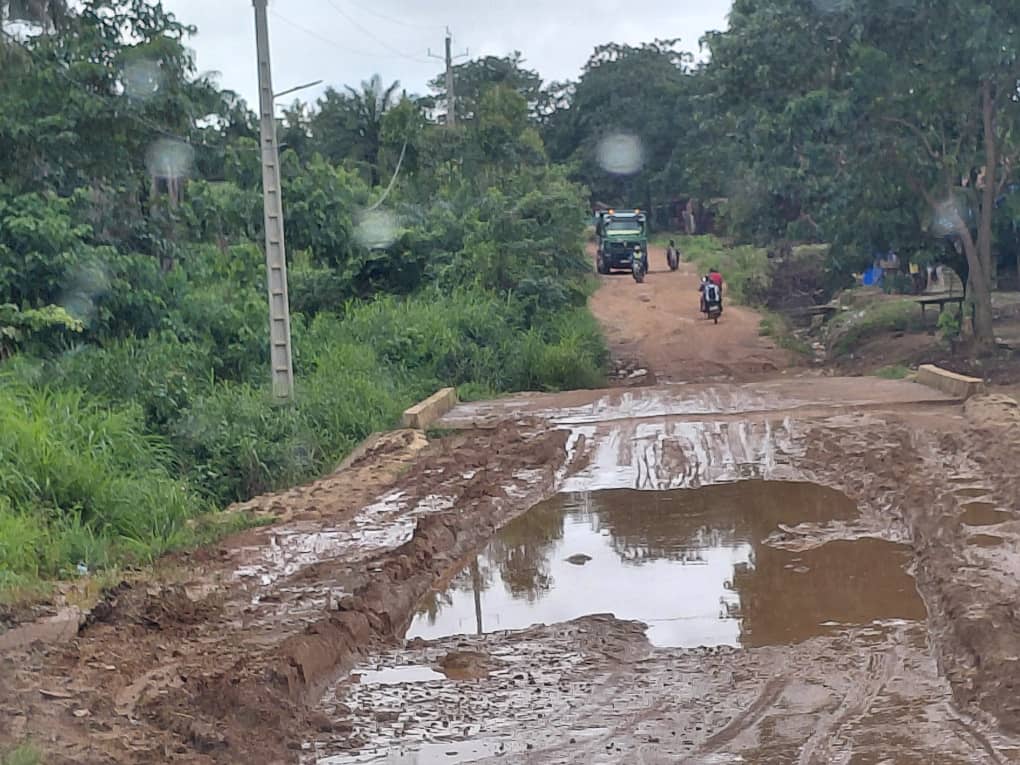
Guinea: Dioumaya-Doyama Bridge Contract Failure Leads to Collapse
Summary
- Last year, heavy rains destroyed bridges in Guinea's Konsoma and Doyama districts, located on the Falessadé road within the Dubréka region.
- The incident halted circulation for a period, isolating rural districts in the affected zone.
- The construction project for these bridges, specifically on the Dioumaya-Doyama route towards Falessadé, has been deemed a "failed contract."
- This failure signals potential contractual disputes and highlights non-performance risks in Guinean public works.
Infrastructure Failure in Dubréka
The classification of the Dioumaya-Doyama bridge project as a failed contract immediately signals potential contractual disputes and significant non-performance risks for all parties involved.
Last year, a significant infrastructure failure occurred in Guinea, specifically impacting the Dubréka region. Heavy rainfall during that period led to the destruction of critical bridge infrastructure, severing vital connections for local communities. The severe weather conditions caused bridges situated in both the Konsoma and Doyama districts to be swept away.
These affected structures were integral parts of the road network leading towards Falessadé, a rural commune within the broader Dubréka administrative area. The immediate consequence of these bridge losses was a complete disruption of traffic flow. For a considerable duration, vehicular and pedestrian movement was halted across the rural districts in the affected zone, isolating communities and impeding essential services.
The Failed Construction Contract
The destruction of these bridges, particularly those on the Dioumaya-Doyama route towards Falessadé, points to a deeper underlying issue beyond just environmental factors. The project responsible for the construction of these bridges has been characterized as a "failed contract," indicating significant problems with its execution or outcome. This designation suggests that the infrastructure, which was presumably built to withstand local conditions, proved inadequate.
Such a characterization of the Falessadé road infrastructure contract implies potential deficiencies in design, construction quality, or oversight. The fact that the bridges succumbed to heavy rains, leading to their collapse in Konsoma and Doyama districts, raises serious questions about the integrity of the public works undertaken. This situation highlights a critical instance of Guinée construction contract non-performance, where the expected durability and functionality of the infrastructure were not met.
Regional Connectivity and Public Trust
The disruption caused by the Dubréka bridge construction problems extended beyond mere inconvenience, profoundly affecting the daily lives and economic activities of the rural districts. The Falessadé commune, being a rural area, relies heavily on robust road infrastructure for connectivity to markets, healthcare, and education. The prolonged cessation of circulation underscored the vulnerability of these communities when essential links are compromised.
This incident, marked by the Konsoma Doyama bridge collapse, serves as a stark reminder of the critical importance of reliable infrastructure in supporting regional development and maintaining public trust. When public works projects fail to deliver on their promise, especially in the face of predictable environmental challenges like heavy rains, it erodes confidence in government-led initiatives and the contractors responsible for their execution. The implications for future infrastructure development in the Dubréka region and across Guinea are substantial.
Legal and Operational Ramifications
The classification of the Dioumaya-Doyama bridge project as a failed contract immediately signals potential contractual disputes and significant non-performance risks for all parties involved. Such an outcome typically triggers a review of the contractual obligations, performance bonds, and liability clauses. For legal and compliance teams, this incident underscores the imperative to scrutinize due diligence processes and enhance risk assessment protocols for all public works projects in Guinea.
The failure of the bridge construction on the Falessadé road, particularly within the Dubréka region, necessitates a thorough examination of procurement practices, contractor selection, and project oversight mechanisms. Ensuring that future infrastructure initiatives are resilient and meet specified standards requires robust legal frameworks and stringent adherence to quality control. This event highlights the critical need for comprehensive legal and technical evaluations to prevent similar instances of Guinée construction contract non-performance, safeguarding public funds and ensuring the delivery of durable infrastructure.
Practical Implications
This incident signals potential contractual disputes and non-performance risks in Guinean public works, urging legal and compliance teams to scrutinize due diligence and risk assessment for infrastructure projects, particularly in the Dubréka region.
Source
How does this affect you?
Get an AI analysis of this article grounded in your jurisdictions, practice areas, and any policy documents you've uploaded to Wansom.
Finish this article free. Just your email for instant unlock.
Wansom is AI and can make mistakes.