
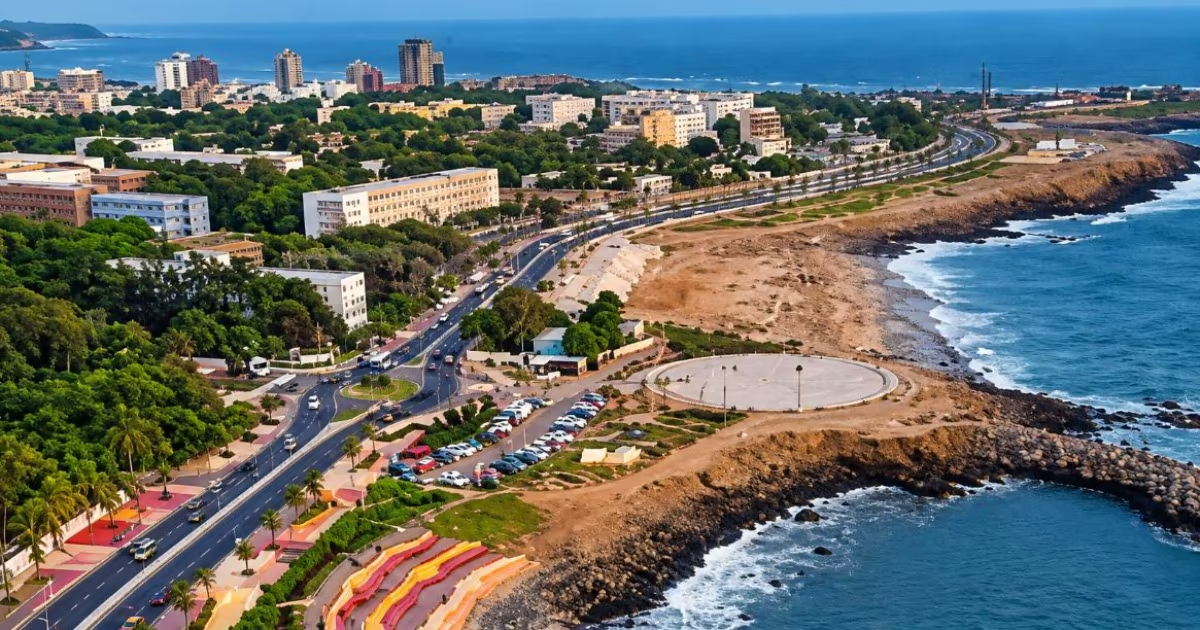
Groupe Kharafi: Corniche Parcels Sales Under Inquiry, 20 Billion FCFA Generated
Summary
- Sales of land parcels attributed to Groupe Kharafi on the Corniche of Dakar reportedly exceeded 20 billion FCFA.
- These details emerged during the parliamentary commission's hearing of former Director of State Lands, Abdou Gningue.
- Groupe Kharafi allegedly obtained a state certificate claiming 60% site development, then subdivided and sold parcels.
- An ad hoc committee later found the actual development level to be significantly lower than the certified 60%.
- The investigation has raised suspicions of forgery and illicit enrichment concerning these land transactions.
What Happened
The significant disparity between reported development and on-the-ground reality suggests potential irregularities in how state land was managed and subsequently monetized.
The parliamentary inquiry into land transactions in Senegal has brought to light significant allegations concerning Groupe Kharafi's activities on the Corniche de Dakar. Reports indicate that sales of land parcels initially allocated to the group have generated over 20 billion FCFA. This substantial sum emerged as a key detail during recent proceedings, drawing considerable public and official attention to the land dealings.
The controversy centers on the development status of the allocated site. Groupe Kharafi reportedly secured an official certificate from state services, attesting that 60% of the land had been developed. Following the acquisition of this document, the group allegedly proceeded to subdivide the property into smaller parcels, which were then sold off. The original plan for the site envisioned the construction of a hotel and a series of villas, contributing to the broader Corniche de Dakar développement.
Investigation Details
These revelations came to the fore during the audition of Abdou Gningue, the former Director of State Lands. Gningue was questioned by the commission d'enquête parlementaire Sénégal, which is actively investigating various land-related issues across the country. His testimony provided crucial insights into the administrative processes surrounding the land allocation and subsequent transactions.
A critical piece of evidence in this ongoing inquiry was the finding by an ad hoc committee. This committee, established by then-Prime Minister Ousmane Sonko, conducted an on-site visit to the Corniche property. Their findings directly contradicted the official certificate, as they observed that the actual level of development was far below the 60% claimed in the state-issued document. This discrepancy has fueled suspicions regarding the legitimacy of the land transactions and the accuracy of official records.
Allegations and Broader Context
The parliamentary hearing has consequently raised serious allegations of faux et enrichissement illicite foncier. The significant disparity between reported development and on-the-ground reality suggests potential irregularities in how state land was managed and subsequently monetized. The alleged Groupe Kharafi ventes parcelles Corniche enquête forms part of a wider scrutiny into land governance in the country, highlighting vulnerabilities in the process of allocating and developing public assets.
Such incidents contribute to a growing concern over what has been termed a scandale foncier Dakar, where public land allocations and subsequent private transactions are being rigorously examined for transparency and adherence to legal frameworks. The ongoing parliamentary commission's work underscores a commitment to uncovering and addressing potential abuses in land management, particularly concerning valuable coastal properties like those on the Corniche. The findings from this investigation could have substantial repercussions, potentially leading to legal actions and influencing future policies related to real estate development and land acquisition processes in Senegal, especially for state-allocated land. This scrutiny emphasizes the need for robust due diligence and transparent practices in all large-scale development projects.
Practical Implications
Lawyers advising on real estate development or land acquisition in Senegal, particularly on state-allocated land, should anticipate increased scrutiny and potential legal challenges. Compliance officers must reinforce due diligence processes to verify development claims and ensure transparency to mitigate risks of fraud and illicit enrichment allegations, especially in light of ongoing parliamentary inquiries.
Source
Source: Original reporting via Senenews
How does this affect you?
Get an AI analysis of this article grounded in your jurisdictions, practice areas, and any policy documents you've uploaded to Wansom.
Finish Reading the Full Story and the Expert Analysis.
Get the latest legal & regulatory intelligence in Senegal
Wansom is AI and can make mistakes.