
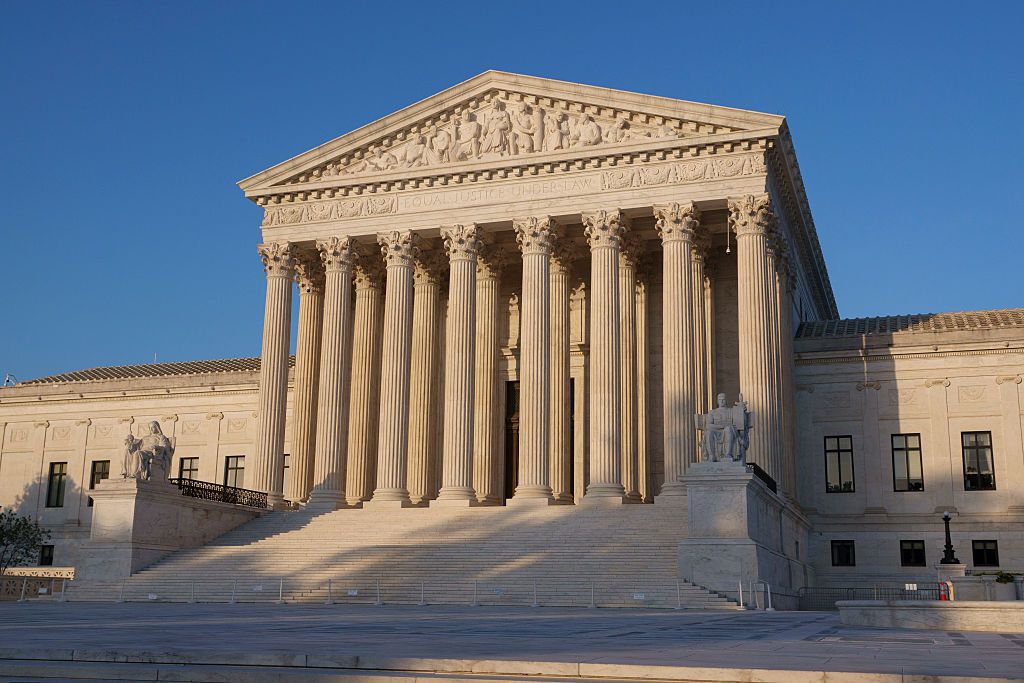
Supreme Court: Goldman Sachs Arbitration Bankruptcy Review
Summary
- The Supreme Court will hear a case involving Goldman Sachs Bank and its attempt to enforce an arbitration clause in a bankruptcy proceeding.
- The dispute began when debtors Rhea Brown and Gregory Maze alleged Goldman Sachs violated the automatic stay by attempting to collect debts.
- Goldman Sachs sought to compel arbitration based on credit card agreements, but lower courts denied this request.
- The central question for the Supreme Court is when a bankruptcy court can override the Federal Arbitration Act to refuse arbitration.
- This case, *Goldman Sachs Bank USA v. Brown*, will clarify the interplay between bankruptcy law and arbitration agreements.
The Genesis of a Supreme Court Challenge
Lawyers advising creditors or debtors in bankruptcy proceedings should closely monitor this Supreme Court case, as its outcome will clarify the enforceability of arbitration clauses in bankruptcy and the extent to which bankruptcy courts can override the Federal Arbitration Act.
The Supreme Court has recently agreed to review a significant case that delves into the complex interplay between bankruptcy proceedings and arbitration agreements. This dispute, officially titled *Goldman Sachs Bank USA v. Brown*, stems from a situation involving two individuals, Rhea Brown and Gregory Maze, who initiated bankruptcy proceedings approximately three years ago. Both listed credit card debts owed to Goldman Sachs Bank among their financial obligations.
Following their bankruptcy filings, the Bankruptcy Code's automatic stay provision came into effect, which is designed to prevent creditors from attempting to collect debts from individuals undergoing bankruptcy. However, Brown and Maze subsequently alleged that Goldman Sachs repeatedly continued its efforts to secure payment for their credit card debts, despite the protective measures of the automatic stay. This alleged conduct prompted Brown and Maze to file an adversary proceeding, essentially a separate lawsuit within their broader bankruptcy case, accusing the bank of willfully violating the automatic stay.
Arbitration Clause vs. Bankruptcy Protection
In response to the adversary proceeding, Goldman Sachs Bank invoked an arbitration clause embedded within the credit card agreements held by Brown and Maze. The bank petitioned the bankruptcy court to halt the ongoing lawsuit and instead compel Brown and Maze to resolve their dispute through arbitration, as stipulated in their contractual terms. This move set the stage for a critical legal question regarding the enforceability of such clauses in the context of bankruptcy.
The bankruptcy court, however, rejected Goldman Sachs's request to compel arbitration. This decision was subsequently affirmed by the federal district court, which reviewed the bankruptcy court's ruling. The matter then proceeded to the U.S. Court of Appeals for the 4th Circuit, where a divided three-judge panel also upheld the lower courts' determination, concluding that compelling arbitration in this specific scenario was not appropriate. This consistent rejection across multiple judicial levels has now brought the *Goldman Sachs arbitration bankruptcy Supreme Court* case to the nation's highest court.
The Supreme Court's Focus on Federal Law
The Supreme Court's decision to add this case to its oral argument docket for the 2026-27 term highlights the profound legal questions at stake. The central issue the justices will consider is precisely when, and under what circumstances, a bankruptcy court possesses the authority to override the Federal Arbitration Act (FAA) and decline to enforce an agreement to arbitrate disputes. This case will scrutinize the boundaries of bankruptcy courts' powers when faced with contractual arbitration mandates.
This upcoming review by the Supreme Court is poised to provide much-needed clarity on the intersection of two powerful federal statutes: the Bankruptcy Code and the Federal Arbitration Act. The outcome will have significant implications for financial institutions, creditors, and debtors alike, shaping how arbitration clauses are treated in bankruptcy proceedings and defining the extent to which bankruptcy courts can assert their jurisdiction over such agreements. Lawyers advising creditors or debtors in bankruptcy proceedings should closely monitor this Supreme Court case, as its outcome will clarify the enforceability of arbitration clauses in bankruptcy and the extent to which bankruptcy courts can override the Federal Arbitration Act.
Practical Implications
Lawyers advising creditors or debtors in bankruptcy proceedings should closely monitor this Supreme Court case, as its outcome will clarify the enforceability of arbitration clauses in bankruptcy and the extent to which bankruptcy courts can override the Federal Arbitration Act. This will directly impact litigation strategy and compliance for financial institutions and other entities with arbitration agreements when a counterparty files for bankruptcy.
Source
How does this affect you?
Get an AI analysis of this article grounded in your jurisdictions, practice areas, and any policy documents you've uploaded to Wansom.
Wansom is AI and can make mistakes.