
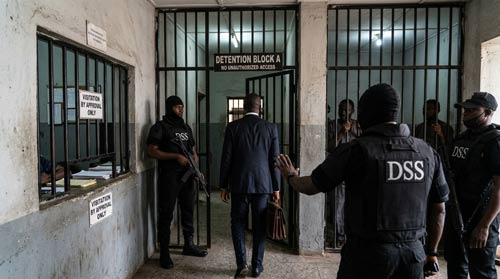
Godspower Eroga SSS AGF Lawsuit: Challenges DG Approval for Lawyer Access
Summary
- Abuja-based lawyer Godspower Eroga has sued the State Security Service (SSS) and the Attorney-General of the Federation (AGF).
- The lawsuit, filed at the Federal High Court in Abuja, challenges the SSS's alleged practice of requiring DG approval for lawyers to access detained clients.
- Eroga argues this requirement creates an "indefinite barrier to legal consultation."
- The legal action seeks to affirm the right to legal consultation for detained individuals in Nigeria.
The Lawsuit Unfolds
Ultimately, this legal battle aims to remove what is perceived as an "indefinite barrier to legal consultation," ensuring that the right to legal representation is not contingent on administrative approvals that can be arbitrarily withheld or delayed.
An Abuja-based legal practitioner, Godspower Eroga, Esq., has initiated a significant legal challenge against the State Security Service (SSS) and the Attorney-General of the Federation (AGF). This Godspower Eroga SSS AGF lawsuit has been filed before the Federal High Court in Abuja, aiming to dismantle a long-standing procedural hurdle faced by lawyers seeking to represent their clients.
The core of Eroga's complaint centers on the SSS's alleged requirement for legal representatives to submit formal written applications. This process, according to the lawsuit, mandates that lawyers must then secure the explicit approval of the Director-General of the SSS before they are permitted to consult with their clients who are currently in detention. This administrative step is being contested as an undue impediment to legal access.
This legal action directly targets what Eroga describes as an "indefinite barrier to legal consultation," highlighting the perceived arbitrary nature and potential for delay inherent in the current system. The lawsuit seeks judicial intervention to clarify and affirm the rights of legal practitioners and their detained clients.
Challenging Access to Justice
The practice under scrutiny in the Godspower Eroga SSS AGF lawsuit directly impacts the fundamental right to legal consultation Nigeria. By requiring SSS DG approval lawyer access, the security agency effectively controls when and how legal counsel can meet with individuals held in their custody. This alleged policy has been a point of contention for legal practitioners who argue it obstructs timely and effective representation.
Lawyers frequently encounter situations where their detained clients access SSS facilities, only to find themselves subject to a bureaucratic process that can delay or even deny essential legal consultations. The necessity of obtaining the Director-General's personal approval for every visit introduces an unpredictable element, potentially leaving detainees without immediate legal advice during critical stages of their detention.
This procedural requirement, which forms the basis of the challenge at the Federal High Court Abuja SSS, raises significant questions about due process and the constitutional guarantees afforded to all citizens. The lawsuit posits that such a barrier undermines the ability of legal professionals to perform their duties effectively and ensures that individuals in detention receive proper legal guidance without undue interference.
Broader Implications for Legal Rights
The implications of this Attorney-General of the Federation lawsuit extend beyond the immediate parties, potentially reshaping the landscape of legal representation for individuals detained by security agencies across Nigeria. A favorable judgment for Godspower Eroga could establish a crucial precedent, affirming the unhindered right to legal consultation Nigeria and streamlining detained clients access SSS facilities.
The involvement of the Attorney-General of the Federation as a defendant underscores the national significance of this case, as the AGF is the chief legal officer of the federation and responsible for upholding the rule of law. The outcome will likely influence how security agencies, including the SSS, manage access for legal counsel to their detainees, potentially removing the current requirement for SSS DG approval lawyer access.
Ultimately, this legal battle aims to remove what is perceived as an "indefinite barrier to legal consultation," ensuring that the right to legal representation is not contingent on administrative approvals that can be arbitrarily withheld or delayed. The resolution of this case at the Federal High Court in Abuja is keenly awaited by the legal community, as it holds the potential to strengthen fundamental human rights protections within the country's justice system.
Practical Implications
Lawyers representing clients detained by the SSS should closely monitor the outcome of this case, as a favorable judgment could remove the current requirement for DG approval, significantly easing access to clients and upholding the right to legal representation in Nigeria.
Source
How does this affect you?
Get an AI analysis of this article grounded in your jurisdictions, practice areas, and any policy documents you've uploaded to Wansom.
Finish Reading the Full Story and the Expert Analysis.
Get the latest legal & regulatory intelligence in Nigeria
Wansom is AI and can make mistakes.