
Supreme Court: Mandates Regularisation for Goa PWD Workers
Summary
- The Supreme Court has ordered the regularisation of long-serving temporary workers in the Goa Public Works Department.
- The ruling emphasizes that the State cannot deny absorption to workers after granting them temporary status and promising permanent roles.
- The Court highlighted the State's obligation to act as a "model employer" and not exploit labor, referencing Articles 14 and 16 public employment.
- The workers were engaged through a state-created society and had performed perennial functions for decades.
- This decision overturns a Bombay High Court ruling and reinforces the rights of temporary employees for absorption in India.
The Supreme Court's Landmark Decision
The apex court's decision underscores a fundamental principle: a state cannot deny regularisation to employees who have dedicated years of service, particularly after having formally granted them temporary status and made explicit promises of absorption into permanent roles.
India's Supreme Court has mandated the regularisation of numerous long-serving temporary workers within the Goa Public Works Department (PWD). This significant ruling came in response to an appeal filed by Rupesh N Goankar and others, challenging a previous judgment by the Bombay High Court at Goa. The High Court had, on July 28, 2023, declined to uphold a 2014 directive that would have granted these workers temporary status and recognized their right to absorption into the PWD as vacancies became available.
The apex court's decision underscores a fundamental principle: a state cannot deny regularisation to employees who have dedicated years of service, particularly after having formally granted them temporary status and made explicit promises of absorption into permanent roles. This judgment effectively overturns the High Court's stance, reinforcing the rights of temporary employees absorption India and setting a precedent for SC regularisation Goa PWD workers.
The State's Role as a Model Employer
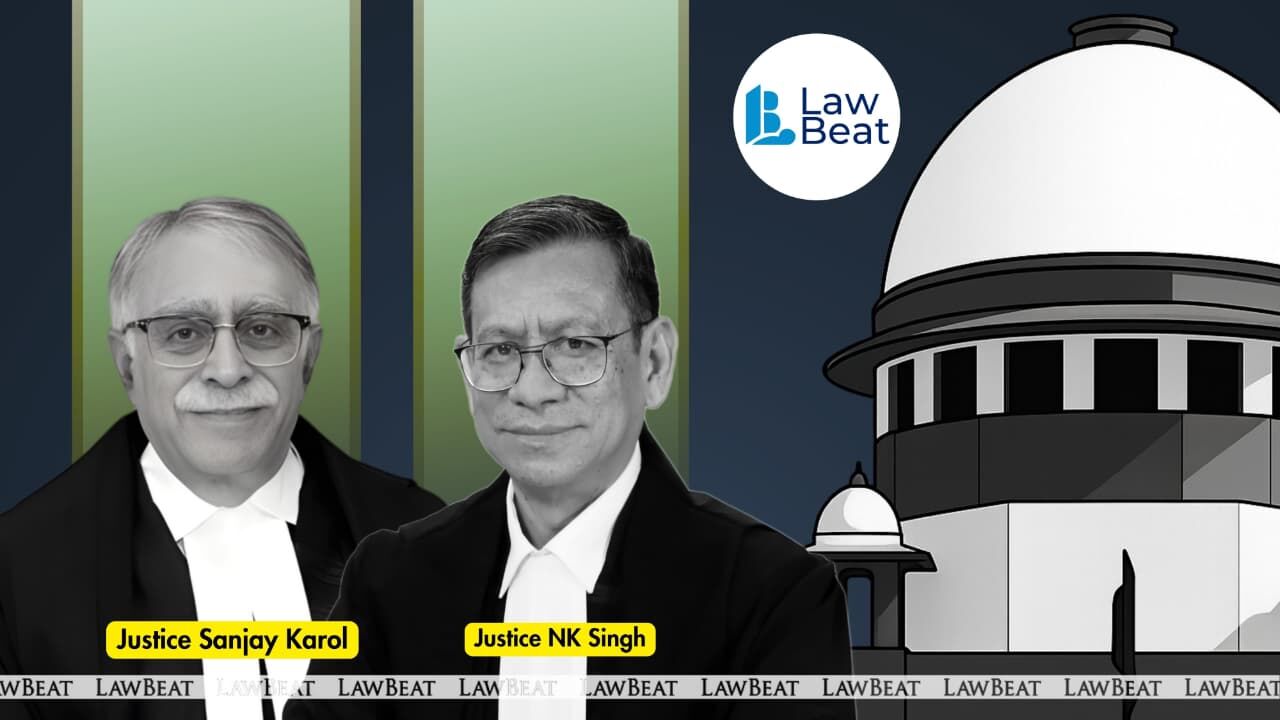
Central to the Supreme Court's reasoning is the principle that the State must operate as a model employer, upholding fairness and avoiding exploitation. The bench, comprising Justices Sanjay Karol and N Kotiswar Singh, clarified that constitutional provisions for equality in public employment, specifically Articles 14 and 16, do not preclude the State from establishing schemes designed to regularise long-serving temporary staff. The Court emphasized that a mechanical reliance on past precedents to deny regularisation to workers performing perennial services is inappropriate, especially when their initial engagement was not purely illicit.
The workers in question were members of the PWD Labour Supply Society, an entity established by the State itself. This society, headed by the Principal Chief Engineer of the PWD, was created with the explicit aim of curbing the exploitation of contract labor within the department and facilitating their eventual regularisation. The Supreme Court highlighted that the workers' engagement through this state-constituted society did not sever their employment relationship with the State, particularly given that the society was led by state officials and designed to fulfill specific governmental operational requirements. These individuals had been engaged between 1967 and 2003, consistently performing essential, ongoing functions for the State over many years.
A Pattern of Unfulfilled Commitments
The path to regularisation for these Goa PWD workers was marked by a series of governmental commitments that were subsequently undermined. On July 27, 2012, the Chief Minister's office initiated a resolution to develop a policy for absorbing members of the PWD Labour Supply Society. This was followed by a proposal, approved by both the Finance Department and the Chief Minister on September 4, 2013, which notably recommended a moratorium on direct recruitment within the Goa Public Works Department until the Society's members were absorbed.
Despite these high-level approvals, contradictory actions soon emerged. Just two days later, on September 6, 2013, the Principal Chief Engineer issued an advertisement for direct recruitment to various PWD positions. Nevertheless, a significant step forward occurred on December 4, 2013, when the PWD Minister and the Chief Minister approved a proposal to grant "temporary status" to 1,399 Society members who had completed at least eight years of service by April 1, 2013. This commitment was formalized on February 7, 2014, when the Principal Chief Engineer, also serving as Additional Secretary to the Government, issued an order sanctioning this temporary status and explicitly recognizing their entitlement to absorption into PWD establishments as vacancies arose. However, the State later issued further recruitment advertisements in October and December 2014, without acknowledging the pending claims for absorption from these long-serving workers.
Upholding Legitimate Expectations
In its defense, the State of Goa had argued that the 2014 order lacked the necessary government sanction, that the workers were merely members of a society rather than direct government employees, and that no sanctioned posts existed for their absorption. However, the Supreme Court firmly rejected these contentions. The Court found it unacceptable for the State to leverage its own procedural shortcomings to negate the legitimate expectations it had created among its workers.
Crucially, the Court noted that during earlier proceedings, the Advocate General had conceded before the High Court that the workers were indeed entitled to absorption into PWD establishments against vacancies, as per the February 7, 2014 order. The Supreme Court's decision, particularly in the case of Rupesh N Goankar Supreme Court, thus reinforces the State model employer principle that the State cannot renege on its promises, especially when those promises have led employees to a reasonable expectation of permanent employment. This ruling sets a significant precedent for temporary employees absorption India, particularly concerning the Goa Public Works Department regularisation efforts.
Practical Implications
This Supreme Court ruling reinforces the state's obligation as a model employer, making it harder for government bodies to deny regularisation to long-serving temporary workers, especially those engaged through state-sponsored entities. Lawyers should advise government clients to review their temporary employment policies and commitments to avoid similar legal challenges, and counsel workers on their enhanced rights to absorption.
Source
How does this affect you?
Get an AI analysis of this article grounded in your jurisdictions, practice areas, and any policy documents you've uploaded to Wansom.
Wansom is AI and can make mistakes.