
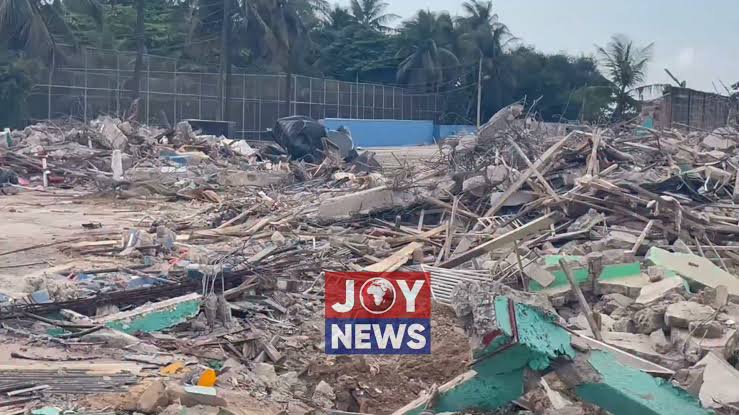
GHATOF Demands Compensation for La Pleasure Beach Demolition
Summary
- The Ghana Tourism Federation (GHATOF) is demanding compensation for 85 businesses affected by demolition at La Pleasure Beach.
- The demolition has put approximately 4,000 jobs at risk, primarily impacting women.
- GHATOF seeks accountability from district assemblies for demolishing businesses with valid operating permits without proper notice.
- The federation insists that displaced traders receive the first right of refusal for any future beachfront redevelopment.
- GHATOF warns that the incident could undermine investor confidence in Ghana's tourism sector.
What Happened
GHATOF President Seth Ocran has warned that the handling of businesses holding official permits could significantly erode investor confidence within Ghana's tourism sector.
The Ghana Tourism Federation (GHATOF) has issued a strong call for compensation on behalf of 85 businesses that were recently displaced by demolition activities at La Pleasure Beach. This action by GHATOF highlights the significant disruption caused, which has jeopardized approximately 4,000 jobs, a substantial number of which are held by women. The federation emphasizes that many of these enterprises had been integral to the local economy for several decades, consistently contributing through various taxes, tourism levies, and other statutory payments.
The demolition has had a particularly severe impact on women involved in food vending, general trading, and the sale of arts and crafts. Many affected traders reported not only losing their primary sources of income but also valuable equipment and significant investments they had made in anticipation of the busy December festive season. This period is typically one of the most lucrative for tourism-related businesses, making the timing of the demolition especially damaging to their financial stability and future prospects, as it directly impacts their ability to capitalize on peak tourist activity.
Legal and Regulatory Questions
A central point of contention raised by GHATOF concerns the validity of operating permits held by some of the demolished businesses. The federation questions why these enterprises, which possessed official Ghana business operating permits, were subjected to demolition without adequate prior notification. This situation has prompted GHATOF to seek accountability from the relevant Accra district assembly and other public institutions responsible for issuing these permits, highlighting a potential lapse in administrative due process.
During a meeting with the affected traders on Wednesday, October 15, GHATOF articulated its demand for the displaced businesses to be granted the first right of refusal in any future redevelopment plans for the beachfront. This measure aims to ensure that if commercial activities resume at the site, the original tenants would have the opportunity to return and rebuild their livelihoods. The dispute underscores broader questions regarding the protection afforded to businesses operating under permits issued by public bodies and the obligations of authorities when such businesses are displaced, particularly concerning property rights and fair treatment.
Investor Confidence and Economic Impact
GHATOF President Seth Ocran has warned that the handling of businesses holding official permits could significantly erode investor confidence within Ghana's tourism sector. He stressed that the federation is committed to pursuing compensation for the traders and advocating for their inclusion in any future redevelopment initiatives for the La Pleasure Beach area, emphasizing the importance of respecting established business operations. The implications of the La Pleasure Beach businesses demolition extend beyond the immediate loss of physical structures, threatening the livelihoods and employment opportunities that form the backbone of the beachfront economy.
The Ghana Tourism Federation compensation efforts are not merely about addressing the immediate losses of the displaced traders; they also aim to safeguard the broader perception of Ghana as a stable and predictable environment for tourism investment. GHATOF maintains that the manner in which these businesses are treated will have lasting consequences for both the affected individuals and the overall confidence in Ghana's tourism investment landscape, particularly concerning Ghana beachfront redevelopment rights and the stability of business operations. The federation has pledged to continue its advocacy for compensation and meaningful dialogue with the affected traders regarding the future of the site, underscoring the need for transparent and equitable resolutions.
Practical Implications
Lawyers should advise clients on the potential for legal challenges against local authorities regarding property rights, administrative due process, and compensation for businesses operating under valid permits that are subject to demolition. Compliance officers should note the implications for regulatory stability and investor confidence in Ghana's tourism sector, particularly concerning the protection of businesses with official operating licenses.
Source
How does this affect you?
Get an AI analysis of this article grounded in your jurisdictions, practice areas, and any policy documents you've uploaded to Wansom.
Finish Reading the Full Story and the Expert Analysis.
Get the latest legal & regulatory intelligence in Ghana
Wansom is AI and can make mistakes.