
Ghana: TradeMark Africa Partnership Renewal Bolsters Trade
Summary
- Ghana's Ministry of Trade, Agribusiness and Industry (MoTAI) and TradeMark Africa (TMA) have renewed their partnership through a Memorandum of Understanding (MoU).
- The agreement aims to strengthen trade facilitation, boost exports, and support sustainable economic growth, building on a previous partnership from January 2023.
- It reinforces Ghana's commitment to obligations under the WTO Trade Facilitation Agreement, AfCFTA, and ECOWAS trade agenda.
- Key initiatives include modernizing border management systems, strengthening digital trade infrastructure, improving logistics, and preparing for green trade requirements.
- The partnership also focuses on expanding opportunities for women, youth, and SMEs in regional and AfCFTA trade, with over 1,250 traders already benefiting from support.
Renewed Commitment to Trade Facilitation
This significant Ghana TradeMark Africa partnership renewal aims to bolster trade facilitation, significantly increase exports, and foster sustainable economic growth across the nation.
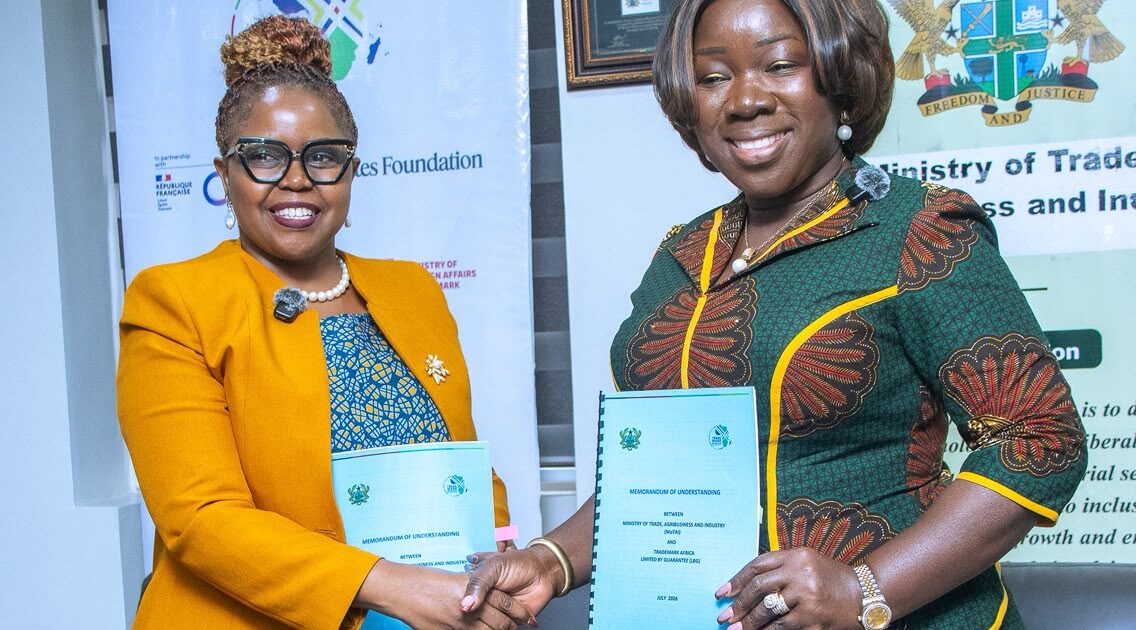
Ghana's Ministry of Trade, Agribusiness and Industry (MoTAI) and TradeMark Africa (TMA) have formally renewed their collaborative efforts through the signing of a Memorandum of Understanding (MoU). This significant Ghana TradeMark Africa partnership renewal aims to bolster trade facilitation, significantly increase exports, and foster sustainable economic growth across the nation. The agreement was officially signed by Elizabeth Ofosu-Adjare, the Minister for Trade, Agribusiness and Industry, and Allen Sophia Asiimwe, the Deputy Chief Executive Officer of TradeMark Africa.
This latest MoU builds upon a foundational partnership established in January 2023, which initially provided a strategic framework for advancing Ghana’s trade and economic development priorities. The renewed commitment underscores both institutions' dedication to deepening their collaboration, particularly in fulfilling Ghana’s obligations under crucial international and regional trade frameworks. These include the World Trade Organization (WTO) Trade Facilitation Agreement, the African Continental Free Trade Area (AfCFTA), and the Economic Community of West African States (ECOWAS) trade agenda.
Strategic Initiatives for Economic Growth
Under the terms of the renewed Ghana TradeMark Africa partnership, MoTAI and TMA will continue to implement the Ghana Country Programme Strategy. This comprehensive strategy is designed to deliver impactful interventions across several key areas: enhancing trade facilitation, promoting regional integration, boosting private sector competitiveness, and improving market access for Ghanaian products. A core component of this strategy involves modernising Ghana's border management systems, a critical step for streamlining cross-border commerce.
Furthermore, the agreement will support efforts to strengthen Ghana's digital trade infrastructure and improve logistics networks, which are vital for efficient trade operations. These initiatives are specifically targeted at reducing both the time and cost associated with moving goods along the strategically important Abidjan–Lagos Corridor. The partnership also commits to promoting stronger standards and quality systems, thereby enhancing the competitiveness of Ghanaian exports, with a particular focus on agricultural and manufactured products. Crucially, the agreement supports Ghana’s preparedness for emerging green trade requirements, ensuring future trade practices are environmentally sustainable.
Inclusive Trade and Tangible Progress
A significant focus of the renewed partnership is to expand opportunities for traditionally underserved groups, including women, young people, and small and medium-sized enterprises (SMEs). This will be achieved through inclusive trade interventions and improved access to trade finance, enabling greater participation in regional and AfCFTA trade. This Ghana trade facilitation MoU is designed to ensure that the benefits of increased trade are widely distributed across the economy.
Minister Ofosu-Adjare highlighted several achievements stemming from the ongoing collaboration, including the recent commissioning of enhanced Ghana border management systems at the Akanu–Noepe Joint Border Post. She noted that the introduction of integrated digital customs systems, modern infrastructure, and solar energy solutions at this border has facilitated 24-hour operations and significantly reduced delays in the movement of goods. Beyond infrastructure, the collaboration has strengthened institutional capacity, provided training for border officials, and offered export-readiness support to SMEs. More than 1,250 women and small-scale cross-border traders have already benefited from support related to AfCFTA procedures, simplified trade processes, and the creation of safer trading environments.
Future Outlook and National Ambitions
Allen Sophia Asiimwe of TradeMark Africa commended the Ghanaian government, particularly MoTAI, for its sustained collaboration, expressing optimism that the renewed partnership will lead to even deeper cooperation and greater results. The renewed MoU is anticipated to serve as a vital platform for scaling up investments, increasing exports, and advancing Ghana’s national ambition of establishing itself as a leading regional trade and investment hub. This aligns seamlessly with Ghana's broader national priorities, which include fostering private sector-led growth, promoting industrialisation, creating jobs, and developing a resilient, export-driven economy.
The comprehensive support for Ghana's trade sector, including the strengthening of Ghana digital trade infrastructure and AfCFTA Ghana trade support, is expected to have a transformative impact. By focusing on these strategic areas, the partnership aims not only to boost economic indicators but also to create a more inclusive and robust trading environment that benefits all segments of Ghanaian society, positioning the nation for sustained prosperity in the regional and global marketplace.
Practical Implications
Lawyers and compliance officers should monitor the implementation of this renewed partnership for changes in Ghana's trade facilitation procedures, customs regulations, and digital trade infrastructure, particularly concerning AfCFTA and ECOWAS trade. This presents opportunities to advise clients on new market access, compliance with evolving trade standards (including green trade requirements), and leveraging support for SMEs, women, and youth in export-oriented businesses.
Source
How does this affect you?
Get an AI analysis of this article grounded in your jurisdictions, practice areas, and any policy documents you've uploaded to Wansom.
Wansom is AI and can make mistakes.