
Ghana's Economy Showing Signs of Stability but Not Fully Recovered from Recent Downturn
Abstract
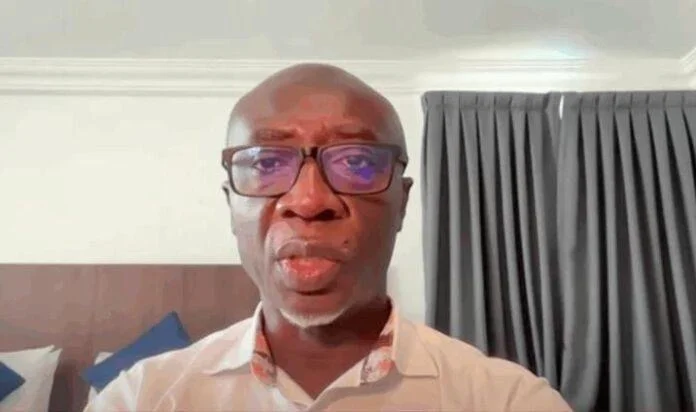
Professor Kwadwo Appiagyei Atua has argued that the Office of the Special Prosecutor (OSP) should not bear sole responsibility for the challenges surrounding Ghana's efforts to secure the return of former Finance Minister Ken Ofori-Atta. Prof Atua stated that other state institutions, including the Attorney-General's Office and Ghana's security agencies, should also be considered in assessing how the matter has developed. The professor expressed concerns about the characterization of Mr Ofori-Atta's departure from Ghana and questioned the relevance of bringing the OSP's extradition request into immigration proceedings.
Introduction
Professor Kwadwo Appiagyei Atua, a Professor of International Law at the University of Ghana, has spoken out against the Office of the Special Prosecutor (OSP) being solely blamed for the challenges surrounding the return of former Finance Minister Ken Ofori-Atta. This comes after a decision by a United States court raised questions about aspects of the evidence presented in Ghana's pursuit of Mr Ofori-Atta, while the OSP maintains that the former minister remains a fugitive from justice. Prof Atua's comments highlight the complex nature of international cooperation in criminal investigations and enforcement.
Background
The Office of the Special Prosecutor (OSP) was established to investigate and prosecute corruption-related cases in Ghana. The OSP has been at the forefront of efforts to secure the return of former Finance Minister Ken Ofori-Atta, who is wanted for alleged corruption and financial crimes. However, a United States court decision has raised questions about aspects of the evidence presented by Ghana, leading to concerns that the OSP may not be solely responsible for the challenges surrounding Mr Ofori-Atta's return.
Analysis
Prof Atua's comments suggest that the responsibility for the situation should extend beyond the OSP to include other state institutions involved in criminal investigations and enforcement. This includes the Attorney-General's Office and Ghana's security agencies, which may have played a role in the matter. The professor also questioned the characterization of Mr Ofori-Atta's departure from Ghana, arguing that he had received permission to travel for medical reasons. However, questions remain over what is currently preventing his return to Ghana.
Conclusion
Prof Atua's comments highlight the need for a more nuanced understanding of international cooperation in criminal investigations and enforcement. Practitioners should be aware that the OSP may not be solely responsible for the challenges surrounding Mr Ofori-Atta's return, and that other state institutions may also be involved. The outcome of this matter has not yet been reported.
How does this affect you?
Get an AI analysis of this article grounded in your jurisdictions, practice areas, and any policy documents you've uploaded to Wansom.
Finish Reading the Full Story and the Expert Analysis.
Wansom is AI and can make mistakes.