
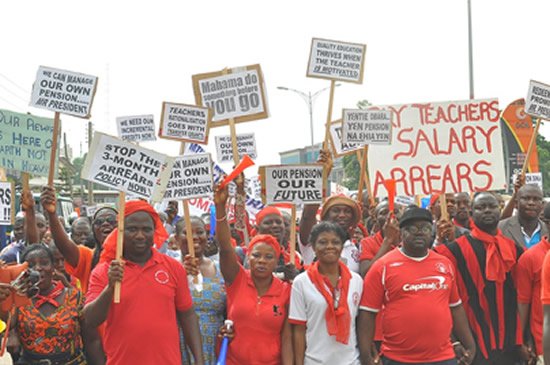
Ghana PTA: Backs Teachers' Strike, Sets October 30 Deadline
Summary
- The National Council of Parents Teachers Association (PTA) has backed the concerns of pre-tertiary teachers in Ghana.
- The PTA threatens to join teacher unions in street protests if the government fails to resolve outstanding issues by an October 30 deadline.
- Raphael Kofi Gapson, Secretary of the Council, stated that parents recognize the legitimacy of teachers' grievances and initially supported their strike.
- Negotiations between teacher unions, the Fair Wages and Salaries Commission (FWSC), and the Ghana Education Service (GES) recently concluded without an agreement but were set to reconvene.
- Mr. Gapson urged teachers to consider returning to classrooms while expressing hope for a resolution to the Ghana education sector industrial action by the end of the current week.
Escalating Teacher Dispute in Ghana
The National Council of Parents Teachers Association has publicly endorsed the concerns of pre-tertiary teachers currently engaged in industrial action, signaling a significant escalation in the ongoing labor dispute within Ghana's education sector.
The National Council of Parents Teachers Association (PTA) has publicly endorsed the concerns of pre-tertiary teachers currently engaged in industrial action, signaling a significant escalation in the ongoing labor dispute within Ghana's education sector. This backing comes with a stern warning: parents are prepared to join teacher unions in street protests if the government fails to address outstanding issues by a firm October 30 deadline.
Raphael Kofi Gapson, Secretary of the Council, articulated the parents' position, emphasizing their recognition of the legitimacy behind the teachers' grievances. He stated that parents believe the government is obligated to honor its commitments to educators. Initially, parents supported the teachers' strike, driven by shared concerns and a desire for the government to take decisive steps toward resolving the impasse. Mr. Gapson highlighted that parents viewed the teachers' demands as genuinely warranted.
Ongoing Negotiations and Parental Expectations
Despite the strong stance, Mr. Gapson also urged teachers to consider returning to their classrooms while negotiations continue. He conveyed the parents' hope that ongoing discussions would yield a resolution by the end of the week following his statements. These crucial discussions involve the Finance Minister, indicating the high-level attention the matter is receiving.
Recent negotiations between teacher unions, the Fair Wages and Salaries Commission (FWSC), and the Ghana Education Service (GES) concluded without a definitive agreement on Tuesday. However, the involved parties were scheduled to reconvene on Wednesday, October 7, as efforts persist to resolve the underlying issues that prompted the nationwide strike. Mr. Gapson expressed optimism that these negotiations could ultimately break the deadlock and facilitate a return to normal school operations.
The October 30 Ultimatum and Broader Implications
The PTA has set a clear ultimatum, giving the government until October 30 to demonstrate concrete progress in fulfilling its obligations to teachers. Failure to meet this deadline, according to Mr. Gapson, will compel the PTA to join teacher unions in widespread street demonstrations against the government. This threat underscores the growing pressure on authorities to find a swift resolution.
Mr. Gapson further stressed that teachers have legitimate financial obligations that must be met, framing the issue as a matter of national priority. The potential for parents to join teacher unions in protests by the October 30 deadline highlights the widespread impact and public concern surrounding this Ghana labour dispute, suggesting that the consequences of inaction could extend beyond the education sector.
Practical Implications
Lawyers advising educational institutions or businesses in Ghana should monitor the escalating teacher strike and the October 30 deadline for potential widespread protests, which could impact operations, contractual obligations, and public order. This situation highlights the need to assess potential business disruptions and compliance risks related to industrial action.
Source
How does this affect you?
Get an AI analysis of this article grounded in your jurisdictions, practice areas, and any policy documents you've uploaded to Wansom.
Finish Reading the Full Story and the Expert Analysis.
Get the latest legal & regulatory intelligence in Ghana
Wansom is AI and can make mistakes.