
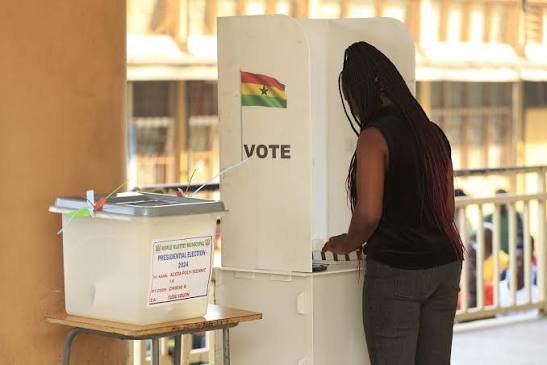
GHANA proposes extending PRESIDENTIAL TERM TO 5 YEARS
Abstract
Ghana's government has accepted several recommendations from a constitutional review committee established in 2025 by President John Dramani Mahama to examine the 1992 Constitution. The most consequential is extending the presidential and parliamentary term from four to five years, on the stated rationale that transitions and election cycles consume too much of a four-year term to allow administrations to implement their agendas fully. The government also accepted lowering the minimum age for presidential candidates from 40 to 35, rejecting the committee's proposal of 30, and agreed to move presidential elections to the first week of November to widen the gap before the 7 January inauguration.
These changes require a constitutional amendment bill to pass through Ghana's legislative process before going to a national referendum in 2027, where at least 40% of registered voters must participate and at least 75% of those voting must approve the change for it to take effect.
Introduction
Ghana operates under the 1992 Constitution, which established the current Fourth Republic following a period of military rule.
The Constitution presently sets a four-year term for the President and for Parliament, with a two-term limit for the presidency, and fixes the minimum age for presidential candidates at 40 years.
Article 289 and the accompanying entrenchment provisions in Chapter 25 of the Constitution classify certain clauses, including provisions on the structure and tenure of the executive and legislature, as requiring both a two-thirds parliamentary majority and a successful national referendum to amend, distinguishing them from non-entrenched provisions that Parliament can amend by ordinary majority.
The government's acceptance of the term-extension proposal on Thursday is the latest step in a constitutional review process Mahama initiated last year, but acceptance by the executive is not adoption.
Ghana's 1992 Constitution designates certain provisions, including the length of the presidential and parliamentary term, as entrenched clauses that cannot be amended by Parliament alone. Any change requires passage of a bill and a national referendum meeting specific turnout and approval thresholds. That referendum is not scheduled until 2027, which means the current announcement marks the start of a multi-year process rather than a settled outcome.
Background
The stated justification, that four-year terms leave administrations too little effective governing time once transition periods and election campaigns are subtracted, is a familiar argument in comparative constitutional design and has precedent in other African states that have extended or shortened presidential terms in recent decades, sometimes controversially. The accompanying changes, a modest reduction in the presidential candidacy age floor and a shift in the election calendar to widen the gap before inauguration, are secondary but not trivial: both affect who can run and how election administration is sequenced
Analysis
The government's acceptance of the committee's recommendations is a political and executive step.
Extending both the presidential and parliamentary term to five years has direct implications for institutional accountability cycles. A longer term extends the interval between electoral accountability checks, which increases the practical importance of non-electoral oversight mechanisms, including Parliament's own oversight committees, the judiciary, and independent bodies such as the Commission on Human Rights and Administrative Justice, during the additional year of any given term
For political parties and candidates, the compliance dimension centres on the revised age floor. A reduction from 40 to 35 broadens eligibility for presidential candidacy, and parties will need to update internal candidate vetting and nomination procedures accordingly once the amendment is finalised. Electoral Commission compliance obligations will also shift if the presidential election date moves to the first week of November, requiring adjustment to nomination, campaign, and results-certification timelines currently built around the existing December election date.
Conclusion
Ghana's government has taken a clear position on extending presidential and parliamentary terms, but the entrenched nature of these constitutional provisions means the outcome remains genuinely open until the 2027 referendum. The high turnout and approval thresholds, and Ghana's own recent history of a failed constitutional referendum, mean this cannot be treated as a settled reform. Decision-makers should track the bill's parliamentary passage as the next concrete milestone, and treat the period leading to the 2027 vote as a sustained period of political and institutional attention rather than a short-term news cycle
Citations
- 1.Constitution of the Republic of Ghana, 1992, Chapter 25 (Amendment of the Constitution), including Articles 289 and 290 on entrenched provisions and referendum thresholds.
- 2.Constitution of the Republic of Ghana, 1992, Article 63 (Presidential election and inauguration provisions).
- 3.Constitution of the Republic of Ghana, 1992, Article 43 (Electoral Commission of Ghana).
- 4.Constitutional Review Committee, established 2025 under President John Dramani Mahama, Report and Recommendations on Constitutional Review.
- 5.Electoral Commission of Ghana, administrative framework for national referenda and elections.
Finish Reading the Full Story and the Expert Analysis.
Get the latest legal & regulatory intelligence in Ghana
Wansom is AI and can make mistakes.