
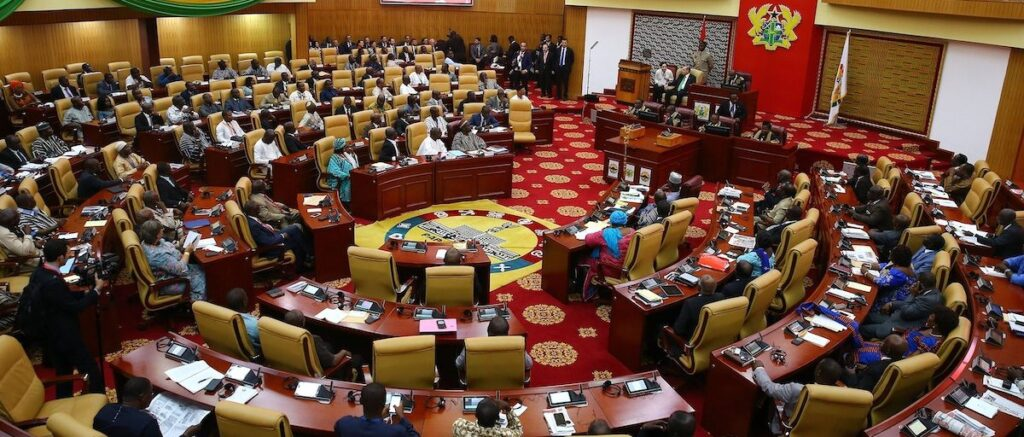
Ghana Parliament Corrects Constitutional Flaw in Cocoa Bill Mining Provision
Summary
- Parliament corrected a constitutional flaw in the Ghana Cocoa Board Bill, 2026, which has been passed by Parliament and is awaiting presidential assent, by deleting a provision requiring COCOBOD Chief Executive approval for mining activities.
- The problematic provision was found to be inconsistent with both the Constitution and the Minerals and Mining Act.
- The correction ensures that the legislation aligns with existing laws, promoting sustainable practices and protecting cocoa farmers' interests.
Constitutional Flaw Corrected in Cocoa Bill
This anomaly was identified through Parliament's rigorous scrutiny process, which involves clause-by-clause examination by experienced lawyers.
The Ghanaian Parliament has made significant changes to the Ghana Cocoa Board Bill, 2026, which has been passed by Parliament and is awaiting presidential assent, addressing a critical issue that had been overlooked during its drafting process. A provision requiring COCOBOD Chief Executive approval for mining activities was found to be inconsistent with both the Constitution and the Minerals and Mining Act. This anomaly was identified through Parliament's rigorous scrutiny process, which involves clause-by-clause examination by experienced lawyers. As a result of this review, the problematic provision has been deleted from the Bill, ensuring that it aligns with existing laws. The correction is seen as a major improvement to the legislation, which aims to protect cocoa farmers and promote sustainable practices in the sector.
Legal Context: Mineral Deposits and Licensing
According to the Constitution of Ghana, mineral deposits are vested in the President. This means that any mining activities must be authorized by the President or their representative, typically through a minister acting on their behalf. The Minerals and Mining Act, 2006 (Act 703), as amended, further clarifies this process, outlining the procedures for issuing mining licenses. In light of these laws, requiring an additional approval from the COCOBOD Chief Executive after a valid license has been issued would create a conflict with the constitutional framework. This is because it would imply that the President's authority is being undermined by an internal agency within the cocoa sector.
Why It Matters: Reforms and Scrutiny
The Ghana Cocoa Board Bill, 2026, introduces several reforms aimed at protecting cocoa farmers' interests and promoting sustainable practices. These changes were not previously present in laws governing the sector, indicating a significant shift towards more equitable and environmentally conscious policies. The Parliament's scrutiny process played a crucial role in identifying and addressing potential issues within the Bill. This rigorous examination ensures that legislation is thoroughly vetted before passage, preventing unintended consequences and protecting the rights of all stakeholders involved.
Practical Implications
Lawyers should note that the new Cocoa Bill in Ghana has been amended to remove a provision requiring COCOBOD Chief Executive approval for mining activities, which was found to be inconsistent with the Constitution and Minerals and Mining Act. Compliance officers should review their internal procedures to ensure they are not inadvertently relying on this now-deleted provision.
Source
How does this affect you?
Get an AI analysis of this article grounded in your jurisdictions, practice areas, and any policy documents you've uploaded to Wansom.
Wansom is AI and can make mistakes.