
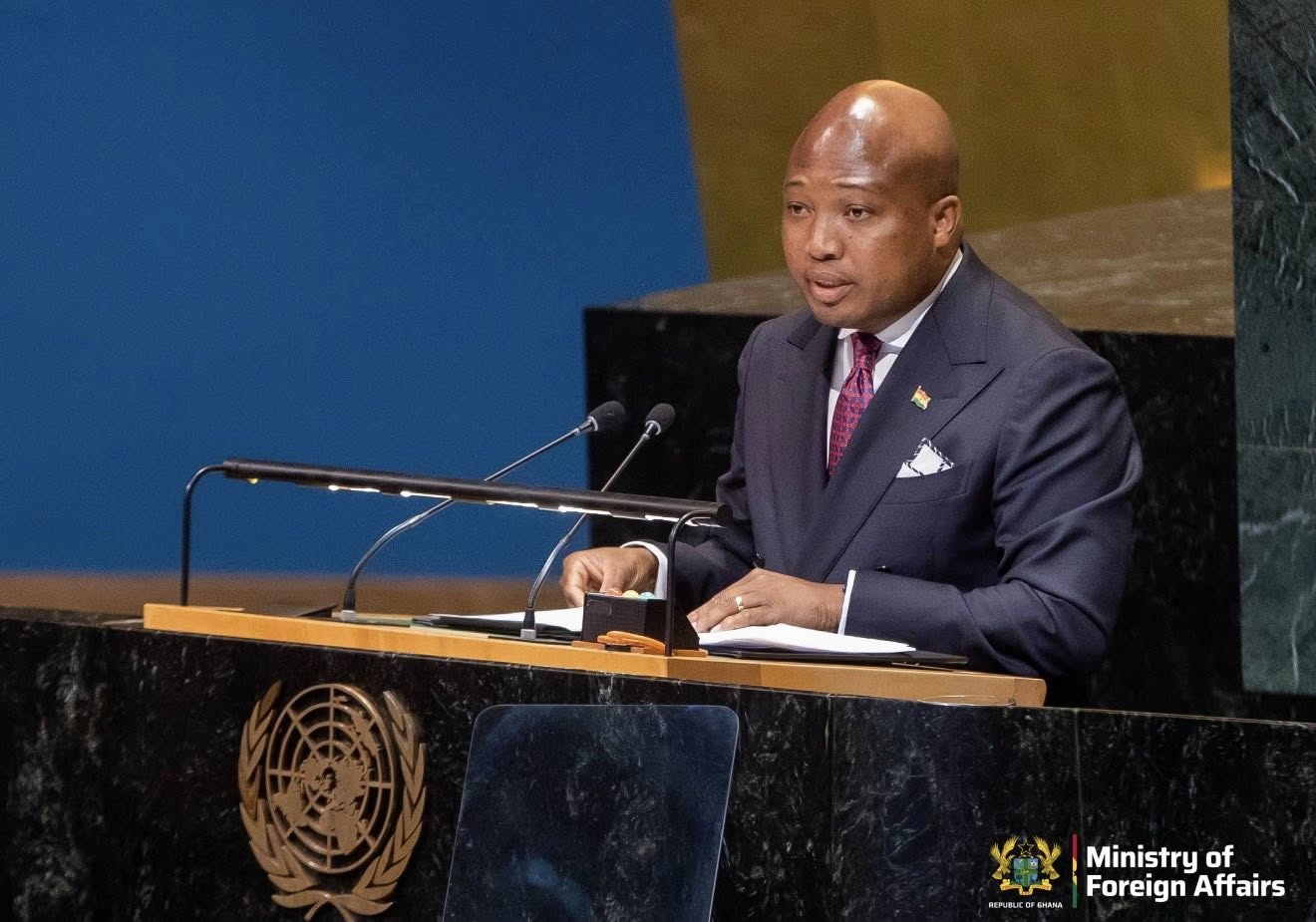
Ghana: Opposes ICC Abolition At UN General Assembly, Urges Strengthening
Summary
- Ghana has rejected calls to abolish the International Criminal Court (ICC), advocating for its strengthening to ensure accountability for crimes against humanity.
- Foreign Affairs Minister Samuel Okudzeto Ablakwa articulated this position at the United Nations General Assembly during the 25th anniversary of the Durban Declaration.
- He called for renewed global action against racism, racial discrimination, and historical injustices, emphasizing severe consequences for human rights violators.
- Mr. Ablakwa highlighted a Ghana-led UN resolution adopted this year, which declared the trafficking of enslaved Africans the gravest crime against humanity.
- He also questioned Africa's continued absence from permanent membership on the UN Security Council, noting the continent's population of about 1.4 billion.
Ghana's Stance on International Justice
Ghana has firmly rejected proposals to dismantle the International Criminal Court (ICC), advocating instead for its reinforcement to ensure robust accountability for individuals responsible for crimes against humanity.
Ghana has firmly rejected proposals to dismantle the International Criminal Court (ICC), advocating instead for its reinforcement to ensure robust accountability for individuals responsible for crimes against humanity. This unequivocal position was articulated by Foreign Affairs Minister Samuel Okudzeto Ablakwa during a session of the United Nations General Assembly. The occasion marked the 25th anniversary of the Durban Declaration and Programme of Action, providing a platform for Ghana to underscore its commitment to international justice.
Minister Ablakwa emphasized that the global community must safeguard the ICC, rather than condemn it, asserting that severe repercussions are essential for those who commit heinous crimes against humanity and flagrantly disregard the foundational principles of the Durban Declaration. Ghana's stance highlights a proactive approach to international criminal justice, seeking to bolster institutions designed to uphold human rights and deter atrocities. This intervention at the UN General Assembly signals Ghana's consistent advocacy for a stronger international legal framework.
Addressing Global Injustices and Human Rights
Beyond the immediate focus on the ICC, Mr. Ablakwa utilized the anniversary of the Durban Declaration to issue a renewed global appeal for action against racism, racial discrimination, and historical injustices. He pointed out that a quarter-century after the declaration's adoption, the world continues to grapple with pervasive anti-Black racism, escalating xenophobic attacks, and devastating conflicts, specifically citing ongoing crises in Palestine and Sudan. His remarks underscored the persistent challenges in achieving true global equity and peace.
The Foreign Affairs Minister's address stressed the imperative for the international community to confront these enduring issues with greater resolve. He reiterated the necessity of imposing stringent penalties on perpetrators of human rights violations, aligning with the spirit of the Durban Declaration which seeks to combat discrimination in all its forms. Ghana's representative thus framed the discussion around the ICC within a broader context of systemic global inequalities and the urgent need for comprehensive human rights protection.
Reparatory Justice and UN Reform
Further expanding on the theme of historical injustice, Mr. Ablakwa delved into the critical issue of reparatory justice. He highlighted how the enduring legacy of slavery and the trafficking of enslaved Africans continues to fuel contemporary inequalities across the globe. In a significant development, he referenced a United Nations resolution, spearheaded by Ghana and adopted earlier this year, which formally recognized the trafficking of enslaved Africans as the gravest crime against humanity. This resolution represents a pivotal step in the ongoing efforts to achieve reparatory justice for historical wrongs.
Additionally, Ghana's representative raised a pertinent question regarding the structure of the United Nations itself, specifically challenging Africa's continued exclusion from permanent membership on the UN Security Council. He noted the continent's substantial population, approximately 1.4 billion people, as a compelling reason for its inclusion in the council's permanent ranks. This call for Africa UN Security Council reform underscores Ghana's broader vision for a more equitable and representative international governance system, advocating for stronger international action to address both historical and contemporary injustices and to ensure greater accountability for human rights violations worldwide.
Practical Implications
This article signals Ghana's strong commitment to international criminal justice and human rights frameworks, which could influence its approach to international legal cooperation, extradition requests, and domestic implementation of international law. Lawyers advising on international human rights, criminal law, or investment in Ghana should note this consistent policy stance.
Source
How does this affect you?
Get an AI analysis of this article grounded in your jurisdictions, practice areas, and any policy documents you've uploaded to Wansom.
Finish Reading the Full Story and the Expert Analysis.
Get the latest legal & regulatory intelligence in Ghana
Wansom is AI and can make mistakes.