
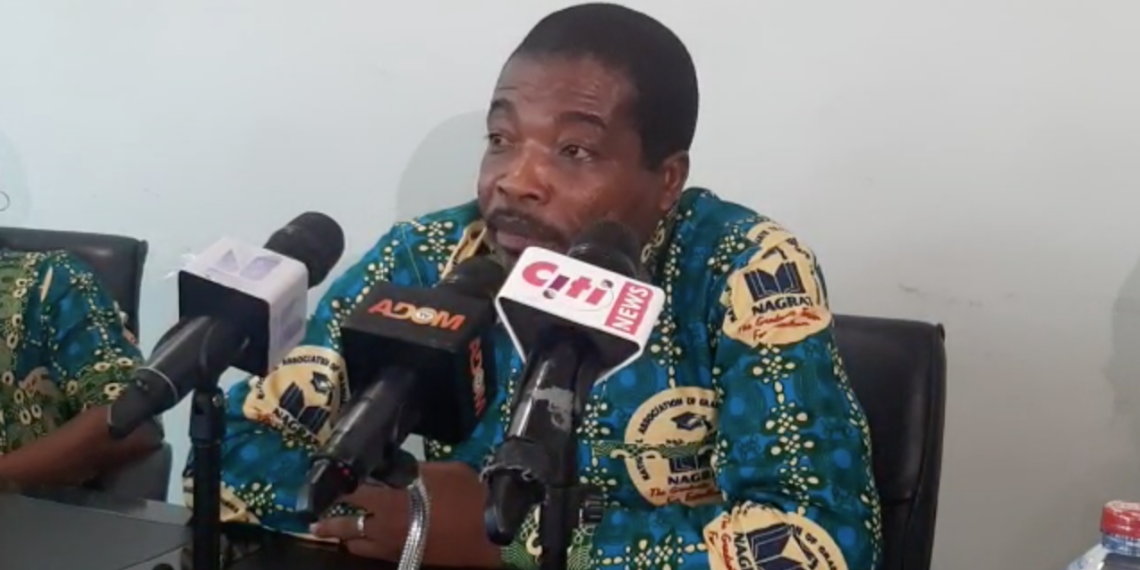
NAGRAT Ghana: Teacher Salary September Deadline Demanded
Summary
- NAGRAT has urged the Ghanaian government to communicate promptly if it cannot meet the September deadline for teacher promotional salary adjustments.
- The union granted a one-month period for resolution after an emergency meeting with the Education Ministry, Controller and Accountant General’s Department, and Ghana Education Service.
- NAGRAT President Jacob Anaba expressed cautious confidence due to the presence of key officials, including the Minister for Finance, at the discussions.
- Approximately 80,000 teachers are affected by these adjustments, and early notice is crucial for NAGRAT to inform its members.
- The union deliberately agreed to the September deadline, considering the current economic circumstances, and will monitor implementation.
Deadline Looms for Teacher Salary Adjustments
Legal professionals advising the Ghanaian government, especially departments such as the Ministry of Education or the Controller and Accountant General's Department, must therefore recognize the critical importance of this September deadline.
The National Association of Graduate Teachers (NAGRAT) has issued a clear directive to the Ghanaian government, urging prompt communication if it anticipates any inability to meet a critical September deadline. This deadline is set for the resolution of outstanding issues specifically related to Ghana teacher promotional salary adjustments. Jacob Anaba, the President of NAGRAT, publicly articulated the union's expectation for transparent and timely updates, underscoring the importance of adherence to the September cut-off for these vital remuneration changes.
Following an intensive emergency meeting that convened key governmental and educational stakeholders, NAGRAT formally granted the government a one-month window to finalize these long-pending adjustments. The discussions involved high-ranking representatives from the Ministry of Education, the Controller and Accountant General’s Department, and the Ghana Education Service, highlighting the gravity of the ongoing public sector salary negotiations. This specific period of grace was a deliberate concession by the union, made in consideration of the prevailing national economic circumstances, rather than insisting on immediate implementation of the salary revisions.
High-Level Engagements and Cautious Optimism
The pivotal emergency meeting, which ultimately established the September deadline, was characterized by the presence of several influential government officials. Among the attendees were the Controller and Accountant General, the Director General of the Ghana Education Service, and the Minister for Finance, signifying the high-level commitment to addressing the teachers' concerns. NAGRAT President Jacob Anaba conveyed a measured sense of confidence regarding the government's stated commitment, directly attributing this cautious optimism to the senior leadership involved in the discussions.
Anaba's statement, delivered during an interview on Joy FM's Top Story on August 31, underscored the union's reliance on the perceived openness and transparency that marked these high-level engagements. Despite this guarded positive outlook, NAGRAT has unequivocally stated its intention to rigorously monitor the implementation process to ensure that the agreed-upon promotional salary adjustments are indeed executed as planned. This proactive stance by NAGRAT aims to diligently protect the financial interests of its members while navigating the broader landscape of Ghana public sector salary negotiations.
Implications for Industrial Relations and Legal Compliance
The potential failure to meet the NAGRAT Ghana teacher salary September deadline without prior, adequate communication carries substantial ramifications, particularly for the approximately 80,000 teachers whose promotional salary adjustments are currently pending. Jacob Anaba explicitly emphasized that early notification of any impending difficulties would be crucial, enabling NAGRAT to effectively disseminate information to its extensive membership, thereby mitigating uncertainty and averting potential industrial unrest.
This proactive and transparent communication is not merely a courtesy; it is fundamental for maintaining stable industrial relations within Ghana's vital education sector. Should the government encounter unforeseen operational or financial obstacles, the absence of timely updates could swiftly transform Ghana Education Service salary issues into more widespread and contentious disputes. Legal professionals advising the Ghanaian government, especially departments such as the Ministry of Education or the Controller and Accountant General's Department, must therefore recognize the critical importance of this September deadline. Ensuring clear, consistent communication is paramount to avoiding further negotiation impasses and upholding compliance with established public sector remuneration policies.
Practical Implications
Lawyers advising the Ghanaian government, particularly the Ministry of Education or Controller and Accountant General's Department, or public sector unions like NAGRAT, should monitor the September deadline for teacher salary adjustments. Failure to meet the deadline or communicate effectively could lead to industrial relations disputes or necessitate further negotiation and compliance with public sector remuneration policies.
Source
How does this affect you?
Get an AI analysis of this article grounded in your jurisdictions, practice areas, and any policy documents you've uploaded to Wansom.
Finish Reading the Full Story and the Expert Analysis.
Wansom is AI and can make mistakes.