
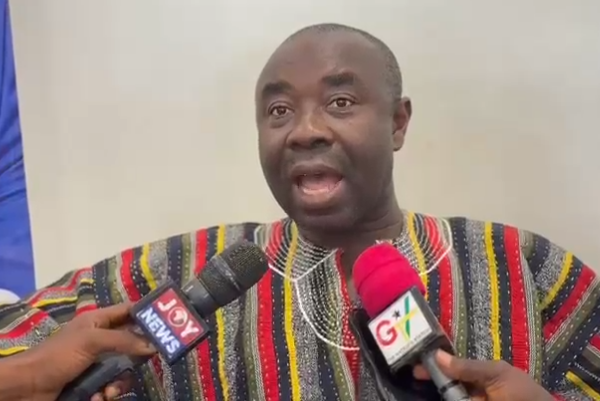
Ghana Labour Minister: Teachers Strike Dialogue Confident of Resolution
Summary
- Three teacher unions in Ghana initiated an indefinite strike on September 25 over various employment grievances.
- Labour Minister Emmanuel Kwadwo Agyekum expressed confidence that dialogue would resolve the dispute, ruling out punitive measures.
- An emergency meeting on October 9 covered the collective agreement, teacher promotions, and deprived-area allowances.
- The Minister anticipated a positive resolution to the industrial action by the close of the day.
- The strike has significantly disrupted public pre-tertiary education across the country.
The Ongoing Industrial Action
This approach signals a potential shift in the government's strategy for managing public sector labour disputes, prioritizing negotiation over more forceful interventions.
Three prominent teacher unions in Ghana initiated an indefinite industrial action on Friday, September 25, following the government's failure to address their grievances by a September 24 deadline. This widespread strike has significantly disrupted teaching and learning activities across public pre-tertiary schools nationwide, placing considerable pressure on the government to find a swift resolution. The unions' primary concerns revolve around several long-standing employment issues, including the non-payment of salary arrears for promoted teachers, delays in finalizing a new Collective Agreement, and the non-implementation of the Deprived Area Allowance.
In response to the escalating situation, Ghana's Labour Minister, Emmanuel Kwadwo Agyekum, has voiced strong confidence that the dispute can be resolved through constructive dialogue, explicitly ruling out the need for any alternative, more forceful measures to compel teachers back to their classrooms. This optimistic outlook emerged after an emergency meeting held on October 9 with representatives from the striking teacher unions. The government is intensifying its efforts to engage with the unions, aiming to restore normalcy to the educational sector as quickly as possible.
Government's Approach to Resolution
Following the critical October 9 meeting, Minister Agyekum characterized the discussions as highly positive, expressing a firm belief that substantial progress towards ending the industrial action would be achieved by the close of the day. The negotiations during this emergency session focused on three key areas central to the teachers' demands: the comprehensive collective agreement, various issues pertaining to teacher promotions, and the implementation framework for deprived-area allowances. These topics represent the core of the Ghana teacher unions industrial action.
Minister Agyekum emphasized that the depth and sincerity of the discussions reinforced his conviction that a mutually acceptable resolution was within reach. When questioned about the possibility of the government resorting to punitive measures should negotiations fail, the Minister unequivocally dismissed such an approach. He reiterated that the positive trajectory of the talks made any consideration of alternative steps unnecessary, maintaining his expectation for a favorable announcement before the day concluded. This stance underscores a preference for collaborative problem-solving in the Ghana public sector labour dispute.
Implications for Public Sector Labour Relations
The current industrial action and the government's response, particularly the Ghana Labour Minister teachers strike dialogue, carry significant implications for future public sector labour disputes in the country. Minister Agyekum's explicit commitment to dialogue and his rejection of coercive tactics signal a potential strategic shift in how the government intends to manage such conflicts. This approach suggests a recognition of the critical importance of engaging with unions through negotiation rather than confrontation, which could set a precedent for resolving other labour issues, including those related to Ghana teachers salary arrears and Ghana Collective Agreement negotiations.
This situation highlights the crucial need for timely and effective resolution of employment-related grievances within the public sector. The prolonged nature of issues such as salary arrears and delays in collective bargaining agreements can lead to widespread industrial action, severely impacting essential services like education. The Minister's confidence in achieving a resolution through discussion, without resorting to punitive measures, indicates a strategic pivot towards fostering more stable and cooperative labour relations across the public service. This approach signals a potential shift in the government's strategy for managing public sector labour disputes, prioritizing negotiation over more forceful interventions.
Practical Implications
Lawyers advising public sector employers or unions in Ghana should note the government's explicit preference for dialogue over punitive measures in resolving industrial disputes, indicating a potential shift in strategy for future labour negotiations. This also highlights the critical importance of timely resolution of salary arrears and collective bargaining agreements to prevent prolonged industrial action.
Source
How does this affect you?
Get an AI analysis of this article grounded in your jurisdictions, practice areas, and any policy documents you've uploaded to Wansom.
Finish Reading the Full Story and the Expert Analysis.
Get the latest legal & regulatory intelligence in Ghana
Wansom is AI and can make mistakes.