
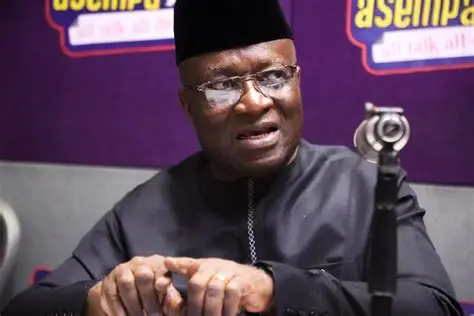
Kyei-Mensah-Bonsu: Ghana MP Arrest Privilege Violated by EOCO
Summary
- Former Majority Leader Osei Kyei-Mensah-Bonsu criticized an attempted arrest of MP Nana Agyei Baffour Awuah by EOCO personnel at the Accra High Court on September 23.
- Kyei-Mensah-Bonsu emphasized that while Members of Parliament have constitutional privileges, these do not place them above the law or exempt them from accountability.
- He highlighted that EOCO's initial invitation was directed to the MP's associated law firm, which had already engaged with the agency and submitted a statement.
- The former leader urged state institutions to respect constitutional mandates and follow established legal procedures when dealing with legislators.
- He warned that actions perceived as disregarding parliamentary privileges could create tension and undermine Ghana's democracy.
Incident Under Scrutiny
Protecting parliamentary privileges is not about shielding Members of Parliament from accountability, but about ensuring that the constitutional role of Parliament is respected while the law takes its course.
On Wednesday, September 23, a tense confrontation unfolded at the Accra High Court, drawing sharp criticism from former Majority Leader Osei Kyei-Mensah-Bonsu regarding the attempted arrest of a Ghanaian legislator. The incident involved security personnel, believed to be from the Economic and Organised Crime Office (EOCO), and Member of Parliament Nana Agyei Baffour Awuah. This clash occurred within the court's precincts, sparking immediate concerns about the conduct of law enforcement officials and their respect for parliamentary privilege in Ghana. Lawyers representing detained Techiman-based nurse Salomey Baffoe Awiti were also reportedly involved in the altercation.
Speaking on Joy FM's Super Morning Show the following day, Thursday, September 24, Mr. Kyei-Mensah-Bonsu characterized the event as “the most unfortunate.” He specifically highlighted the location of the confrontation—within the court premises—as a factor that made the situation particularly troubling. His comments underscored a broader call for strict adherence to due process when state institutions engage with Members of Parliament.
The Due Process Debate
Mr. Kyei-Mensah-Bonsu elaborated on the specifics of the case involving MP Nana Agyei Baffour Awuah, questioning the EOCO MP arrest procedure. He explained that the initial invitation from EOCO had been directed to the law firm with which the Member of Parliament was associated, rather than to the legislator in his personal capacity. Following this, the law firm consulted the Clerk’s Department of Parliament and subsequently appointed a senior officer to engage with the investigative body.
This designated representative reportedly interacted with EOCO on three separate occasions, with these engagements ultimately leading to the submission of a formal statement. Given this established communication and cooperation, Mr. Kyei-Mensah-Bonsu expressed bewilderment regarding EOCO's subsequent attempt to arrest the Ghanaian legislator. He noted that the agency had not indicated any apprehension or expressed a desire for further invitations to the firm or its representatives, making the resort to an attempted arrest seem unwarranted and unnecessary. He cautioned that such actions, perceived as disregarding parliamentary privilege Ghana, could dangerously escalate tensions between state institutions.
Upholding Constitutional Mandates
While advocating for rigorous due process, Osei Kyei-Mensah-Bonsu was clear that parliamentary privileges do not elevate Members of Parliament above the law. He stressed that these constitutional protections, afforded to legislators in the discharge of their duties, do not exempt them from accountability or legitimate investigations. Instead, he argued that the appropriate approach for any action against an MP must strictly follow established legal and constitutional procedures, ensuring that legal means are employed to achieve legal ends.
The former Majority Leader further urged all Ghana constitutional mandates state institutions to respect one another's distinct roles and authority. He maintained that disagreements involving legislators should always be resolved through lawful channels, rather than through actions that could potentially undermine the authority of Parliament. Ultimately, Mr. Kyei-Mensah-Bonsu emphasized that protecting parliamentary privileges is not about shielding Members of Parliament from accountability, but about ensuring that the constitutional role of Parliament is respected while the law takes its course.
Practical Implications
Lawyers advising state agencies or Members of Parliament in Ghana must be acutely aware of the constitutional provisions governing parliamentary privilege and the established procedures for engaging with or investigating legislators. This incident underscores the critical need for strict adherence to due process to avoid procedural missteps and potential constitutional challenges, especially in high-profile cases involving public officials.
Source
How does this affect you?
Get an AI analysis of this article grounded in your jurisdictions, practice areas, and any policy documents you've uploaded to Wansom.
Finish Reading the Full Story and the Expert Analysis.
Get the latest legal & regulatory intelligence in Ghana
Wansom is AI and can make mistakes.