
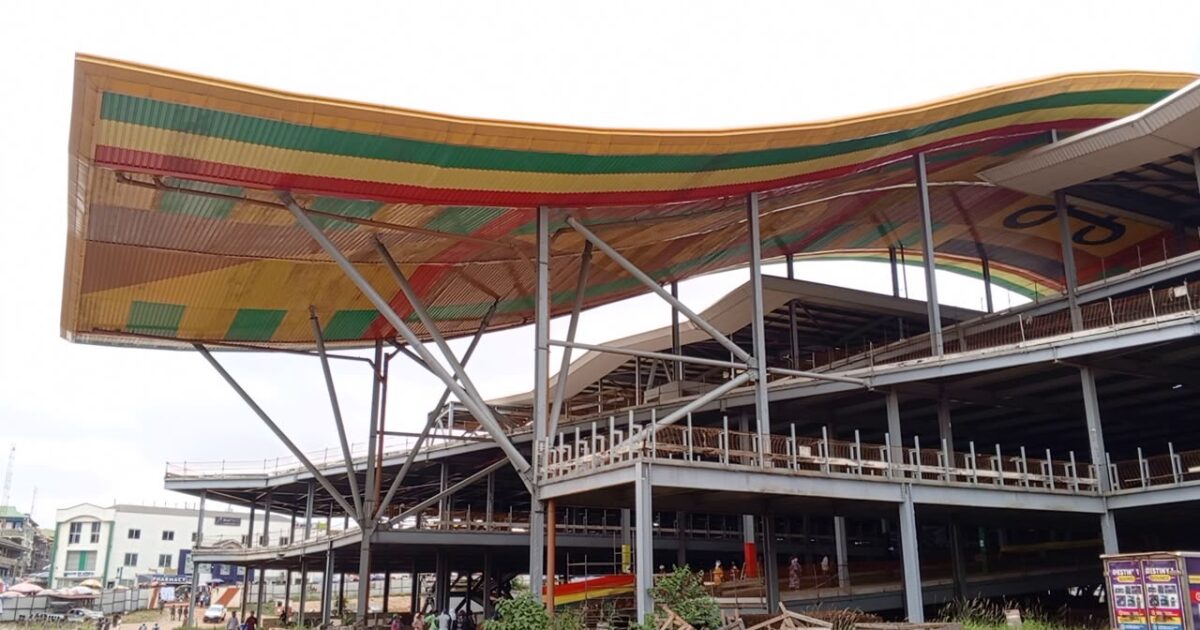
Ghana Ministry: Kejetia Market Shop Premium Resale Undermines Project
Summary
- Ghana's Ministry of Local Government, Chieftaincy and Religious Affairs discovered shop owners at Kejetia market's Phase One are reselling stalls for up to GH¢120,000, significantly above the original GH¢25,000 premium.
- This unauthorized subletting has led to a major funding shortfall, with only GH¢89 million collected out of an expected GH¢165.3 million for the market's redevelopment.
- The deficit threatens the funding for Phases Two and Three of the Kumasi Central Market project, which aims to add modern trading facilities.
- Authorities plan to implement new premium collection methods for future phases, including charging the "real value" of stalls and outsourcing collection to an independent entity.
- Minister for Local Government, Chieftaincy and Religious Affairs Mahama Ayariga and Kumasi Mayor Richard Ofori Agyemang Boadi have condemned the practice, emphasizing the need for the state to capture the true market value.
Investigation Uncovers Market Premium Abuse
This unauthorized subletting has led to a major funding shortfall, with only GH¢89 million collected out of an expected GH¢165.3 million for the market's redevelopment.
The Ministry of Local Government, Chieftaincy and Religious Affairs in Ghana has identified a concerning pattern of unauthorized resale and subletting of commercial spaces within Phase One of the Kumasi Central Market Redevelopment project, commonly known as Kejetia market. Ministry officials describe this practice as an "unfair trend," where original shop occupants are demanding prices significantly higher than the initial premium paid for their stalls. A preliminary assessment of premium payments revealed that some shop owners, who acquired their spaces for GH¢25,000, are subsequently reselling or subletting them for figures ranging between GH¢100,000 and GH¢120,000. This represents a markup of up to four times the original premium.
During a government stakeholder meeting held in Kumasi, Minister for Local Government, Chieftaincy and Religious Affairs Mahama Ayariga highlighted the disparity, noting that if GH¢100,000 represents the true market rate for these shops, then the state should be collecting that amount to adequately fund subsequent phases of the redevelopment. Kumasi Mayor Richard Ofori Agyemang Boadi corroborated these findings, citing instances of individuals who are not active traders acquiring multiple shops and then reselling them at the inflated market rate, rather than the GH¢25,000 premium set for the five-year tenancy. This Kejetia market shop subletting dispute underscores a broader challenge in trader premium payment enforcement Ghana.
Funding Shortfall Threatens Redevelopment
The widespread practice of Ghana Kejetia market shop premium resale has severely impacted the financial viability of the broader Kumasi Central Market redevelopment premium project. Authorities had anticipated collecting GH¢165.3 million in premium payments over a five-year lease period for Phase One. However, the actual collection has fallen significantly short, with only GH¢89 million secured to date. This substantial deficit, representing less than half of the projected revenue, has been attributed to "lackadaisical" premium payments and the failure of many occupants to honor their financial obligations, even as the five-year tenancy expiry date has passed for some.
These expected revenues from Phase One were critical for financing the subsequent stages of the ambitious redevelopment. Phase Two of the project, which involves adding substantial modern trading and support facilities to the existing Kejetia complex, was contracted in December 2018 for 248 million euros and was projected to be completed within 48 months. The current funding shortfall directly jeopardizes the timely completion of both Phase Two and the planned Phase Three, as the initial strategy relied on internally generated funds rather than external borrowing.
New Enforcement Measures Planned
In response to the identified issues, the Ministry of Local Government, Chieftaincy and Religious Affairs Ghana market shops oversight, in conjunction with the local assembly, is actively developing new strategies for premium collection and enforcement. For Phase Two, a key shift will involve collecting the "real value" of the stalls, moving away from the previously set, lower premium. The intent is to utilize proceeds from both Phase One and Phase Two to fund Phase Three entirely, thereby eliminating the need for external loans. This signals a stricter approach to Ghana market stall tenancy agreements.
Upcoming "crunch meetings" are scheduled to bring together the assembly, the Minister for Local Government, Chieftaincy and Religious Affairs, and traders to deliberate on appropriate valuations for market stalls, aiming to generate sufficient income for the facility's ongoing management. Furthermore, an independent entity is expected to be outsourced specifically for the collection of market premiums for Phase Two and all subsequent phases of the project. Tony Yeboah-Asare, a consultant from Avangarde Design Services involved with the project, underscored the critical importance of regular and adequate premium payments to ensure the proper and sustainable management of the Kejetia market facility.
Practical Implications
Lawyers advising clients with commercial interests in government-developed markets, particularly in Ghana, should review existing tenancy agreements and prepare for potential renegotiation of premium payments and stricter enforcement against unauthorized subletting. This development signals a shift towards government efforts to reclaim market value from public assets, setting a precedent for future market projects and potentially leading to new regulations or disputes over existing arrangements.
Source
How does this affect you?
Get an AI analysis of this article grounded in your jurisdictions, practice areas, and any policy documents you've uploaded to Wansom.
Finish Reading the Full Story and the Expert Analysis.
Get the latest legal & regulatory intelligence in Ghana
Wansom is AI and can make mistakes.