
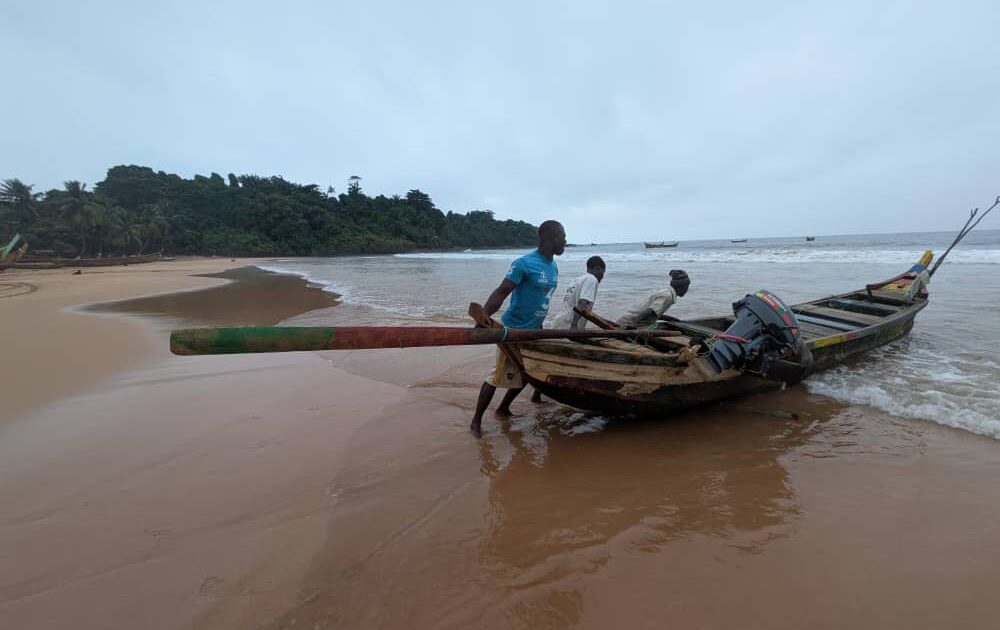
Ghana: Greater Cape Three Points MPA Monitoring Gap Exposes Lack of Enforcement
Summary
- Ghana officially declared the 703.86 sq km Greater Cape Three Points Marine Protected Area on April 14, 2026.
- Five months after its declaration, the MPA lacks marked boundaries, operational patrols, and government funding.
- Local fishermen reportedly do not know the precise limits of the protected area.
- The MPA is not operationalized as a distinct boundary on Global Fishing Watch, hindering digital monitoring of activity.
- This reflects a broader lack of full operationalization for the protected zone, both physically and digitally.
The Unimplemented Protected Zone
The pronounced Ghana Greater Cape Three Points MPA monitoring gap means that the protected status, while legally declared, lacks the necessary infrastructure for effective oversight and management.
Ghana officially designated its inaugural marine protected area (MPA), the Greater Cape Three Points Marine Protected Area, on April 14, 2026. This significant environmental declaration established a protected zone spanning 703.86 square kilometers. However, despite its formal declaration, the practical implementation of this crucial conservation initiative has lagged considerably.
A full five months after the MPA's establishment, fundamental operational elements remain absent. There are no clearly marked boundaries delineating the protected area, nor have any operational patrols been initiated to monitor activity within its designated expanse. Furthermore, the government has yet to allocate specific funding to support the MPA's ongoing management and enforcement efforts, leaving its declared status largely theoretical. This lack of tangible presence has led to confusion among local fishermen, who report being unaware of precisely where the protected zone begins or ends, undermining the very purpose of its creation.
Digital Blind Spots and Enforcement Challenges
The challenges facing the Greater Cape Three Points MPA extend beyond physical implementation into the digital realm, creating a significant monitoring gap. One of the world's foremost open-access platforms for tracking fishing activity at sea, Global Fishing Watch, currently does not recognize Ghana's first marine protected area as a separately operationalized boundary. This omission means that despite the MPA's official declaration, the platform cannot isolate and visualize vessel activity specifically within the 703.86 sq km protected zone.
This digital oversight is symptomatic of a broader issue concerning the Greater Cape Three Points MPA operationalization. The absence of the MPA from Global Fishing Watch does not, in itself, confirm that fishing vessels have entered the protected area. Instead, it underscores a more fundamental problem: five months post-declaration, the zone has not been fully integrated into either on-the-ground enforcement mechanisms or the digital systems that are vital for effective monitoring and compliance with Ghana fishing regulations. This creates substantial hurdles for Ghana marine protected area enforcement, as authorities and researchers lack essential tools to track and analyze activity within the designated area.
Implications for Compliance and Conservation
The current state of the Greater Cape Three Points MPA presents significant implications for both marine conservation and the maritime industry operating in Ghana. The pronounced Ghana Greater Cape Three Points MPA monitoring gap means that the protected status, while legally declared, lacks the necessary infrastructure for effective oversight and management. Without clear boundaries, patrols, or digital tracking capabilities, the area's ecological integrity remains vulnerable, and the conservation objectives are difficult to achieve.
For legal professionals advising clients in Ghana's fishing or maritime industries, this situation creates considerable uncertainty. The lack of operationalization and clearly defined boundaries for the Greater Cape Three Points MPA directly impacts compliance obligations. Businesses and vessel operators are left without precise guidance on where restrictions apply, making adherence to future regulations challenging and potentially exposing them to unforeseen enforcement actions once the MPA becomes fully operational. This fundamental problem highlights the critical need for comprehensive operationalization to ensure both environmental protection and regulatory clarity.
Practical Implications
Lawyers advising clients in Ghana's fishing or maritime industries should note the current lack of operationalization and clear boundaries for the Greater Cape Three Points MPA. This creates significant uncertainty regarding compliance obligations and potential enforcement challenges, as the declared protected status is not yet effectively implemented or monitored.
Source
How does this affect you?
Get an AI analysis of this article grounded in your jurisdictions, practice areas, and any policy documents you've uploaded to Wansom.
Finish Reading the Full Story and the Expert Analysis.
Get the latest legal & regulatory intelligence in Ghana
Wansom is AI and can make mistakes.