
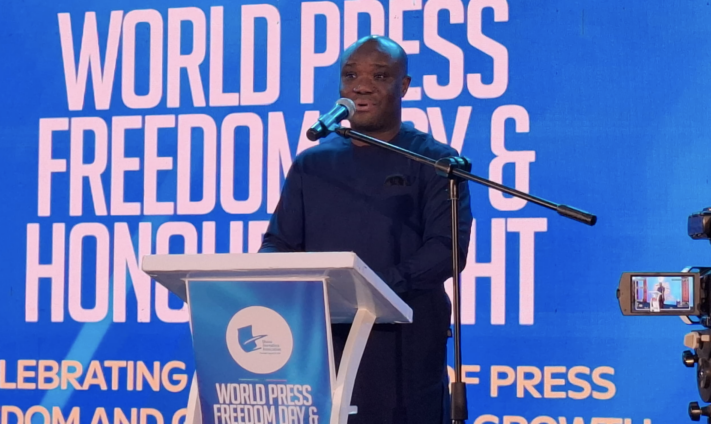
Ghana Government: Free Speech Not Cover for Criminal Conduct
Summary
- Minister Felix Kwakye Ofosu stated the Ghanaian government is not restricting freedom of expression.
- He emphasized the need to distinguish legitimate criticism from criminal conduct.
- His comments followed public concerns about democratic freedoms, including the arrest of nurse Salomey Baffoe Awiti in Techiman.
- The government's stance aims to balance free speech with the enforcement of existing laws.
What Happened
Legal professionals must now carefully assess potential legal risks by considering the government's articulated position.
The Ghanaian government, through its Minister for Government Communications, Felix Kwakye Ofosu, recently addressed mounting concerns regarding the state of democratic freedoms and freedom of expression within the nation. Mr. Ofosu explicitly refuted allegations that the current administration is actively curtailing free speech, emphasizing a crucial distinction between what constitutes valid public critique and what crosses into the realm of criminal behavior. These remarks were delivered during a public event, against a backdrop of heightened public scrutiny over the government's approach to dissent.
The Minister's intervention was particularly timely given the widespread public discussion ignited by recent events, notably the arrest of Salomey Baffoe Awiti, a nurse in Techiman. This specific incident had become a focal point for critics who argued that it exemplified a concerning trend towards the suppression of dissenting voices. Mr. Ofosu's statements aimed to clarify the government's official position amidst these growing anxieties, seeking to reassure the public while also setting boundaries for acceptable discourse.
Government's Stance on Free Speech
In his address, Minister Kwakye Ofosu articulated a core tenet of the Mahama administration's approach to public discourse: the imperative to differentiate between legitimate criticism and actions that constitute criminal conduct. He underscored that the government acknowledges and respects the right to freedom of expression, a cornerstone of any democratic society. However, this right, according to the Minister, is not absolute and does not extend to activities that violate existing laws.
This clarification suggests that while robust public debate and scrutiny of government policies are encouraged, individuals must remain within legal parameters. The Ghana government's position, as conveyed by Mr. Ofosu, is that it will not tolerate actions deemed criminal under the guise of free speech. This nuanced stance seeks to balance constitutional protections for freedom of expression with the state's responsibility to maintain law and order, defining the boundaries within which citizens can voice their opinions without facing legal repercussions.
Legal Context and Public Concern
The arrest of nurse Salomey Baffoe Awiti in Techiman served as a significant catalyst for the recent surge in public concern regarding democratic freedoms in Ghana. While the specifics of her arrest were not detailed in the Minister's comments, the incident itself became emblematic for those who perceived a chilling effect on public commentary. Critics pointed to such actions as potential infringements on the fundamental right to freedom of expression, questioning the government's commitment to upholding these liberties.
This particular event brought into sharp focus the ongoing debate about the line between permissible public critique and actions that might be construed as criminal. The government's response, through Minister Kwakye Ofosu, was an attempt to address these anxieties directly, asserting that the administration remains committed to free speech but also to enforcing the law. The incident and the subsequent official commentary highlight the delicate balance that must be struck in a democratic state between protecting individual rights and ensuring public order.
Why It Matters
The Ghana government's explicit differentiation between legitimate criticism and criminal conduct, as articulated by Felix Kwakye Ofosu, carries significant implications for the landscape of freedom of expression in Ghana. For citizens, it underscores the importance of understanding the legal boundaries surrounding public statements, particularly those directed at government or public officials. This distinction serves as a critical guidepost for individuals engaging in political commentary or expressing dissent, signaling that while their right to speak is protected, it is not without limits.
From a legal perspective, this official stance provides a framework for lawyers advising clients on public statements or political commentary in Ghana. Legal professionals must now carefully assess potential legal risks by considering the government's articulated position. Guiding clients on the boundaries of freedom of expression requires a clear understanding of what the administration considers legitimate criticism versus what it might prosecute as criminal conduct, thereby informing strategies to mitigate legal exposure while still enabling robust public discourse.
Practical Implications
Lawyers advising clients on public statements or political commentary in Ghana should note the government's stated distinction between legitimate criticism and criminal conduct, as articulated by Felix Kwakye Ofosu, to assess potential legal risks and guide clients on the boundaries of freedom of expression.
Source
How does this affect you?
Get an AI analysis of this article grounded in your jurisdictions, practice areas, and any policy documents you've uploaded to Wansom.
Finish Reading the Full Story and the Expert Analysis.
Get the latest legal & regulatory intelligence in Ghana
Wansom is AI and can make mistakes.