
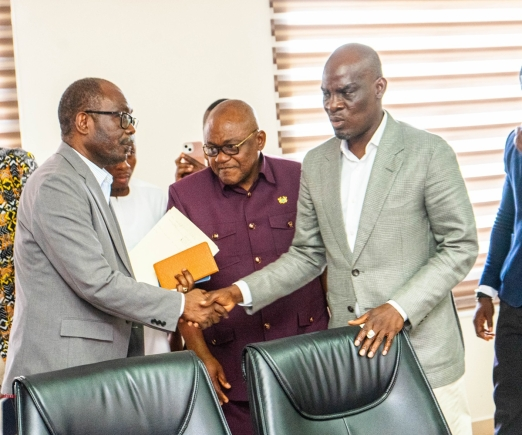
FWSC: Ghana Teacher Strike Talks Resume on Collective Agreement
Summary
- Three major teacher unions in Ghana (GNAT, NAGRAT, PRETAG) have declared a nationwide strike over unresolved issues concerning promotion allowances and arrears.
- The unions' grievances include delays in negotiating a new Collective Agreement, failure to automatically place promoted teachers on correct salary scales, and non-implementation of a Deprived Area Allowance.
- Education Minister Haruna Iddrisu has appealed to the striking teachers to suspend their action, announcing that the Fair Wages and Salaries Commission will resume talks on Tuesday.
- The government has committed to establishing a validation committee for the Deprived Area Allowance and processing promotion-related salary updates and arrears for October.
- The dispute highlights ongoing challenges in Ghana's public education sector regarding collective bargaining and the timely fulfillment of conditions of service.
Ongoing Industrial Action in Ghana's Education Sector
This ongoing dispute highlights the complexities of managing public sector employment, particularly concerning salary scales, allowances, and the timely implementation of agreements, which are critical for maintaining industrial harmony and ensuring the stability of the education sector.
Three prominent teacher unions in Ghana have initiated a nationwide strike, citing the government's failure to address long-standing issues related to promotion allowances and arrears. The Ghana National Association of Teachers (GNAT), the National Association of Graduate Teachers (NAGRAT), and the Pre-Tertiary Teachers Association of Ghana (PRETAG) declared their industrial action last Friday, following a joint statement issued on September 25, 2026.
The unions' grievances are multifaceted, primarily revolving around the delay in negotiating a new Collective Agreement, which they contend should have been finalized by June 2026 as their existing agreement had expired. Additionally, they are protesting the government's failure to automatically place newly promoted teachers onto their appropriate salary scales and the non-implementation of the Deprived Area Allowance. This widespread Ghana teacher strike has prompted an appeal from the Minister of Education, Haruna Iddrisu, urging teachers to suspend their action.
In response to the escalating situation, the Fair Wages and Salaries Commission (FWSC) is scheduled to resume talks with the striking unions on Tuesday. These crucial discussions aim to continue negotiations on their collective agreement and conditions of service, marking a significant step in addressing the current impasse as Ghana teacher strike FWSC talks resume.
Government's Commitments and Proposed Resolutions
During a meeting in Accra yesterday, Minister of Education Haruna Iddrisu provided updates to the unions regarding the government's efforts to resolve the outstanding issues. Addressing the Deprived Area Allowance, he announced the formation of a validation committee, to be chaired by the Minister of Employment and Labour, tasked with verifying relevant data. The government of President Mahama has committed to rolling out a 20% rural deprived allowance effective January 2027, contingent upon the validation process and the establishment of a defined roadmap that ensures adequate representation from the teacher unions.
Regarding the automatic placement of teachers on new salary scales after promotion, the Director-General of the Ghana Education Service (GES) has been instructed to collaborate with the Controller and Accountant General. Their mandate is to update data for processing salaries on the new grade, with a deadline set for Monday at 4 p.m., requiring work even through the weekend. This initiative aims to address the concerns of teachers who successfully passed promotion examinations in December 2025 and February 2026.
For the payment of arrears, the ministry currently possesses data for 29,000 of the nearly 80,000 affected teachers. While September salaries have already been processed, the Controller and Accountant General has pledged to action these payments for October, with any supplementary arrears arising from the process also committed to be honored. The government's negotiating team, which includes the Minister for Employment and Labour, the Minister for Education, the Chief Executive of the Fair Wages and Salaries Commission, the Controller and Accountant General, and the Director-General of GES, has engaged in open deliberations with the unions.
Broader Implications for Labour Relations in Ghana
This industrial action underscores persistent challenges within Ghana's public sector, particularly concerning collective bargaining and the timely fulfillment of conditions of service. The unions had repeatedly raised their concerns with the Fair Wages and Salaries Commission Ghana regarding the expired Collective Agreement and the stalled negotiations for a new one, which they believed should have been concluded by June 2026. The current dispute highlights the complexities inherent in Ghana education sector labour dispute resolution.
The Haruna Iddrisu teacher strike appeal reflects the government's efforts to de-escalate the situation and find a resolution through dialogue. The demands for automatic placement of promoted teachers on appropriate salary scales, including payment of arrears effective January 2026, and the implementation of the Deprived Area Allowance, are central to the Ghana teacher collective agreement negotiations.
This ongoing dispute highlights the complexities of managing public sector employment, particularly concerning salary scales, allowances, and the timely implementation of agreements, which are critical for maintaining industrial harmony and ensuring the stability of the education sector.
Practical Implications
This development highlights ongoing collective bargaining and industrial relations challenges within Ghana's public education sector. Lawyers advising public sector unions or government bodies should monitor these negotiations closely for implications on labour law, collective agreement enforcement, and the legal framework governing strikes and conditions of service in Ghana.
Source
How does this affect you?
Get an AI analysis of this article grounded in your jurisdictions, practice areas, and any policy documents you've uploaded to Wansom.
Finish Reading the Full Story and the Expert Analysis.
Get the latest legal & regulatory intelligence in Ghana
Wansom is AI and can make mistakes.