
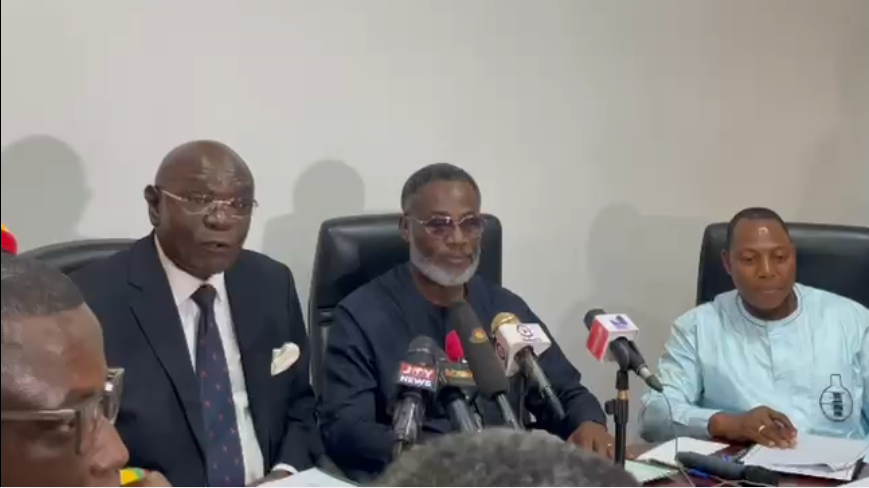
Ghana Council of State: Teacher Strike Talks Conclude Productively
Summary
- The Council of State held "fruitful" talks with striking pre-tertiary teacher unions on October 9, 2026, regarding their nationwide industrial action.
- Chairman Edward Korbly Doe confirmed that all grievances were discussed, including delayed promotions and deprived-area allowances.
- A key focus of the meeting was negotiations for a Collective Bargaining Agreement with the Ministry of Education.
- The Ghana National Association of Teachers (GNAT), National Association of Graduate Teachers (NAGRAT), and Pre-Tertiary Education Teachers Association of Ghana (PRETAG) are involved in the strike.
- The unions are scheduled to meet next with the Fair Wages and Salaries Commission, with the Council of State expecting further invitations.
What Happened
The successful resolution of this dispute could establish important precedents for future labor relations and collective bargaining processes across Ghana's public sector.
The Council of State recently concluded discussions with representatives from Ghana's pre-tertiary teacher unions, characterizing the engagement as productive. These talks, held on Friday, October 9, 2026, form part of ongoing efforts to resolve a nationwide industrial action that has led to empty classrooms across the country, with both educators and students remaining at home. Edward Korbly Doe, Chairman of the Council, confirmed to the media that the parties thoroughly reviewed the underlying concerns that prompted the strike.
Mr. Doe expressed confidence in the discussions, stating that all grievances were presented and examined individually. This meeting underscores the government's commitment to finding a resolution to the widespread Ghana public sector industrial action. The Council of State's involvement highlights the high-level attention being given to the dispute, aiming to facilitate a swift return to normalcy in the educational system.
Key Issues Driving the Dispute
The core of the industrial dispute revolves around several critical issues that the teacher unions have consistently raised. These include significant delays in processing teacher promotions, the absence of allowances for educators working in deprived areas, and stalled negotiations concerning a Collective Bargaining Agreement with the Ministry of Education. These outstanding matters are central to the demands of the Ghana National Association of Teachers (GNAT), the National Association of Graduate Teachers (NAGRAT), and the Pre-Tertiary Education Teachers Association of Ghana (PRETAG), the unions leading the strike.
The unions have maintained a firm stance, asserting that these specific issues must be adequately addressed as a prerequisite for any comprehensive Ghana teacher strike resolution. Their leadership continues to engage with relevant government institutions, emphasizing that while negotiations are ongoing, the resolution of these grievances remains paramount. The current Ghana Council of State teacher strike talks aimed to bridge the gap on these contentious points.
Path Forward for Resolution
Following their engagement with the Council of State, the striking teacher unions are scheduled to proceed with further discussions with the Fair Wages and Salaries Commission (FWSC). This subsequent meeting is a crucial next step in the multi-faceted approach to resolving the industrial action. The Council of State anticipates being invited back into the dialogue once the unions have concluded their session with the FWSC, indicating a structured process for continued mediation.
Chairman Edward Korbly Doe conveyed this planned progression, underscoring the collaborative nature of the resolution efforts. The involvement of the Fair Wages and Salaries Commission Ghana is particularly significant, as it plays a central role in public sector remuneration and conditions of service. This sequence of meetings is designed to systematically address the various facets of the dispute, moving towards a comprehensive Collective Bargaining Agreement Ghana teachers can accept.
Broader Implications for Ghana's Public Sector
The ongoing Ghana Council of State teacher strike talks carry substantial implications beyond the immediate educational sector. The successful resolution of this dispute could establish important precedents for future labor relations and collective bargaining processes across Ghana's public sector. The prolonged absence of teachers from classrooms highlights the critical need for effective mechanisms to address worker grievances and prevent widespread industrial action.
The concerted efforts by the Council of State, coupled with the upcoming engagement with the Fair Wages and Salaries Commission, demonstrate a commitment to achieving a Ghana teacher strike resolution. The outcome will not only impact the thousands of teachers represented by GNAT, NAGRAT, and PRETAG but also influence the framework for addressing similar disputes involving other public sector employees. Ensuring fair conditions and timely promotions is vital for maintaining stability and productivity within the public service.
Practical Implications
Lawyers advising public sector entities or trade unions in Ghana should monitor these ongoing negotiations closely, as they indicate active efforts to resolve a significant industrial dispute. The outcome could set precedents for future collective bargaining agreements and strike resolutions, impacting labor relations and compliance obligations within the public education sector.
Source
How does this affect you?
Get an AI analysis of this article grounded in your jurisdictions, practice areas, and any policy documents you've uploaded to Wansom.
Finish Reading the Full Story and the Expert Analysis.
Get the latest legal & regulatory intelligence in Ghana
Wansom is AI and can make mistakes.