
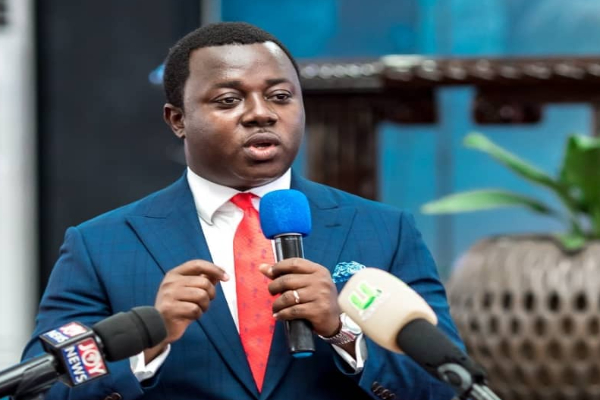
Ntim Fordjour: Appeals Mahama on Ghana Commercial Vehicle Preaching Restriction
Summary
- Rev. John Ntim Fordjour, a Member of Parliament and senior pastor, has appealed to President John Dramani Mahama.
- The appeal concerns regulations that restrict religious preaching in moving commercial vehicles in Ghana.
- Fordjour argues these measures could lead to the imprisonment of pastors and evangelists for sharing their faith.
- He is seeking the President's intervention to address these specific regulations.
Call for Presidential Intervention
He contends that the regulations, which prohibit preaching in moving commercial vehicles, might expose pastors and evangelists to the risk of imprisonment.
Rev. John Ntim Fordjour, who serves as both the Senior Pastor of Victory Bible Church International’s Higher Heights Sanctuary in East Legon and as the Member of Parliament for Assin South, has formally requested President John Dramani Mahama to intercede regarding new regulations. This appeal specifically targets measures that impose restrictions on religious preaching within commercial vehicles while they are in motion. The prominent religious and political figure is seeking the President's direct involvement to address these contentious rules.
Concerns Over Religious Freedom and Penalties
At the heart of Rev. Fordjour's appeal is the assertion that these new restrictions on religious speech in public transport could lead to severe consequences for individuals. He contends that the regulations, which prohibit preaching in moving commercial vehicles, might expose pastors and evangelists to the risk of imprisonment. This potential legal jeopardy, he argues, stems directly from their efforts to share their faith in public spaces, specifically within Ghana's commercial transport sector.
The concern articulated by the Assin South MP centers on the criminalization of what many consider a fundamental aspect of their religious practice. The prospect of incarceration for expressing religious beliefs in a public setting, such as a bus or taxi, raises questions about the balance between public order regulations and constitutional guarantees of freedom of religion. This specific Ghana commercial vehicle preaching restriction is thus framed as a direct threat to the ability of religious leaders to carry out their evangelical duties without fear of legal repercussions.
Regulatory Landscape and Broader Implications
While the precise details of the regulations restricting commercial vehicle religious speech Ghana are not fully elaborated in the appeal, the mere existence of such measures has prompted a high-level intervention request. These rules, which aim to govern religious expression on public transport, represent a notable development in Ghana's regulatory environment. The Ghana transport regulations religious expression could set a precedent for how religious activities are permitted or curtailed in various public domains, extending beyond just commercial vehicles.
The appeal by Rev. Fordjour implicitly raises broader questions about freedom of religion public transport Ghana and the extent to which the state can regulate religious practices in public spaces. The call for President Mahama's intervention suggests that the regulations are viewed as potentially infringing upon fundamental rights, prompting a need for executive review or reconsideration. The outcome of this Ntim Fordjour Mahama appeal could therefore have significant implications for how religious expression is understood and protected within the country's legal framework.
Why This Matters for Legal Professionals
This development signals potential legal challenges or amendments to public transport regulations concerning religious expression, requiring legal professionals to assess compliance risks for faith-based groups and individuals operating in Ghana's commercial transport sector. Lawyers should monitor the outcome of this appeal to advise clients on the enforceability and scope of any such restrictions. The specific concern about imprisonment for sharing faith highlights the severe potential ramifications of the Ghana bus preaching ban and similar measures.
The intervention sought from President Mahama by a prominent MP and religious leader underscores the political and social sensitivity surrounding such regulations. Legal experts will need to carefully analyze any executive response or subsequent legislative actions to understand the evolving landscape of religious freedom in public spaces. The resolution of this matter will be crucial for guiding individuals and organizations on their rights and obligations concerning religious expression within Ghana's public transportation system.
Practical Implications
This development signals potential legal challenges or amendments to public transport regulations concerning religious expression, requiring legal professionals to assess compliance risks for faith-based groups and individuals operating in Ghana's commercial transport sector. Lawyers should monitor the outcome of this appeal to advise clients on the enforceability and scope of any such restrictions.
Source
How does this affect you?
Get an AI analysis of this article grounded in your jurisdictions, practice areas, and any policy documents you've uploaded to Wansom.
Finish Reading the Full Story and the Expert Analysis.
Get the latest legal & regulatory intelligence in Ghana
Wansom is AI and can make mistakes.