
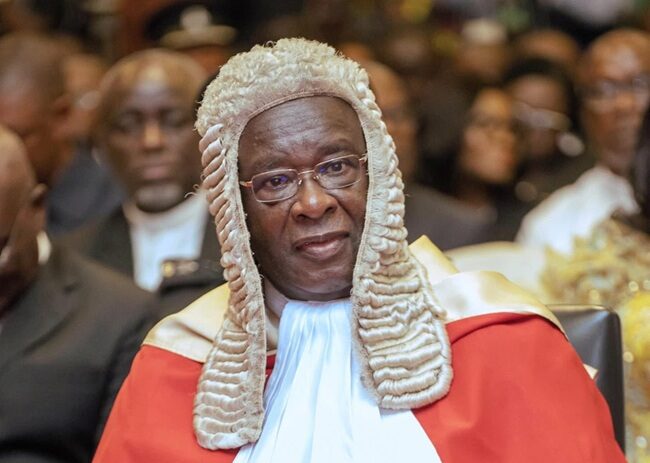
Ghana Chief Justice: Tsikata Defends Public Statements Amidst Debate
Summary
- An open letter by Evans Mawunyo Tsikata, dated September 3, 2026, addresses the public debate surrounding the Chief Justice of Ghana's comments on governance.
- The Chief Justice's public statements have led to accusations of partisan bias and calls for resignation.
- The letter argues that judicial independence does not require silence on national issues and that the Chief Justice, as a citizen, has a right to contribute to public discourse.
- It challenges critics to identify specific constitutional or ethical breaches rather than making general accusations of partisanship.
- The author encourages the Chief Justice to continue engaging in national conversations within constitutional and ethical limits, emphasizing the importance of speaking truth to power.
The Chief Justice's Public Commentary Sparks Debate
Judicial independence should not be misconstrued as an obligation for the Chief Justice to remain silent on matters of national importance.
An open letter, penned by Evans Mawunyo Tsikata and dated September 3, 2026, has entered the ongoing public discussion surrounding the Chief Justice of Ghana. The correspondence addresses a significant debate ignited by the Chief Justice's recent public statements concerning governance and the performance of various state institutions. These remarks have reportedly led to accusations of partisan bias against the Chief Justice, with some individuals even calling for their resignation from the high office.
Tsikata's letter, however, takes a firm stance in defense of the Chief Justice's right to engage in national discourse. It suggests that such public engagement is not only permissible but also a necessary aspect of leadership. The author emphasizes that the Chief Justice's willingness to articulate views on national affairs, even if perceived as controversial, should be seen as a commitment to truth rather than a deviation from judicial impartiality. This intervention highlights the intensity of the Ghana Chief Justice public statements debate and the differing expectations placed upon the head of the judiciary.
Redefining Judicial Independence and Public Engagement
Central to Tsikata's argument is the assertion that judicial independence should not be misconstrued as an obligation for the Chief Justice to remain silent on matters of national importance. The letter posits that while the office carries significant constitutional and ethical responsibilities, particularly regarding the Judiciary's impartiality, these do not negate the Chief Justice's fundamental role as a Ghanaian citizen. As a taxpayer and resident, the Chief Justice experiences the country's economic decisions and governance outcomes, thus possessing a legitimate interest in Ghana's progress and welfare.
The letter draws a stark contrast with other prominent public figures in Ghana. It notes that the President routinely comments on a wide array of national issues, including the judiciary, legislature, economy, education, and security. Similarly, the Speaker of Parliament frequently offers opinions on the executive and judicial branches, and Members of Parliament, along with other political actors, regularly weigh in on the operations of all government arms. Tsikata questions why the Chief Justice alone should be expected to refrain from contributing to the national conversation, suggesting that critics should identify specific constitutional or ethical rules violated by the Chief Justice's remarks, rather than simply labeling them as partisan due to disagreement. This perspective directly addresses the Ghana Chief Justice judicial independence and the Judiciary role national issues Ghana.
The Imperative of Truth in National Discourse
The open letter underscores a broader principle concerning leadership and public accountability in Ghana. It argues that public office should not compel an individual to abandon their conscience or civic duty. Instead, it advocates for leaders who are prepared to "speak truth to power," irrespective of the political party in government. The author contends that the Chief Justice's views on Ghana should extend beyond mere judgments and court administration, contributing meaningfully to the national dialogue.
Ultimately, the communication encourages the Chief Justice to persist in observing national developments beyond the courtroom and to continue participating in the national conversation. This engagement, the letter stresses, must always remain within the established boundaries of the Constitution and the ethical obligations inherent to the judicial office. The author concludes by asserting that while truth can sometimes be uncomfortable or politically inconvenient, Ghana ultimately deserves to hear it, reinforcing the importance of Chief Justice public engagement Ghana and Ghana judicial ethics commentary.
Practical Implications
This article highlights the ongoing debate about the appropriate scope of public commentary by the Chief Justice of Ghana. Lawyers should monitor this discussion to understand the evolving expectations for judicial engagement in national affairs, which could impact perceptions of judicial impartiality and independence.
Source
How does this affect you?
Get an AI analysis of this article grounded in your jurisdictions, practice areas, and any policy documents you've uploaded to Wansom.
Finish Reading the Full Story and the Expert Analysis.
Wansom is AI and can make mistakes.